Facebook Ads for Healthcare Case: How We Cut Vein Clinic CPL by 73%

📱 Facebook Advertising for Vein Clinic: Inside the $18 Lead Engine for The Vein Place

Advertising for cosmetic surgery and medical clinics on Meta is hard because people do not casually trust health ads in their feed. Advertising for cosmetic surgery, vein treatment, or any patient-focused service has one major problem from the start: the audience is cautious before they even read the offer.

That was the challenge with The Vein Place OC.

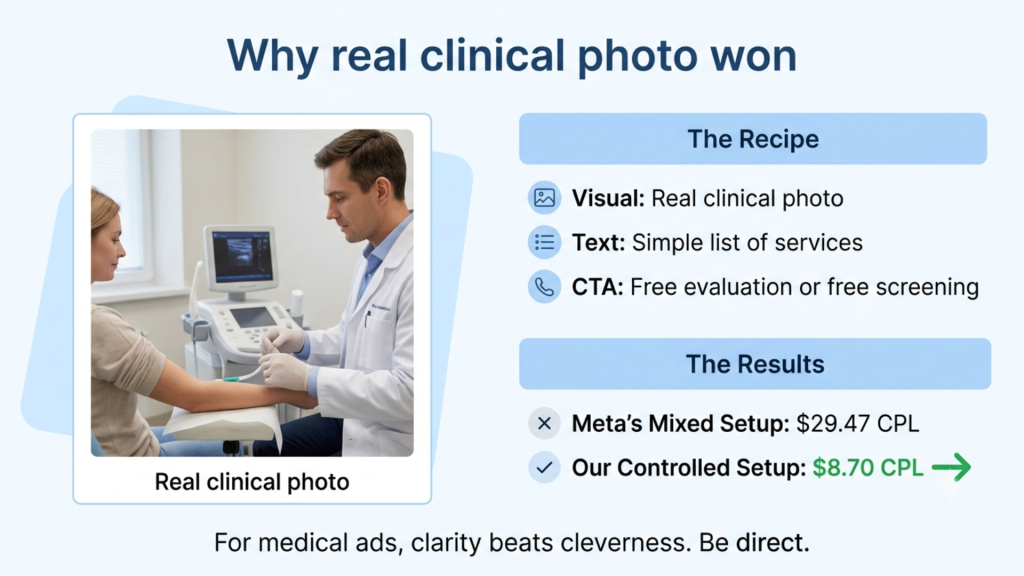
The original campaign leaned heavily on insurance coverage, eligibility, and administrative clinic messaging. On paper, that sounds practical. In the ad account, it failed because it made the process feel cold, clinical, and complicated before the patient had a reason to care.

This case study breaks down how HYPE Hyperion Digital introduced two new human-centered creative angles for The Vein Place. One angle focused on confidence and appearance. The other focused on direct symptoms like leg pain, swelling, and varicose veins. Together, inside one ad set, these two angles dropped CPL from $70.74 to $18.73 and turned a stiff medical campaign into a real patient lead engine.

📈 Fighting High Competition with Facebook Ads for Vein Clinic Scaling

The client was The Vein Place OC, a specialized vein and vascular clinic serving patients in Orange County, California. The campaign focused on a Spanish-speaking audience of women 35+ within a 10-mile radius of Santa Ana, targeting concerns around varicose veins, leg pain, swelling, and restless leg symptoms.

This is a competitive market because vein treatment sits in a space where patients often compare multiple clinics, delay action, and need trust before booking. The audience is not just shopping for a service. They are dealing with a visible or uncomfortable health concern that may affect how they feel, move, dress, and live every day.

The goal was to break through local noise and create a steady stream of patient inquiries without burning through the testing budget. Instead of forcing the campaign to work harder with more spend, we changed the message. Instead of opening with coverage and eligibility, we shifted the message toward the real reasons a patient would stop scrolling and think, “Okay, this is for me.”

🛑 The Problem of Medical Marketing on Meta

🤝 The Trust Barrier: Why cold health ads get skipped

Healthcare ads have a built-in trust problem. Nobody sees a health-related ad in their feed and instantly thinks, “Yes, this brand definitely deserves my trust.” People are naturally protective of their bodies, their symptoms, and their medical decisions, so they do not respond to healthcare ads the same way they respond to a restaurant, gym, or home service offer. If the creative feels too corporate, too cold, or too clinical, the user immediately puts up a wall.

This is why an advertisement for clinic services cannot sound like a policy document. It has to feel clear, human, and relevant to what the patient is already experiencing. On Meta, people are not searching for a doctor in that moment. They are scrolling through their day, so the ad has to meet them with language that feels familiar enough to stop the scroll and safe enough to keep reading.

📉 The Mistake: Why the insurance angle fell flat

The old creative focused on insurance coverage and eligibility messaging. It led with the kind of information clinics often think patients need first: what may be covered, who may qualify, and how the process works. The problem was that this made the ad feel administrative before it felt helpful. The ad was basically saying, “Let’s talk eligibility,” while the patient was thinking, “Can we talk about my concerns first?”

That framing pushed the campaign to a painful $70.74 CPL with only 2 leads from $141.48 in spend. The audience treated it like another generic health notice because it did not connect to the discomfort or emotion behind the condition. Insurance details matter later, but when they show up too early, they signal paperwork, friction, and effort. That creates distance instead of conversions.

🧪 Testing Emotional Angles vs. Direct Symptoms in Varicose Vein Ads

✨ The Emotional Angle: Testing identity and appearance copy

The first new creative variation was the “Reclaim Your Confidence” angle. Instead of talking about clinic coverage or eligibility, it spoke to how visible vein conditions can affect a woman’s confidence, appearance, and daily life. This was not about making the issue feel shallow. It was about acknowledging that visible symptoms can change how someone feels in their own body.

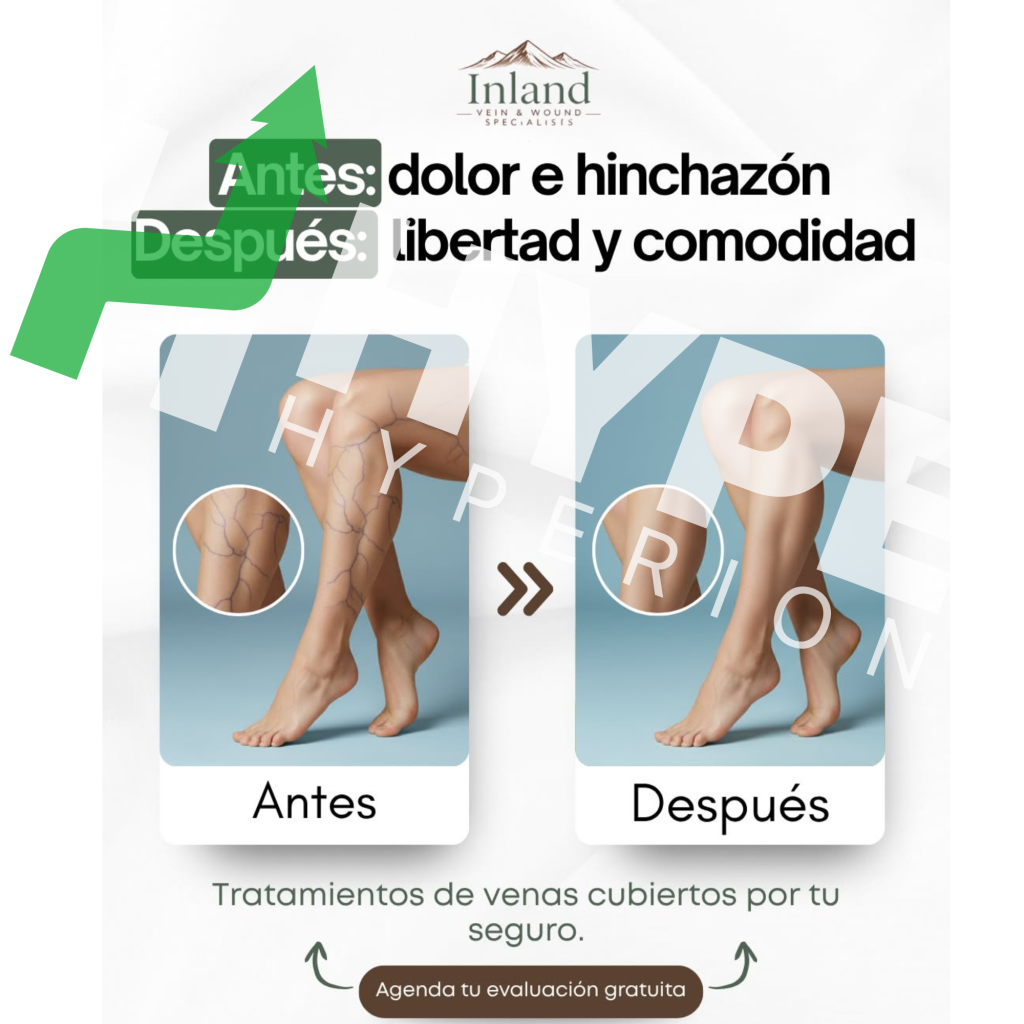
Emotional Ad example:

That emotional angle worked because it reached women who may not have fully framed their problem as a medical issue yet. They may have been thinking about how their legs looked, how they felt wearing certain clothes, or how much they had started hiding the condition. By speaking to identity first, the ad created a personal connection before asking for action. The CPL dropped to $14.80 and generated 2 leads, proving that emotion could break the trust barrier faster than clinic-first copy.

🎯 The Direct Symptom Angle: Capturing high-volume demand

The second creative variation was more direct. It named the symptoms clearly: leg pain, swelling, and varicose veins. There was no complicated terminology, no heavy medical language, and no attempt to sound overly polished.

This angle worked because it captured women who already knew what they were dealing with. They did not need a confidence-based message to help them recognize the problem. They needed a clear ad that said, “Yes, this is the issue, and there is a place that can help.” This direct symptom angle became the volume driver, generating 9 out of the 11 total leads at a stable $19.61 CPL.

💥 How a single ad set triggered a 73% drop in costs

The biggest win came from running both angles together inside the same ad set. We did not overcomplicate the account with separate campaigns, heavy audience splits, or a messy testing structure. We let Meta see both angles and find the people most likely to respond to each one.

The emotional ad reached women who needed a personal connection before thinking about treatment. The symptom-based ad reached women who were already aware of their discomfort and ready to look for relief. Together, those two mindsets created a stronger campaign than either angle could have created alone. The combined ad set brought CPL down from $70.74 to $18.73, generating 11 leads from $206.08 in spend and creating a 73% drop in costs.

💡 Lessons from Advertising for Cosmetic Surgery and Vein Medical Brands

💃 Treating appearance as identity, not vanity

The emotional test showed an important lesson for medical brands that deal with visible conditions. When a condition affects how someone looks, it can also affect how they feel about themselves. That does not make the concern vain or superficial.

ADS examples:

For varicose vein ads, the “Reclaim Your Confidence” angle worked because it respected the emotional side of the problem. It did not just say, “Here is a treatment.” It reflected how the condition can affect confidence, clothing choices, social comfort, and daily self-image. That kind of copy makes the patient feel seen, which is often the first step toward trust.

🗣️ Ditching clinical jargon for normal speech

The direct symptom ads worked because they used the same language patients use in real life. People do not usually describe their discomfort with technical medical terms when talking to a friend. They say things like “my legs hurt,” “my legs feel swollen,” or “these veins are getting worse.”

That simple language removed friction from the ad. The audience did not have to translate the message or wonder if it applied to them. It felt familiar right away, which made it easier to take the next step. For medical ads, clarity often beats complexity because the patient is already carrying enough uncertainty.

📑 Leading with patient relief over clinic paperwork

The ultimate rule for health and medical clients is simple: lead with the patient’s life, not the clinic’s process. Insurance coverage, eligibility, and appointment details are important, but they should not be the first emotional impression. When those details appear too early, the ad feels like work.

A better approach is to lead with relief. Talk about the discomfort the patient wants to reduce, the confidence they want back, or the daily problem they want solved. Once the person feels understood, the practical details can support the decision later in the funnel. In this campaign, patient-first messaging did what administrative copy could not do: it made the audience care before asking them to convert.

📊 Before and After the Split Test

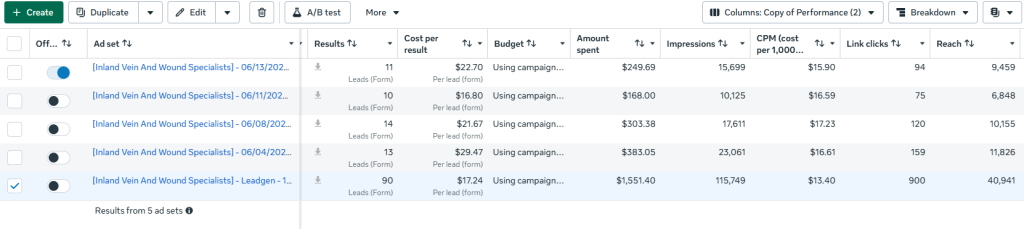
This is what the actual results look like in the ad account.

The difference between the old approach and the new creative strategy was clear. The old insurance angle gave the audience information, but it did not create enough emotional or symptom-based urgency. The new angles spoke to the patient’s real life, and the numbers changed quickly.

Metric / AngleCost Per Lead (CPL)Results & Spend
Old Approach: Insurance & Eligibility
$70.742 leads, $141.48 total spend
New Angle 1: Emotional, “Reclaim Your Confidence”$14.802 leads
New Angle 2: Direct Symptoms, Pain & Swelling$19.619 leads
New Ad Set: Combined Hybrid Setup$18.7311 leads, $206.08 total spend
The Big Win: CPL Improvement
$70.74 → $18.7373% drop in costs

The most important part is not just that the CPL dropped. It is why it dropped. The campaign stopped treating the audience like insurance applicants and started speaking to them like real patients.

The emotional angle created connection. The symptom angle created clarity. Together, they helped the campaign capture two different levels of awareness without making the setup complicated. That is why the combined ad set was able to produce patient inquiries at a much healthier cost.

🏆 The Ultimate Rule for Scaling Medical Ads on Meta

The main takeaway is clear: health and medical marketing scales when you stop acting like an insurance bureaucracy and start writing like a human who understands the patient’s reality.

If the ad opens with process, paperwork, and eligibility, people feel the effort before they feel the value. If you lead with real life impact, visible symptoms, confidence, discomfort, and relief, the audience has a reason to stop and listen.

For The Vein Place, the winning shift was not a bigger budget or a more complicated campaign structure. It was a better message. The campaign moved from coverage-first copy to patient-first copy, and that one shift turned a $70.74 CPL into an $18.73 lead engine.

A major thank you to the team at The Vein Place OC for trusting us with their data and letting us pull back the curtain on these performance metrics.

Gary K. Avatar

Advertising for Construction Company: Qualified Leads via Facebook Ads for SoCal Seismic

Facebook Ads for Construction Company: Real Insight of $18 SoCal Seismic Story

Running contractor ads in Los Angeles is expensive, and the market does not give you enough room for lazy and generic messaging. Ads for contractors become even harder when you are targeting homeowners aged 25+ in one of the most competitive paid traffic markets in the country, especially when you are trying to reach LA homeowners who have already seen every “trusted local contractor” ad under the sun.  

HYPE Hyperion Digital took over a local lead generation campaign for SoCal Seismic in Los Angeles, California. The goal looked simple from the outside: generate more foundation repair and earthquake retrofit leads at a lower cost. 

But this case study had a bigger lesson hiding inside the numbers. A low cost-per-lead can be a trap.

At one point, we brought the campaign down to a $17 CPL, which looked amazing on paper. The problem was that the leads were poor quality and were not converting downstream for the sales team. So the real win was not getting the cheapest possible lead. The real win was finding the balance: a stable $18 CPL with qualified homeowners who actually had real structural concerns and were much more likely to turn into paid work.

🏢The Client and the Reality of Advertising for Construction Company Brands

🔍Who is SoCal Seismic?

SoCal Seismic is a Los Angeles foundation and seismic retrofit company specializing in professional earthquake retrofitting, foundation inspections, and structural repair work. They work with different foundation types and serve property owners who need more than a quick handyman fix. Their projects are high-ticket, technical, and often tied to serious home safety or property value concerns.

They are also positioned around specialized Earthquake Brace & Bolt services, which help California homeowners protect their properties and potentially secure state grant support for qualifying retrofit work. That matters because this is not a casual service where someone clicks an ad because they are mildly curious. The right lead is usually a homeowner with a visible issue, a real inspection concern, or a time-sensitive reason to act. So our campaign could not chase cheap clicks. It had to attract serious property owners with real structural problems.

⚠️The Industry Scare-Tactic Trap

Most foundation and seismic companies in California lean heavily on fear. They talk about massive earthquakes, future disasters, and what could happen if a homeowner does nothing. That angle feels obvious because earthquake retrofitting is connected to safety, but obvious does not always mean effective.

In modern Meta ads, fear-based messaging can easily turn into background noise. People in Los Angeles already know earthquakes exist, and many have learned to emotionally block out that stress because it feels too big, too distant, or too uncomfortable to think about every day. When an ad leads with an invisible future disaster, homeowners often skip it instead of acting on it. That is why fear-based ads can spend money quickly without giving the sales team leads they can actually work with.

🏚️Why Visual Damage Defeats Invisible Fear

📉The Initial Test ($113 CPL Failure)

The first test launched with two video creative angles running at the same time. One video focused on abstract earthquake risk, while the other showed visible home issues like wall cracks, uneven floors, and signs that something might already be wrong with the foundation. The goal was to see whether homeowners would respond more to future fear or present damage.

Video Ad Example:

The results were clear. The earthquake angle produced zero leads, while the visible damage creative did all the work. Even then, the campaign was still expensive, starting at $113.47 CPL with only 3 leads. That told us the account had a signal, but the message was not sharp enough yet. Homeowners were not responding to broad earthquake fear; they were responding to problems they could physically see in their own homes.

👀What We Can See

This happened because people react faster to what feels immediate. A future earthquake is scary, but it is also abstract. A crack in the wall, a sloping floor, or a door that suddenly stops closing properly is much harder to ignore because the homeowner sees it every day.

That is present bias in action. People tend to prioritize the problem right in front of them over a possible problem that might happen later. For this campaign, that meant the creative had to focus less on “what if an earthquake hits?” and more on “what is already happening inside your house?” The visible damage angle gave homeowners a concrete reason to stop, click, and ask for help.

🚨The Emergency Pivot to the “Buy & Sell” Roadblock Segment

🔄Urgent Strategy Shift

After the $113 CPL launch, the account needed a sharper entry point. We did not cut the cost in half by changing Meta interest targets or trying to build some overly complicated audience stack. The real shift came from changing the message and introducing a new reason someone would need help right now.

That new angle focused on homeowners involved in a property transaction. These were people trying to buy or sell a house, but a foundation issue had become a roadblock. This gave the campaign a stronger sense of urgency because the problem was no longer just about maintenance. It was about a deal, a timeline, and money being stuck until the structural concern was handled.

💰The Real Estate Value Trigger

The buy/sell angle worked because it spoke to a different kind of motivation. Some homeowners do not act on foundation issues when the only message is about long-term protection. But when a home inspection flags cracks, settling, or possible foundation movement during a sale, the issue suddenly becomes immediate.

That homeowner is not casually browsing. They may be trying to save a closing, avoid losing a buyer, negotiate repairs, or protect the value of the property. By positioning SoCal Seismic as the solution to a real estate deal getting blocked, the campaign unlocked a highly motivated segment. This helped bring CPL down to $56.98 with 10 leads because the ad was now speaking to people with both a structural problem and a financial reason to solve it quickly.

🎯The Quality Filter: Finding the Performance Sweet Spot in Facebook Ads for Contractors

⚠️How Direct Pain-Point Videos Backfired on Quality

Once the visible damage and buy/sell angles started working, we pushed the creative even harder. We launched more direct pain-point videos around warning signs getting worse and the risk of buying or selling a home with foundation issues. The CPL dropped sharply to $17.83 across 12 leads, which looked like a big win at first glance.

But the sales feedback told a different story. The leads were cheaper, but low cost does not help much when the sales team is stuck chasing unserious prospects. This is one of the most important lessons in advertising for construction company campaigns: low CPL does not always mean healthy performance. If the leads are not serious, qualified, or ready for the service, then the campaign is just creating a different kind of waste. The client pays less per lead, but the team loses time chasing people who were never likely to become customers.

📝How Too Much Form Friction Killed Volume

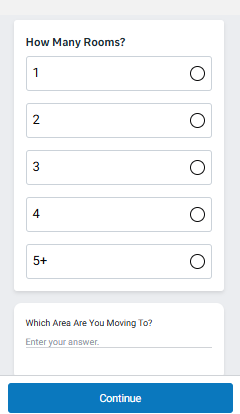
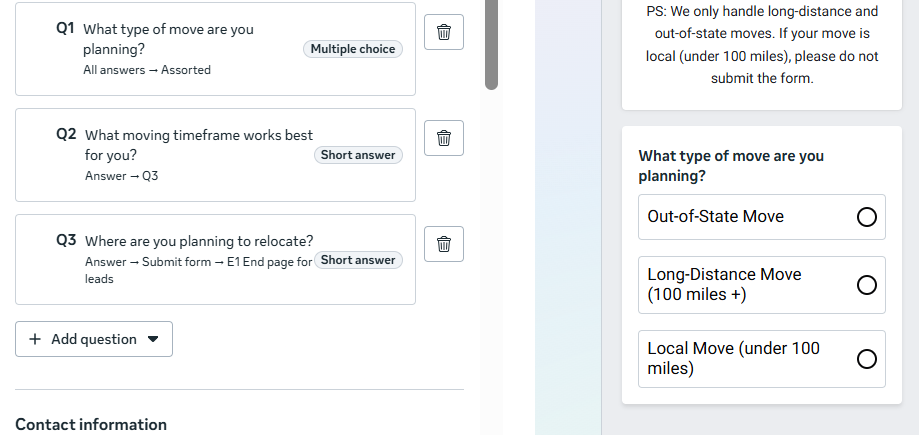
To fix the quality issue, the next move was to add more filtering inside the lead form. We updated the form with two multiple-choice qualifier questions so the campaign could better separate serious homeowners from weak inquiries. In theory, this made sense because the sales team needed better context before spending time on each lead.

The filter worked, but it worked too aggressively. Lead quality improved, but the form became too heavy for users to complete. That extra friction caused volume to drop and pushed CPL up to $86.40 with only 2 leads. This showed us that qualification is important, but too much qualification too early can kill the campaign’s momentum. The form has to filter the noise without making real buyers feel like the process is too much work.

✅Trimming the Lead Form to One Specific Issue Question

The final adjustment was simple but important. We removed one of the multiple-choice questions and kept only one specific qualifier about the homeowner’s actual issue. That gave us the filter we needed without making the form feel heavy.

This one-question setup created the right balance. It helped remove low-intent leads while still allowing serious homeowners to move through the form quickly. The campaign settled at $18.48 CPL with 5 genuinely qualified leads, which was far more valuable than the earlier $17 CPL with weak lead quality. This became the performance sweet spot: low enough to scale, but qualified enough to support real sales conversations.

📊What a Healthy Lead Engine Looks Like

This is what the actual campaign results look like in the ad account.

The campaign started at $113.47 CPL with 3 leads across two video angles. The earthquake-risk angle brought in no leads, while the visible cracks and uneven floors angle carried the test. That first result showed us that homeowners were not reacting to abstract fear. They were reacting to damage they could already see.

After refining the angle and adding the buy/sell roadblock message, CPL dropped to $56.98 with 10 leads. This was the first major improvement because the campaign now had two stronger reasons for homeowners to respond: visible foundation concerns and property transaction pressure.

Then the creative push dropped CPL all the way to $17.83 with 12 leads, but the quality was not there. That was the trap. A cheaper CPL looked good in the ad account, but the leads were not converting well enough for the sales team.

The first form update tried to fix quality with two qualifier questions, but it went too far. CPL jumped to $86.40 and volume dropped to only 2 leads. The final version removed one question and kept only the most important issue-based qualifier, bringing the campaign to a current CPL of $18.48 with qualified leads that actually convert.

That is what a healthy lead engine looks like:

Starting CPL$113.47  (3 leads — two video angles)
After angle refinement$56.98  (10 leads — cracks + buy/sell)
After creative push$17.83  (12 leads — low quality)
After form update$86.40  (2 leads — form too heavy)
Current CPL$18.48  (5 leads — quality leads, 1 MCQ)

Not the absolute cheapest number. Not the highest volume. Not the most complicated setup. 

A healthy campaign produces leads that are affordable, qualified, and useful for the sales team. For SoCal Seismic, the winning formula came from visible-problem creative, a smart buy/sell angle, and one precise lead form question that filtered out noise without scaring away real buyers. 

A big thank you to SoCal Seismic for trusting HYPE Hyperion Digital to navigate one of the most competitive construction markets in Los Angeles. This campaign is a strong reminder that in high-ticket contractor advertising, the goal is not just cheaper leads. The goal is qualified opportunities that can actually turn into revenue.

Gary K. Avatar

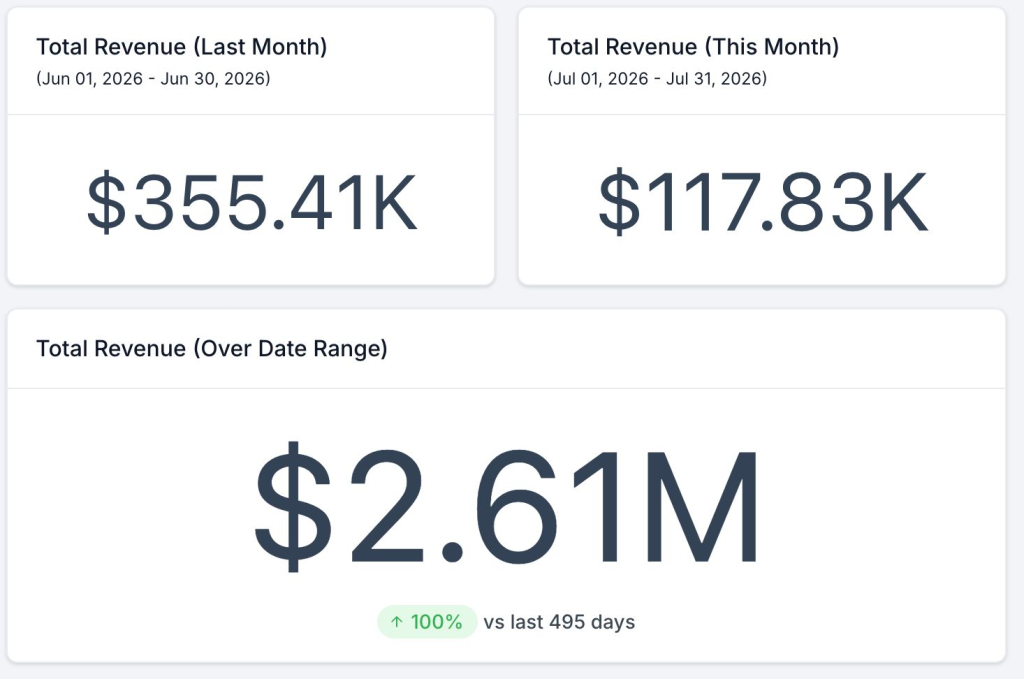
Facebook Case Study #18: Facebook Ads vs Yelp: How a Moving Company Hit $356K Revenue

📊Facebook Ads vs Yelp: How a Moving Company Hit $356K Revenue

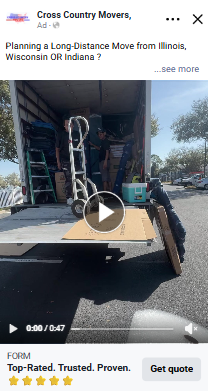
In this case study, we implemented a strategy where Facebook Ads became one of the primary lead sources for the moving company Tim Movers, effectively replacing Yelp as the main paid acquisition channel.

🚚Few words about the Tim Movers moving company

Tim Movers is a trusted moving company based in San Francisco, California, handling both local and long-distance moves for homes and businesses. They’re known for fair pricing, reliable crews, and a really customer-friendly approach—no hidden fees. With lots of positive reviews and high ratings, Tim Movers has built a solid reputation as a go-to choice for stress-free moves around the Bay Area.

📈From Yelp to Facebook: Building a More Scalable and Cost-Effective Lead System

Before launching Facebook Ads, the company was spending approximately $60,000 per year on Yelp advertising. While Yelp delivered leads, it offered limited scalability, reduced control over lead quality, and high dependency on a single third-party platform. The key objective was to build a more cost-efficient, flexible, and controllable lead generation channel capable of delivering consistent inbound requests.

By shifting focus to Facebook Ads, we built a structured lead generation system that proved to be both more adaptable and more profitable in terms of cost per lead and overall return on ad spend. Unlike Yelp, Facebook allowed precise audience targeting, full control over budgets, creatives, and messaging, as well as the ability to scale or slow down campaigns based on seasonality and business demand. As a result, Facebook Ads became one of the main sources of inbound leads, providing a stable flow of potential customers throughout the year.

⚙️ Follow-Up System That Maximized Conversions

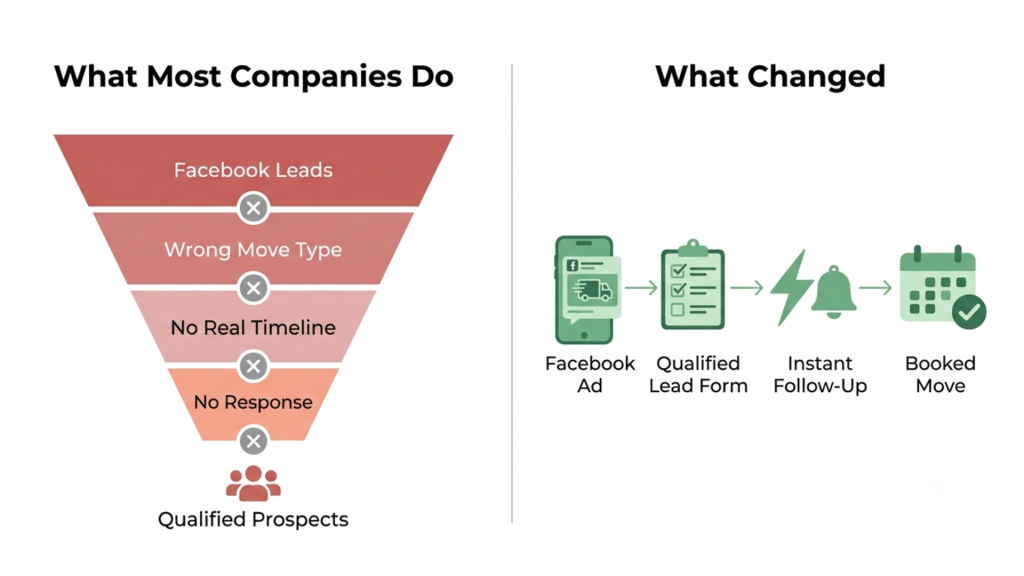
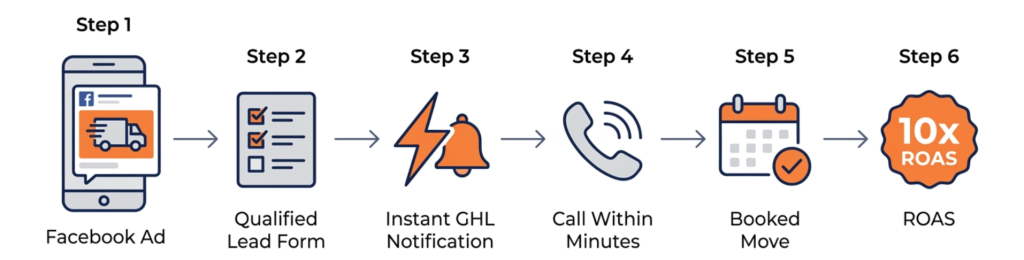
A critical success factor was not just the advertising itself, but the strict follow-up system implemented alongside the campaigns. Facebook leads tend to respond best when contacted quickly, and this behavior was fully leveraged in the sales process. Three core follow-up rules were introduced:

  • The first call was made within 5 minutes after a form submission
  • 📞 A minimum of three call attempts within the first 24 hours
  • 🔁 Two call attempts per day until the lead either booked a job or clearly declined

This approach significantly increased contact and booking rates, ensuring that generated leads were converted into real revenue rather than lost opportunities.

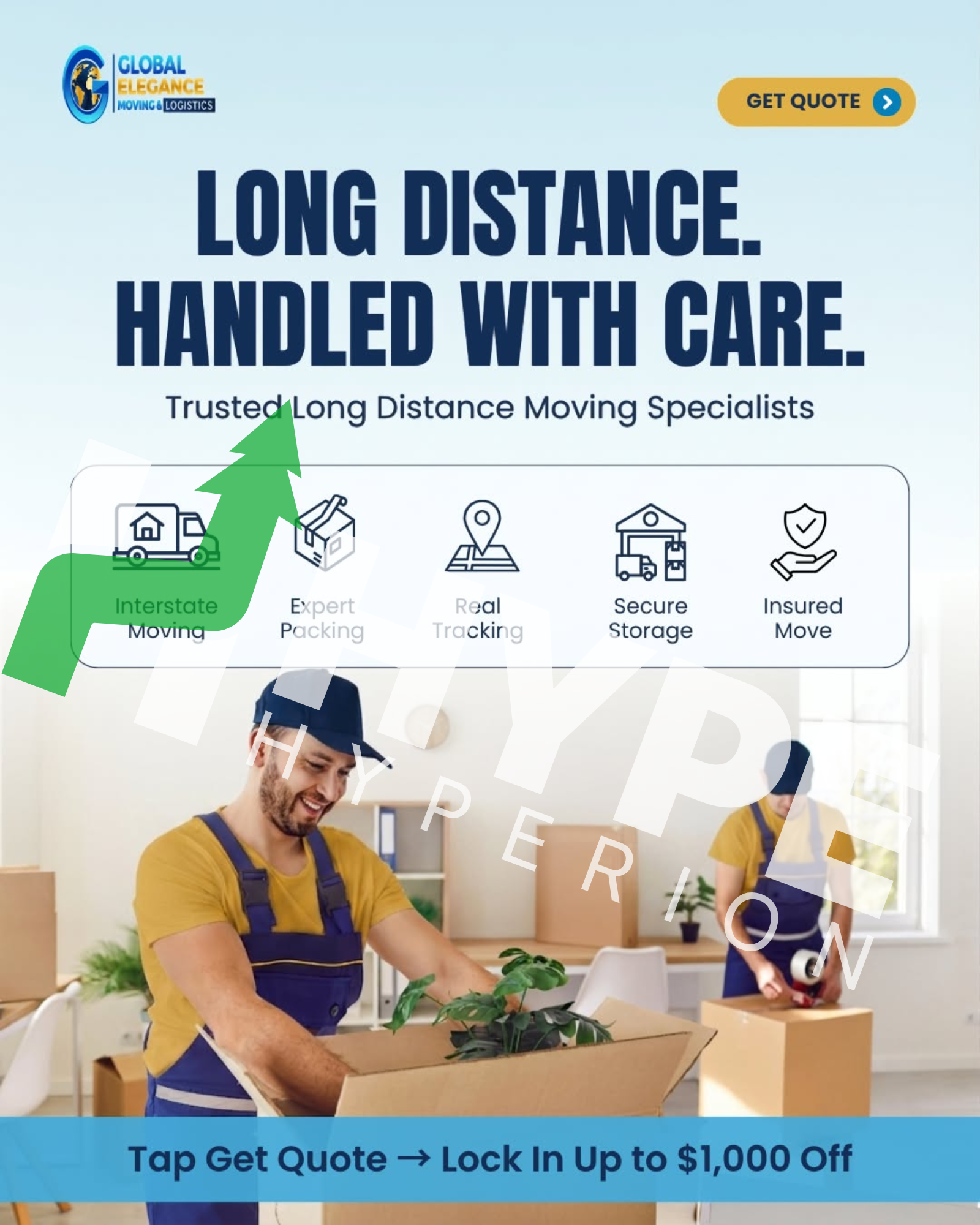
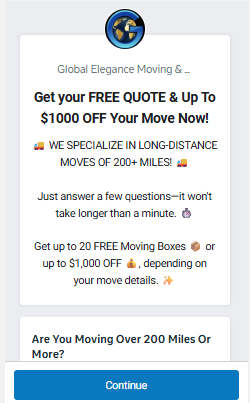
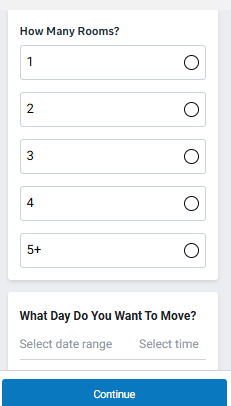
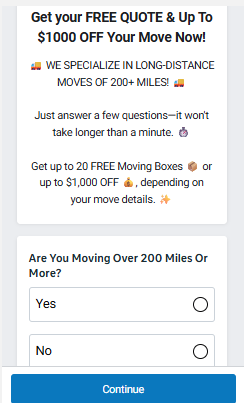
Facebook Ads Creatives

📈 Campaign Results & Lead Generation Impact

As a result of this strategy, Facebook Ads became a stable and controllable acquisition channel that consistently delivered inbound leads across different seasons. The campaigns demonstrated strong scalability, predictable lead flow, and higher operational flexibility compared to directory-based platforms.

Most importantly, the business gained full control over its growth engine, reduced dependency on third-party aggregators, and built a system that supports long-term revenue stability rather than short-term lead purchases.

The strongest performance was recorded in June, which became the peak revenue month with $76,000 in total revenue. Importantly, even during slower periods — particularly in November — Facebook Ads continued to generate inbound requests, helping maintain consistent lead flow and supporting sales during the off-season.

📊 Platform Comparison: Facebook Ads vs Yelp Ads

tim movers leads revenue
Performance Over a 12-Month Period

🟡 Yelp Ads

Ad Spend: ~$60,000
Revenue Generated: $310,439

Key Metrics

  • ROAS: ~5.17×
  • Gross Return (Revenue − Ad Spend): ~$250,439
  • Cost Efficiency: ❌ Lower
  • Scalability & Control: ❌ Limited

Yelp Ads were able to generate revenue, but at a higher acquisition cost and with a strong dependency on a closed platform. Control over lead quality, volume, optimization, and scaling was restricted, limiting long-term growth flexibility.

🔵 Facebook Ads

Ad Spend: $43,378.04
Revenue Generated: $356,724

Key Metrics

  • ROAS: ~8.22×
  • Gross Return (Revenue − Ad Spend): ~$313,346
  • Cost Efficiency: ✅ Significantly higher
  • Scalability & Control: ✅ High

Facebook Ads delivered higher revenue with lower ad spend, while providing full control over targeting, creatives, budgets, and campaign scaling.

🔍 Direct Performance Comparison

~$63,000 higher net return from Facebook Ads
$16,600 lower ad spend on Facebook Ads
$46,285 higher revenue generated via Facebook
~3.05× higher ROAS compared to Yelp

🚀 Why Facebook Ads Outperformed Yelp in This Case

The success of Facebook Ads in this case was driven by several key advantages over Yelp. Facebook provided full control over lead generation, including targeting, messaging, budget allocation, and scaling. Unlike Yelp, which functions as a closed marketplace with limited flexibility, Facebook allowed the business to proactively reach potential customers before they actively compared multiple competitors.

Additionally, Facebook leads proved more responsive to fast follow-up, especially when contacted within minutes. Combined with a disciplined sales process, this created a competitive advantage that Yelp could not offer. Finally, Facebook reduced platform dependency, allowing Tim Movers to build a predictable and scalable acquisition channel without relying on a single aggregator.

Ultimately, the combination of cost-efficient Facebook Ads and a disciplined follow-up process enabled Tim Movers to reduce reliance on Yelp, lower advertising costs, and achieve sustainable revenue growth.

🤝 A Word of Thanks

We would like to thank Tim Movers moving company for their trust and openness throughout this collaboration. Their willingness to test new acquisition channels, optimize internal processes, and fully commit to disciplined follow-up played a key role in achieving these results. Partnerships like this are what allow performance-driven strategies to truly deliver measurable growth.

Facebook Case Study #17: How Meta Ads Helped a Moving Company Convert Early-Stage Leads into Loyal Clients

How HYPE Hyperion Helped a Moving Company Achieve Profitable Growth

💡From Cost-Effective Leads to Profitability Evaluation

We recently shared a case study about a Canadian moving company — Ottawa Best Movers, highlighting how our lead generation efforts brought in high-intent leads at an outstanding CPL of just 9.85 CAD per lead.

previous results


📄Original case: Facebook Case Study #15: Scaling Canadian Movers with HYPE Ad Flow

After several months, we revisited the campaign’s performance to assess the most meaningful metric for any business owner — profitability.

💰Turning a Modest Budget into Real Business Results

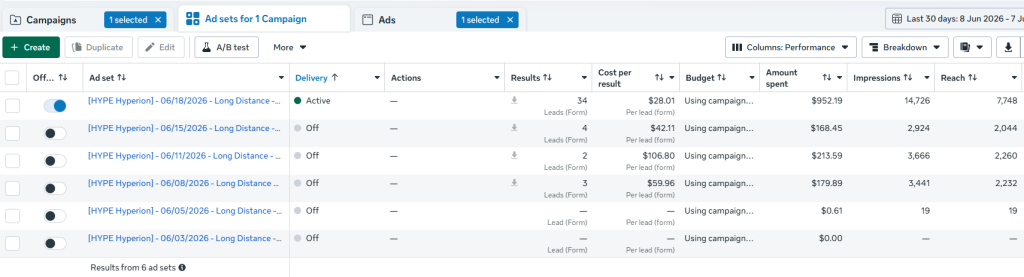
Between June 10th and July 10th, 2025, Ottawa Best Movers spent only $891.68, generating 97 qualified leads with a 22.68% conversion rate. From these leads, 22 jobs were successfully booked, resulting in $18.9K in revenue.

When we first reviewed the campaign results in July, the company had closed 19 deals. However, after several months, their sales team managed to convert three additional jobs from the same lead pool.

🔁Why Consistency and Follow-Up Matter in Meta Lead Generation

The reason behind this improvement is simple — Facebook Ads tend to attract potential customers who are in the early stages of planning their move. By running ads consistently and maintaining communication with leads, the company stayed top-of-mind, building trust and reducing the customers’ need to keep searching for other moving services.

Authentic Video Creatives That Built Trust and Engagement

A key factor in the campaign’s performance was the creative approach. The ad creatives consisted of short, authentic videos filmed on a smartphone with minimal editing. This raw, real-life format resonated strongly with the audience, helping the ads feel more personal and relatable — an important element in service-based industries like moving.

🚀Achieving Impressive ROAS Through Simple, Scalable Strategy

After scaling the campaign and maintaining a daily budget of $30.00, the company achieved the following all-time performance:

📊 Budget: $30/day
📈 Leads generated: 486
👥 Reach: 126,328
👁️ Impressions: 513,797
🎯 Average CPL: $11.14

final results

As a result, over the 30-day campaign cycle, the campaign demonstrated impressive profitability, achieving a remarkable ROAS of 21.22x.

💵Total amount spent: $5,415.02 for 486 real leads.

Over time, Ottawa Best Movers continued to scale their Meta Ads efforts with a consistent daily budget, maintaining efficient lead costs and steady performance.

🌱How Smart Ad Structure and Lead Nurturing Drove Long-Term Growth

This case perfectly illustrates how strategic ad consistency, simple but relatable creatives, and disciplined lead nurturing can transform Meta Ads campaigns into long-term business growth — even with a modest advertising budget.

🙌Our team proud to help local service providers like Ottawa Best Movers turn Facebook leads into loyal customers — not just once, but continuously.

Facebook Case Study #16: How Raw Videos Helped an Attic Insulation Company Close a $32K Sale

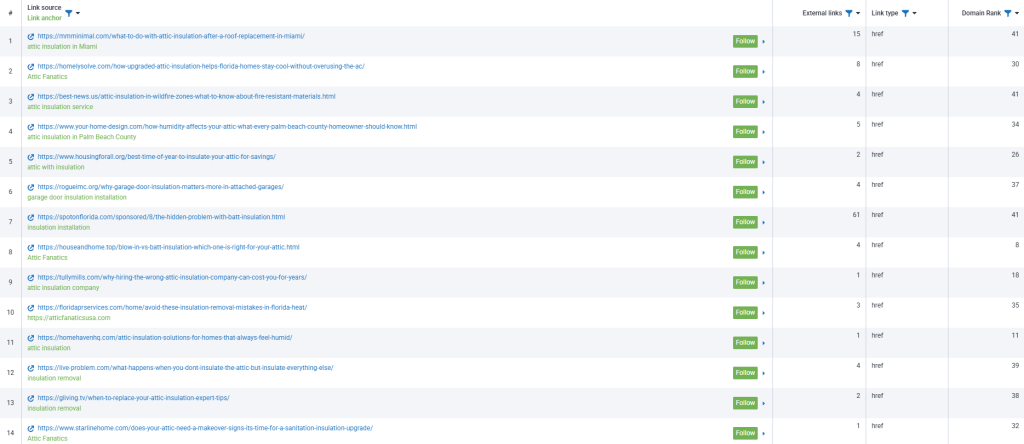
When Attic Fanatics, a Florida-based attic insulation and duct replacement company, approached HYPE Hyperion, the task was clear: generate a consistent flow of high-quality leads using Facebook Ads. The market is competitive, and the audience is demanding. So we started with a simple question — what actually makes someone request insulation?

🎥 Video creatives: Unstaged work vs. glossy production

We tested it all — photos, carousels, scripted videos with voiceovers and editing. But to our surprise, the best-performing content was the rawest one: handheld phone footage of an employee sucking out dusty old insulation with specialized equipment.

No script. No actors. No editing, almost.

Just short, fast-paced clips showing the real process of removing and replacing attic insulation, with some funky background music. That’s it.

This type of video quickly outperformed all others in attention retention, click-through rate, and most importantly, lead conversion. Why? Because it looked real. People on Facebook are tired of “perfect” ads. But here — a dusty attic, the sound of real equipment, and real work. It felt honest and relatable — and that builds trust.

📋 Simple Form, Better Leads

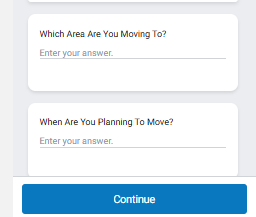
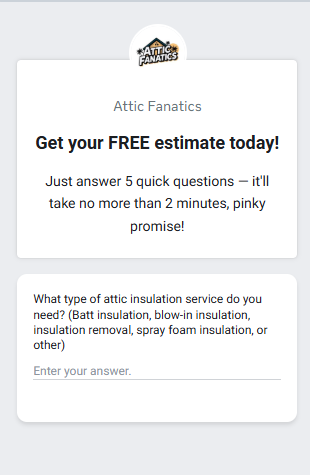
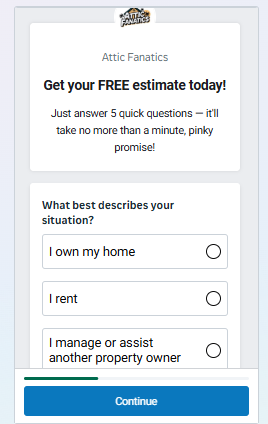
We used a concise lead form with only a few essential questions — like the type of insulation service needed — and contact details. This helped streamline the experience and reduce friction on mobile.

Even without advanced filters or qualification logic, this approach worked remarkably well:

✅ The shorter form increased submission rate
✅ Collected clean, structured data for the sales team
✅ Connected directly to our CRM and booking flow

Sometimes, less is more — and in this case, a well-crafted but minimal form helped move people through the funnel faster.

⚙️ CRM and calendar: Automation via GoHighLevel (Lead Connector)


To streamline everything, we used the built-in Lead Connector CRM within GoHighLevel. Right after someone filled out the form, the system:

📤 Automatically added the lead to the database
📩 Triggered email/SMS notifications
📅 Allowed the user to pick a time for their estimate via online calendar

In practice, this gave us several big wins:

🕒 Clients booked appointments themselves — no back-and-forth calls.
🔔 Auto-reminders improved show-up rates.
💬 All communications were handled inside the CRM — from initial contact to post-visit follow-up.
🚫 Didn’t choose a time? The lead stopped there. Booked one? They were ready to meet our technicians.

💵 The $32,480 deal: How one lead turned into a major sale

One of the leads we got through this video started as a basic insulation request. During the visit, the client also asked about full duct replacement. The manager offered a bundle on the spot, and the client agreed.

Here’s what the deal looked like:

The client paid in two 50% installments, both within a month. No delays. No discounts. Just a clean, high-value sale.

🔄 Why this strategy worked
The real power of this campaign came from the combination of:

Each element supported the others. Remove just one — and performance would’ve dropped significantly. Together, they turned attention into real meetings and real revenue.

📈 What you can apply to your own business
If you work in home services — insulation, HVAC, plumbing, roofing — you don’t need a big production budget. Just show the work. Don’t worry about the mess. Honesty and transparency are what win attention today.

Ask one smart question to protect your team’s time.
And automate the process — calendar, reminders, CRM — to make every step smoother and more scalable.

✅ Why This Campaign Worked

The Attic Fanatics case shows that even in B2C services, a smart and honest approach beats flashy creative. All it takes is a clear message, a simple system, and the understanding that behind every “lead” is a real person — someone who just wants a warmer, quieter, better home.

And for everything else — HYPE Hyperion is here to help.

GoHighLevel — The Best CRM System for Local Businesses 🚀

Why GoHighLevel Is the Best CRM for Small and Medium-Sized Businesses (SMBs)

In the fast-paced world of local business, juggling lead generation, follow-ups, appointment scheduling, client communication, and reporting can feel overwhelming. Most business owners use a patchwork of tools — a CRM here, a calendar tool there, some email automation, and maybe even a funnel builder. But when systems don’t talk to each other, leads fall through the cracks, team members get confused, and growth slows down.
This is where GoHighLevel changes the game.

GoHighLevel is an all-in-one CRM and marketing automation platform built specifically for small and mid-sized service-based businesses — from med spas and roofers to consultants and digital agencies.

🧠 Built for Growth-Oriented Local Businesses

What sets GoHighLevel apart is that it’s not just for tech companies or big enterprises. It was designed with local business operations in mind. Whether you run a fitness studio, a plumbing company, or a lash salon — you’ll find GoHighLevel intuitive, powerful, and directly aligned with your needs.

Let’s break down why it works so well for SMBs.

🚀 1. Centralized Dashboard = Total Visibility

Most CRM systems are either too simple to be useful or so complex that no one on your team uses them properly. GoHighLevel offers the perfect balance.

  • See your lead flow, calendar, sales pipeline, conversations, and campaign performance in one place.
  • The sidebar menu is intuitive, so even your least tech-savvy staff can jump in and get to work.
  • You can assign leads and tasks, monitor deal progress, and keep an eye on everything without switching tools.

🔄 2. “Opportunities” Pipeline: Track Sales in Real Time

One of GoHighLevel’s most powerful features is the Opportunities dashboard — a visual Kanban-style board where every lead is shown in a specific stage of your sales funnel.

Whether it’s:

  • New inbound leads from Facebook ads
  • Booked appointments from your calendar
  • Nurtured contacts waiting for a follow-up
  • Closed-won clients or cold leads

You’ll know exactly what’s happening at each stage and who’s responsible. This makes it nearly impossible to forget follow-ups or lose leads.

📥 3. Smart Lead Capture and Nurturing (Automation-Ready)

GoHighLevel lets you create custom intake forms, landing pages, and funnels that are connected directly to your CRM. But it doesn’t stop at collecting contact info.

From the moment a lead opts in, you can:

  • Send instant SMS or email confirmations
  • Trigger automated follow-up sequences
  • Add them to a nurturing campaign
  • Assign the lead to a team member
  • Even send internal notifications to alert your staff

This automation doesn’t just save time — it ensures no one gets ignored and you close more deals faster.

🗓️ 4. Integrated Calendar with Automated Reminders

Tired of playing phone tag or having clients ghost your appointments? With GoHighLevel, you can:

  • Embed custom calendars on your website
  • Allow prospects to book time directly based on your availability
  • Automatically send reminders via SMS and email
  • Sync everything with Google Calendar

No need to pay for Calendly or third-party tools — it’s built in and fully connected to your lead flow.

📊 5. Reporting That Actually Helps You Grow

GoHighLevel offers built-in reporting on:

  • Lead sources and conversions
  • Campaign performance
  • Pipeline value and closed revenue
  • Staff productivity and lead response time

You’ll gain real insights into what’s working and what’s not — and make smarter decisions based on real data.

🔧 6. White-Labeled for Agencies (Bonus)

If you’re a marketing agency or consultant, GoHighLevel offers full white-labeling, meaning:

  • Your clients see your branding
  • You can resell the CRM under your name
  • Set up client portals, sub-accounts, and revenue streams — all under one system

This is one of the reasons HYPE Hyperion, a leading digital marketing agency, uses and recommends GoHighLevel for both client success and backend efficiency.

🔒 7. Built-In Messaging and Reputation Management

No more switching between Gmail, Facebook Messenger, and SMS. With GoHighLevel:

  • You get a unified inbox to handle all conversations
  • Automate replies to FAQs
  • Send review requests and manage Google reviews
  • Stay compliant with opt-in/opt-out laws

This is crucial for local service businesses where missed messages = missed revenue.

💰 Why Local Businesses Should Switch to GoHighLevel

Here’s the honest truth:

Traditional StackMonthly Cost
CRM (e.g. HubSpot)$50–$300
Email marketing (Mailchimp)$40+
SMS tool (Twilio)$10+
Booking system (Calendly)$12–$29
Funnels (ClickFunnels)$97+
Review management$20+
TOTAL$200–$500+

With GoHighLevel, you get everything in one place starting at under $100/month — and with far deeper automation and client tracking.

🧠 Ready to Stop Losing Leads and Start Growing Smarter?

Running a business is hard enough. Don’t let disorganized tools and poor follow-up cost you money.

GoHighLevel empowers small and medium businesses to:

  • Convert more leads
  • Stay organized
  • Automate follow-ups
  • Close deals faster
  • Scale without hiring extra staff

And with HYPE Hyperion’s expert onboarding and campaign strategies, you’re not just buying a CRM — you’re getting a partner in growth.

👉 Try GoHighLevel with the experts at HYPE Hyperion