Facebook Ads for Construction Company: Real Insight of $18 SoCal Seismic Story
Running contractor ads in Los Angeles is expensive, and the market does not give you enough room for lazy and generic messaging. Ads for contractors become even harder when you are targeting homeowners aged 25+ in one of the most competitive paid traffic markets in the country, especially when you are trying to reach LA homeowners who have already seen every “trusted local contractor” ad under the sun.
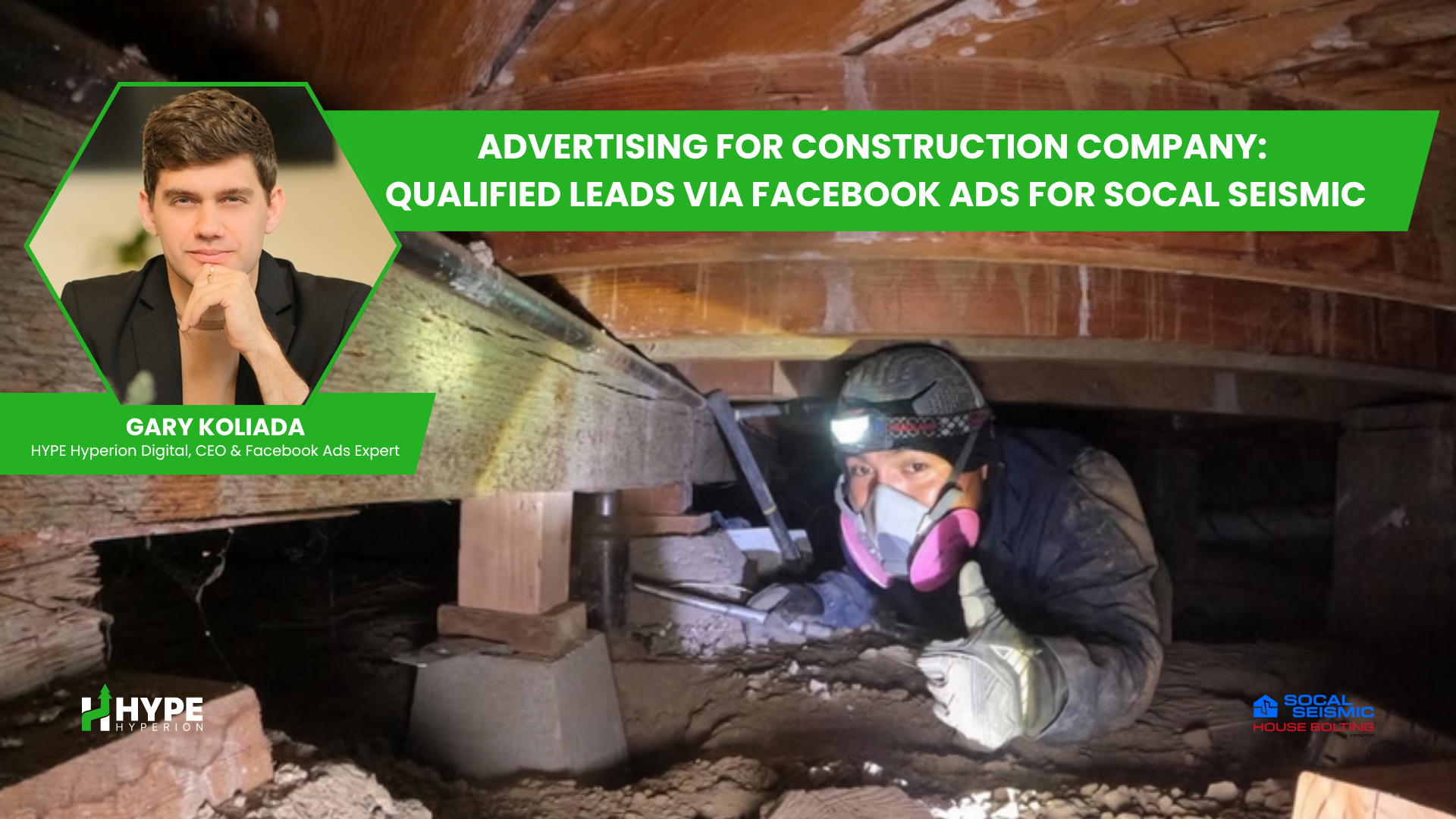
HYPE Hyperion Digital took over a local lead generation campaign for SoCal Seismic in Los Angeles, California. The goal looked simple from the outside: generate more foundation repair and earthquake retrofit leads at a lower cost.
But this case study had a bigger lesson hiding inside the numbers. A low cost-per-lead can be a trap.
At one point, we brought the campaign down to a $17 CPL, which looked amazing on paper. The problem was that the leads were poor quality and were not converting downstream for the sales team. So the real win was not getting the cheapest possible lead. The real win was finding the balance: a stable $18 CPL with qualified homeowners who actually had real structural concerns and were much more likely to turn into paid work.
🏢The Client and the Reality of Advertising for Construction Company Brands
🔍Who is SoCal Seismic?
SoCal Seismic is a Los Angeles foundation and seismic retrofit company specializing in professional earthquake retrofitting, foundation inspections, and structural repair work. They work with different foundation types and serve property owners who need more than a quick handyman fix. Their projects are high-ticket, technical, and often tied to serious home safety or property value concerns.
They are also positioned around specialized Earthquake Brace & Bolt services, which help California homeowners protect their properties and potentially secure state grant support for qualifying retrofit work. That matters because this is not a casual service where someone clicks an ad because they are mildly curious. The right lead is usually a homeowner with a visible issue, a real inspection concern, or a time-sensitive reason to act. So our campaign could not chase cheap clicks. It had to attract serious property owners with real structural problems.
⚠️The Industry Scare-Tactic Trap
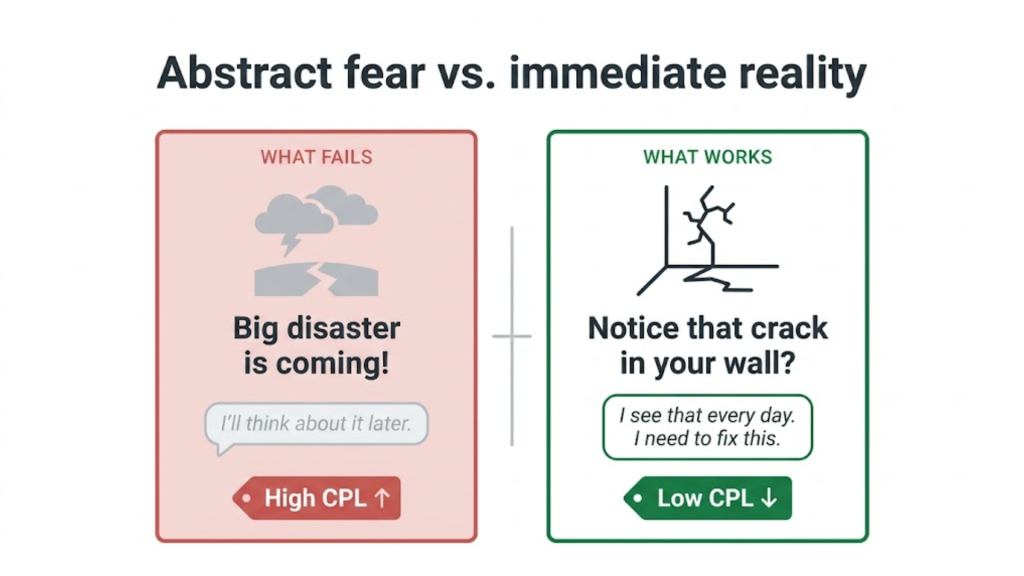
Most foundation and seismic companies in California lean heavily on fear. They talk about massive earthquakes, future disasters, and what could happen if a homeowner does nothing. That angle feels obvious because earthquake retrofitting is connected to safety, but obvious does not always mean effective.
In modern Meta ads, fear-based messaging can easily turn into background noise. People in Los Angeles already know earthquakes exist, and many have learned to emotionally block out that stress because it feels too big, too distant, or too uncomfortable to think about every day. When an ad leads with an invisible future disaster, homeowners often skip it instead of acting on it. That is why fear-based ads can spend money quickly without giving the sales team leads they can actually work with.
🏚️Why Visual Damage Defeats Invisible Fear
📉The Initial Test ($113 CPL Failure)
The first test launched with two video creative angles running at the same time. One video focused on abstract earthquake risk, while the other showed visible home issues like wall cracks, uneven floors, and signs that something might already be wrong with the foundation. The goal was to see whether homeowners would respond more to future fear or present damage.
Video Ad Example:
The results were clear. The earthquake angle produced zero leads, while the visible damage creative did all the work. Even then, the campaign was still expensive, starting at $113.47 CPL with only 3 leads. That told us the account had a signal, but the message was not sharp enough yet. Homeowners were not responding to broad earthquake fear; they were responding to problems they could physically see in their own homes.
👀What We Can See
This happened because people react faster to what feels immediate. A future earthquake is scary, but it is also abstract. A crack in the wall, a sloping floor, or a door that suddenly stops closing properly is much harder to ignore because the homeowner sees it every day.
That is present bias in action. People tend to prioritize the problem right in front of them over a possible problem that might happen later. For this campaign, that meant the creative had to focus less on “what if an earthquake hits?” and more on “what is already happening inside your house?” The visible damage angle gave homeowners a concrete reason to stop, click, and ask for help.
🚨The Emergency Pivot to the “Buy & Sell” Roadblock Segment
🔄Urgent Strategy Shift
After the $113 CPL launch, the account needed a sharper entry point. We did not cut the cost in half by changing Meta interest targets or trying to build some overly complicated audience stack. The real shift came from changing the message and introducing a new reason someone would need help right now.
That new angle focused on homeowners involved in a property transaction. These were people trying to buy or sell a house, but a foundation issue had become a roadblock. This gave the campaign a stronger sense of urgency because the problem was no longer just about maintenance. It was about a deal, a timeline, and money being stuck until the structural concern was handled.
💰The Real Estate Value Trigger
The buy/sell angle worked because it spoke to a different kind of motivation. Some homeowners do not act on foundation issues when the only message is about long-term protection. But when a home inspection flags cracks, settling, or possible foundation movement during a sale, the issue suddenly becomes immediate.
That homeowner is not casually browsing. They may be trying to save a closing, avoid losing a buyer, negotiate repairs, or protect the value of the property. By positioning SoCal Seismic as the solution to a real estate deal getting blocked, the campaign unlocked a highly motivated segment. This helped bring CPL down to $56.98 with 10 leads because the ad was now speaking to people with both a structural problem and a financial reason to solve it quickly.

🎯The Quality Filter: Finding the Performance Sweet Spot in Facebook Ads for Contractors
⚠️How Direct Pain-Point Videos Backfired on Quality
Once the visible damage and buy/sell angles started working, we pushed the creative even harder. We launched more direct pain-point videos around warning signs getting worse and the risk of buying or selling a home with foundation issues. The CPL dropped sharply to $17.83 across 12 leads, which looked like a big win at first glance.
But the sales feedback told a different story. The leads were cheaper, but low cost does not help much when the sales team is stuck chasing unserious prospects. This is one of the most important lessons in advertising for construction company campaigns: low CPL does not always mean healthy performance. If the leads are not serious, qualified, or ready for the service, then the campaign is just creating a different kind of waste. The client pays less per lead, but the team loses time chasing people who were never likely to become customers.
📝How Too Much Form Friction Killed Volume
To fix the quality issue, the next move was to add more filtering inside the lead form. We updated the form with two multiple-choice qualifier questions so the campaign could better separate serious homeowners from weak inquiries. In theory, this made sense because the sales team needed better context before spending time on each lead.
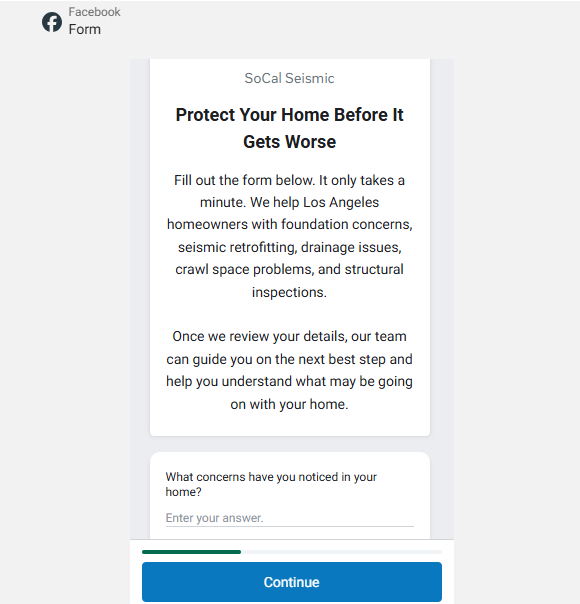
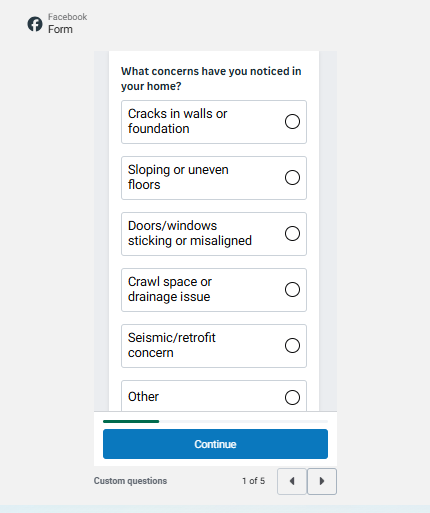
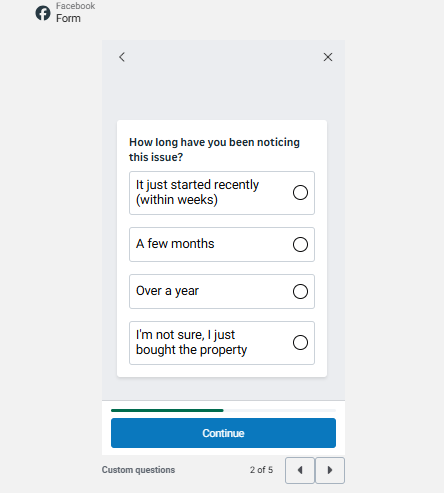
The filter worked, but it worked too aggressively. Lead quality improved, but the form became too heavy for users to complete. That extra friction caused volume to drop and pushed CPL up to $86.40 with only 2 leads. This showed us that qualification is important, but too much qualification too early can kill the campaign’s momentum. The form has to filter the noise without making real buyers feel like the process is too much work.
✅Trimming the Lead Form to One Specific Issue Question
The final adjustment was simple but important. We removed one of the multiple-choice questions and kept only one specific qualifier about the homeowner’s actual issue. That gave us the filter we needed without making the form feel heavy.
This one-question setup created the right balance. It helped remove low-intent leads while still allowing serious homeowners to move through the form quickly. The campaign settled at $18.48 CPL with 5 genuinely qualified leads, which was far more valuable than the earlier $17 CPL with weak lead quality. This became the performance sweet spot: low enough to scale, but qualified enough to support real sales conversations.
📊What a Healthy Lead Engine Looks Like
This is what the actual campaign results look like in the ad account.
The campaign started at $113.47 CPL with 3 leads across two video angles. The earthquake-risk angle brought in no leads, while the visible cracks and uneven floors angle carried the test. That first result showed us that homeowners were not reacting to abstract fear. They were reacting to damage they could already see.
After refining the angle and adding the buy/sell roadblock message, CPL dropped to $56.98 with 10 leads. This was the first major improvement because the campaign now had two stronger reasons for homeowners to respond: visible foundation concerns and property transaction pressure.

Then the creative push dropped CPL all the way to $17.83 with 12 leads, but the quality was not there. That was the trap. A cheaper CPL looked good in the ad account, but the leads were not converting well enough for the sales team.
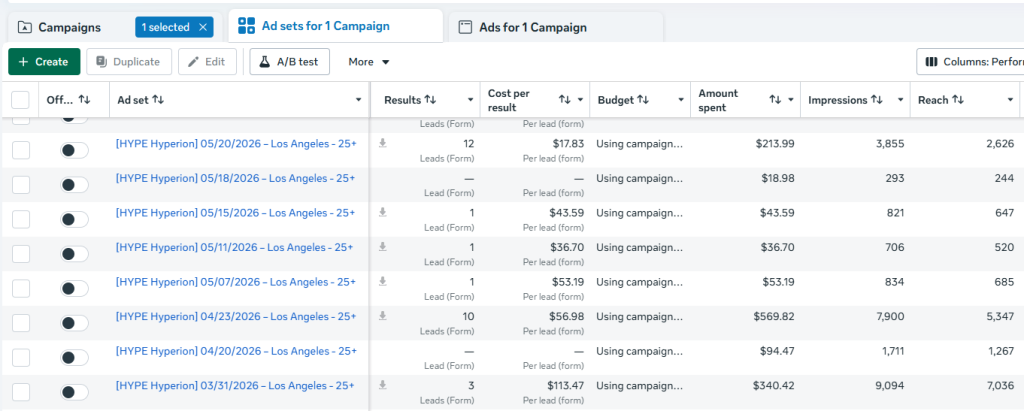
The first form update tried to fix quality with two qualifier questions, but it went too far. CPL jumped to $86.40 and volume dropped to only 2 leads. The final version removed one question and kept only the most important issue-based qualifier, bringing the campaign to a current CPL of $18.48 with qualified leads that actually convert.

That is what a healthy lead engine looks like:
| Starting CPL | $113.47 (3 leads — two video angles) |
| After angle refinement | $56.98 (10 leads — cracks + buy/sell) |
| After creative push | $17.83 (12 leads — low quality) |
| After form update | $86.40 (2 leads — form too heavy) |
| Current CPL | $18.48 (5 leads — quality leads, 1 MCQ) |
Not the absolute cheapest number. Not the highest volume. Not the most complicated setup.
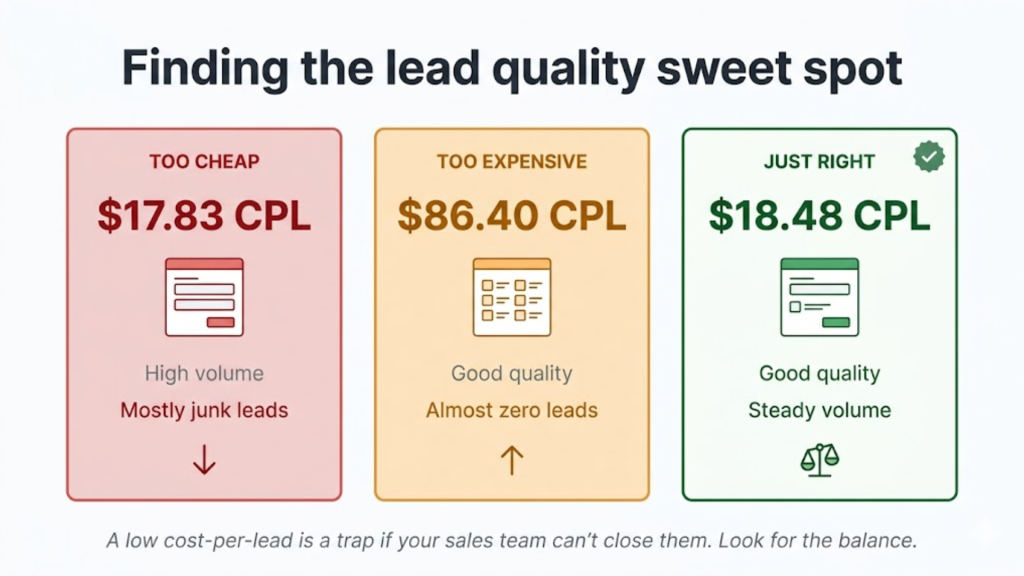
A healthy campaign produces leads that are affordable, qualified, and useful for the sales team. For SoCal Seismic, the winning formula came from visible-problem creative, a smart buy/sell angle, and one precise lead form question that filtered out noise without scaring away real buyers.
A big thank you to SoCal Seismic for trusting HYPE Hyperion Digital to navigate one of the most competitive construction markets in Los Angeles. This campaign is a strong reminder that in high-ticket contractor advertising, the goal is not just cheaper leads. The goal is qualified opportunities that can actually turn into revenue.