Top Things to Get Right Before Launching a Facebook Lead Generation Campaign for a Moving Company
A successful Facebook lead generation campaign does not start when you hit the Publish button. For a moving company, the work that happens before launch can have just as much impact on the final result as the budget, targeting, or ad itself.
Good moving company marketing starts with preparation. Before putting money behind a lead generation campaign, you need to understand the market, know what you are testing, decide what happens when a lead comes in, build an offer worth responding to, and make sure your form filters the right prospects.
Here are five things to get right before spending the first dollar.
Research the Market Before You Build Anything
Before creating a single ad, look at what other moving companies are already putting in front of the same audience. Competitor research gives you a much better starting point because you can see which messages, offers, formats, and positioning are already common in the market.
The Meta Ads Library is one of the easiest places to start. Search for moving companies in the markets you want to target and look beyond the first few ads you find. Pay attention to campaigns that have been running for a long time. An ad that has stayed active for months may be giving you a useful clue about what the advertiser believes is worth continuing to spend money on.
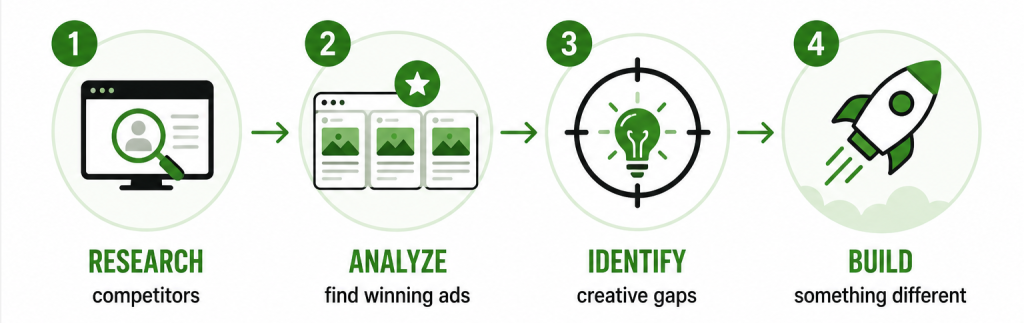
The goal is not to copy those ads. It is to understand what your audience is already seeing so your creative strategy can find a better way to stand out.
What to Look for in Competitor Ads
- Creative format: Are competitors using images, videos, carousels, or a mix?
- Messaging angle: Are they focusing on trust, price, speed, safety, convenience, or another concern?
- Offer: What are they giving the customer a reason to respond?
- CTA: What action are they asking people to take?
- Video length: If they are using video, how quickly do they get to the main point?
- Campaign longevity: Which ads appear to have been running for an extended period?
You are not looking for one competitor to copy. You are looking for patterns. Once you understand what the market is already saying, it becomes much easier to find something your ads can say differently.
Launch With at Least Three Creatives That Actually Test Something Different
Launching three ads does not automatically mean you are running a meaningful creative test. If all three ads use the same message, same structure, and same offer with slightly different images, you may end up learning very little about what actually drives a response.
Good creative testing requires meaningful creative variation. The ads should differ enough that you can understand whether the audience responds better to one angle, format, length, or style of communication.
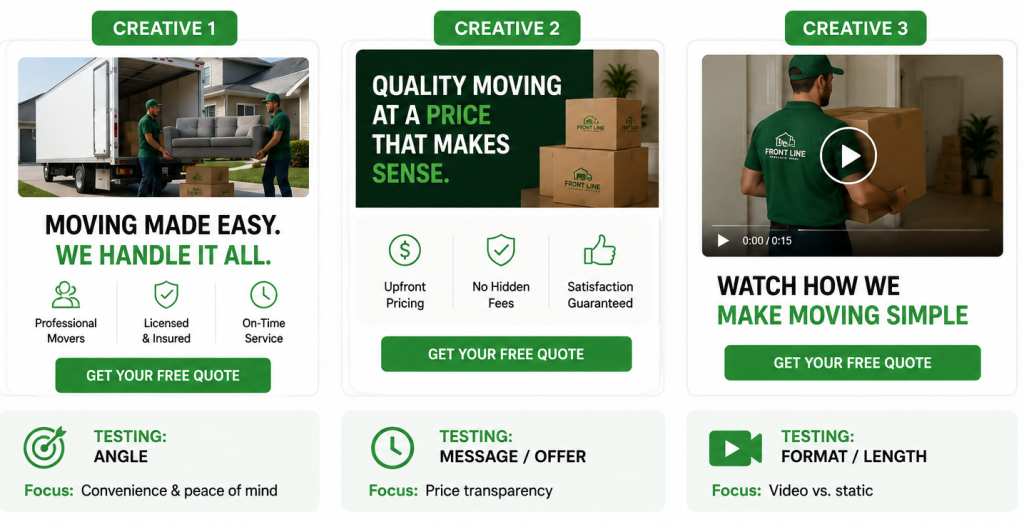
This also gives the Meta algorithm more useful signals to work with. Instead of making tiny changes and treating each one as a new test, you can give the campaign genuinely different creative options and use the results to guide future campaign optimization.
| Creative Variation | What Changes | What You Can Learn |
| Angle | The reason someone should care | Which customer motivation gets the strongest response |
| Length | Short vs. longer messaging or video | How much information the audience needs before taking action |
| Format | Image, video, carousel, etc. | Which format communicates the offer most effectively |
| Ad Copy | Hook, body copy, headline, or CTA | Which message creates the strongest response |
The important part is not simply having three ads live. It is making sure each one gives you something different to learn.
Set Up the Lead Flow Before Spending the First Dollar
Getting a lead is only the beginning. What happens in the minutes after someone submits the form can determine whether that lead turns into an actual sales conversation.
Before launching, map the entire process from submission to follow-up. Where does the lead go? Who gets notified? How quickly does someone call? What happens if the person does not answer? These questions should have answers before the campaign starts, not after the first leads begin coming in.
A strong lead follow-up system should connect the Facebook form to the company’s CRM, trigger an immediate notification, and give the sales team a clear process for contacting and following up with the prospect. CRM automation can handle much of the process in the background, but the sales team still needs to know exactly what happens next.
Pre-Launch Lead Flow Checklist
- 📥 Confirm where Facebook leads are being delivered.
- 🔗 Test that every submission reaches the CRM correctly.
- 🔔 Confirm who receives the lead notification. ⏱️ Set a clear target for lead response time.
- 📞 Make sure the sales team knows how the first call should be handled.
- 🔄 Create a follow-up process for leads who do not answer.
- 🧪 Test the entire flow before spending real ad budget.
A campaign can generate affordable leads and still produce poor business results if those leads sit untouched for hours. The ad gets the opportunity. The follow-up process determines what happens with it.
Build the Offer Before You Build the Ad
The offer should not be something added to the ad after the creative is already finished. It should help shape the message from the beginning.
For a moving company, the right offer can reduce some of the uncertainty that comes with hiring movers. A customer may be worried about cost, pricing surprises, storage, or simply whether booking now is the right decision. A useful moving company offer gives them a concrete reason to take the next step.
Some examples include:
- 📦 Free moving boxes: Gives customers an immediate practical benefit and reduces one of the smaller costs associated with moving.
- 💰 Guaranteed pricing: Addresses the fear that the final bill will be significantly different from what was originally quoted.
- 🏠 Free storage for the first 30 days: Helps customers who have a gap between leaving one property and moving into another.
- ⏰ Discounts tied to booking lead time: Gives customers a reason to plan earlier while creating urgency around the booking decision.
The offer does not need to be complicated. It needs to solve a concern the customer already has.
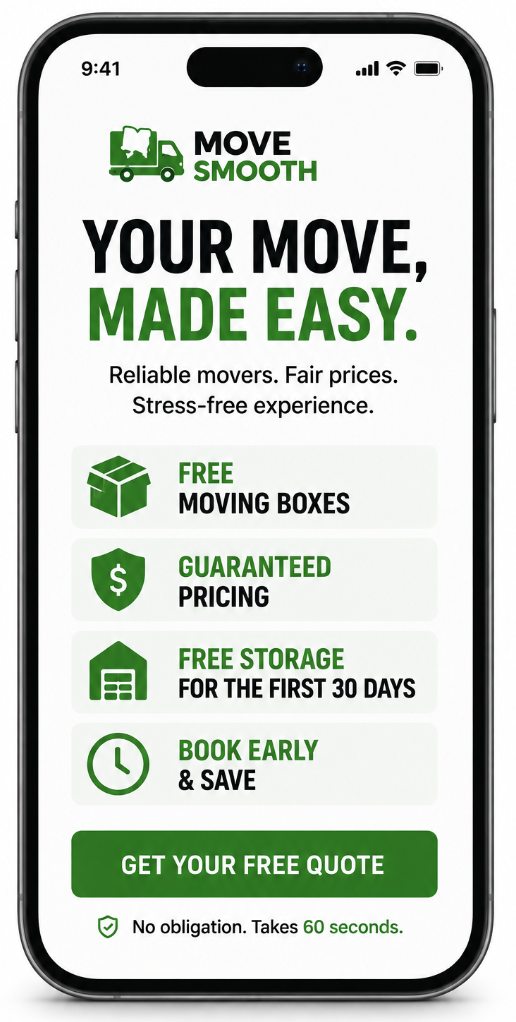
A free moving estimate, for example, can make the first step feel easier because the customer can start the conversation without committing to a move. The important thing is to decide what the offer is trying to accomplish before building the creative around it.
Build the Lead Form to Qualify, Not Just Collect
A form with a high submission rate is not necessarily a good form. For a moving company, the real question is whether the people submitting it actually fit the service. Someone looking for a local move is not necessarily valuable to a campaign built around long-distance relocation. Someone planning to move sometime next year may not have the same urgency as someone moving within the next few weeks.
The form should therefore collect enough information to help identify the right prospects without turning into a long questionnaire. Every question should have a reason for being there.
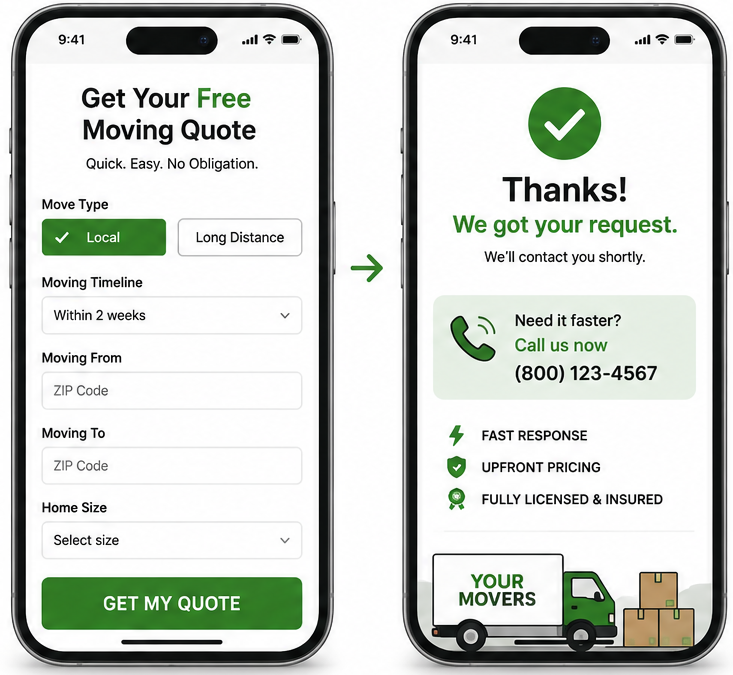
Ask Questions That Reveal the Type and Timing of the Move
Start with the information that tells you what kind of move the person is planning and when it is likely to happen.
For example, asking whether someone is planning a local or long-distance move can help separate the prospects who match the campaign’s service focus. Asking about the moving timeline gives the sales team a better idea of whether the inquiry represents an active opportunity or someone who is only researching.
The point is not to ask everything you possibly can. It is to ask the questions that help determine whether the person is worth a sales conversation right now.
Collect Enough Information for the First Sales Call
Destination or relocation area and property size can give the sales team useful context before the first call. Knowing where the customer is moving and how large the current property is can help the team understand the potential scope of the job and make the first conversation more productive.
These questions can also be structured carefully around Meta’s lead-form restrictions. The goal is to collect useful information without creating unnecessary friction or asking for details in a way that causes the form to become difficult to complete.
A good form should leave the sales team with enough information to understand who they are calling, while still feeling quick and straightforward to the person submitting it.
Use the Confirmation Page as Another Conversion Opportunity
The confirmation page should not be treated as the end of the lead-generation process.
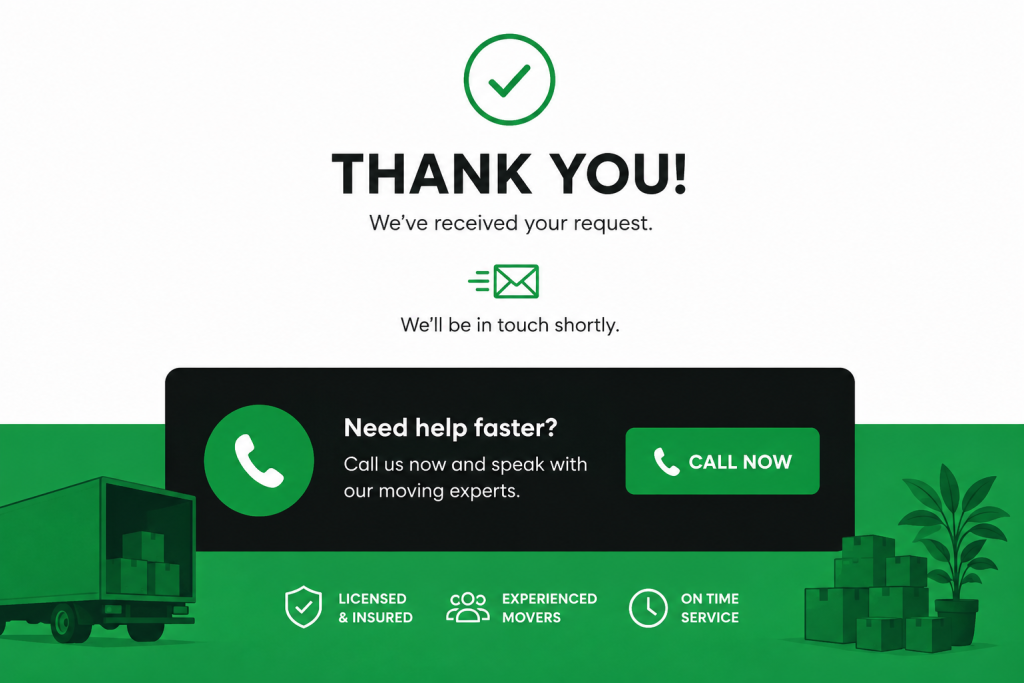
Someone who has just completed a form has already shown a level of interest. That makes the confirmation screen another opportunity to encourage immediate action, such as inviting the prospect to call the company directly for faster assistance.
This is especially useful in the moving industry because a person requesting a quote may also be contacting other companies. If the confirmation page gives them a clear next step while their intent is still high, the business has another chance to start the conversation immediately.
| Lead Form Field | What It Helps You Understand | How Sales Can Use It |
| Move Type | Local or long-distance relocation | Confirm whether the lead fits the service |
| Moving Timeline | How soon the customer expects to move | Prioritize active opportunities |
| Destination / Relocation Area | Where the customer is moving | Understand the scope and logistics |
| Rooms / Bedrooms | Approximate size of the move | Prepare for the likely job size |
| Confirmation Page | Whether the prospect takes another action | Encourage an immediate call or next step |
The best form is not necessarily the one that produces the most submissions. It is the one that gives the sales team useful information without creating enough friction to drive good prospects away.
The Pre-Launch Checklist for a Moving Company Facebook Campaign
Before putting budget behind a moving company campaign, make sure the basic pieces are already in place.
- 🔎 Research the market: Review competitors, their creative angles, offers, CTAs, and active campaigns.
- 🎨 Prepare meaningful creative tests: Launch different angles, formats, lengths, or copy variations instead of cosmetic changes.
- 🔗 Test the lead flow: Make sure leads reach the CRM, notifications work, and the sales team knows how quickly to respond.
- 🎁 Define the offer: Give customers a clear reason to take action before building the ad around it.
- 🎯 Qualify the leads: Ask only the questions needed to identify the right move type, timeline, destination, and job scope.
- ✅ Use the confirmation page: Give high-intent prospects another way to take action immediately after submitting the form.
The biggest mistake is treating these as things to fix after launch. Every lead generated before the system is ready is money spent learning something that could have been prepared beforehand.
For a moving company, the goal is not simply to launch a Facebook campaign. It is to launch a campaign with the creative, offer, lead form, and follow-up process already working together. That preparation gives the campaign a much better chance of turning ad spend into actual moving jobs.