How Better Ad Creative Reduced Lead Costs for Ottawa Pro Movers

How We Dropped Moving Leads Cost From $132 to $16

Advertising for movers can get expensive fast, especially when every local company is fighting for the same customers, the same high-income areas, and the same moving-season demand. In this case study, we are breaking down how HYPE Hyperion Digital took a moving campaign from a painful $132 CPL to $16.58 by changing the creative strategy, not by constantly touching the audience settings.

This campaign was especially interesting because it was launched in the Canadian market, where we do not traditionally have too many clients. That made the test more valuable because we were not just proving the strategy in a familiar market. We were seeing if it could hold up in a competitive, expensive market where we had less historical data to lean on.

The campaign was also targeting high-income areas around Ottawa and Gatineau. That matters because this type of audience is usually more expensive to reach, harder to impress, and much less likely to respond to basic “we are reliable” advertising. These people have seen plenty of moving ads before, so the creative had to do more than just look professional.

🚚 Meet Ottawa Pro Movers: The Local Moving Company from Canada

Ottawa Pro Movers is not built around being the cheapest moving company someone finds during a quick search. They are a premium local moving company in Ottawa built around higher service standards, proper equipment, trained crews, and safer moving experiences. Their positioning is not about winning on price alone. It is about giving customers a smoother, more controlled move where their belongings, timelines, and peace of mind are taken seriously.

That distinction mattered a lot when building the ad strategy. A premium mover cannot advertise like a budget mover because the buyer is not only comparing price. They are comparing trust, safety, professionalism, and the feeling that the company can actually handle the move without creating more stress. So the campaign had to sell a better experience, not just another moving quote.

Check our previous work with Ottawa Pro MoversHow HYPE Hyperion Helped a Moving Company Achieve Profitable Growth

⚠️ The Market Challenge

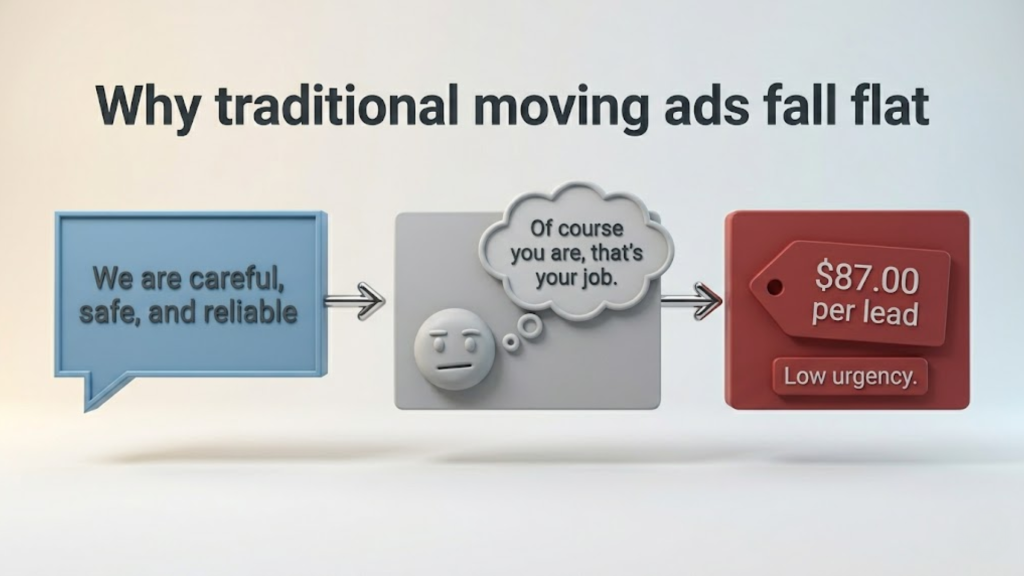
The moving industry has a framing problem. Most companies are saying the same thing with a different logo: “We are careful, we are reliable, we are fast, and your items are safe with us.” None of those claims are wrong, but they are so common that customers barely notice them anymore.

This creates banner blindness. When every ad sounds like the same company wearing a different logo, customers stop paying attention and Meta has very little strong creative signal to work with. That pushes moving companies into bidding wars where the only way to get more leads feels like spending more money. In reality, the bigger issue is often not the budget; it is the fact that the message is not giving the customer a fresh reason to stop, care, and convert.

🎯 The Golden Rule of Facebook Ads for Moving Companies: Creative Over Targeting

For the first test we wanted the data to actually mean something. We did not want to make the classic rookie-agency mistake: changing the audience, budget, offer, form, and creative all at once. The main campaign variables were kept steady so we could clearly see what was actually moving the numbers.

This is important because messy testing creates messy conclusions. If you change the audience, budget, offer, form, and creative at the same time, you cannot honestly say what caused the improvement. In this case, we wanted a clean read on one thing: the message. By keeping the media-buying setup stable, the creative became the real variable inside the experiment.

🌍 Going Wide: Why We Didn’t Touch the Audience Settings

The campaign ran on a 100% broad setup with age 30+ and zero interest targeting. There were no complicated stacks, no overbuilt homeowner interest groups, and no attempt to force Meta into a tiny audience box. We let the platform work with a wider pool while the creative did the filtering.

This matters because modern Meta campaigns are much better at finding buyers when you give the algorithm room to learn. Narrow targeting can sometimes look smart on paper, but it can also choke delivery and make lead costs rise. For a local moving company, especially in a premium market, the better move is often to go broad and let the ad itself call out the right people. The audience settings helped, but they were not the main reason this worked. The creative did the heavy lifting.

🎥 The Main Idea: The Video Does the Targeting For You

The first three seconds of a video ad do more targeting than most people realize. A strong hook instantly tells the right person, “This is about your problem,” while everyone else keeps scrolling. That is why the script, opening line, visual pace, and emotional angle matter so much.

For this campaign, the winning creative did not try to impress everyone. It spoke directly to people who had either experienced a stressful move before or were afraid of hiring movers and still having to manage the whole process themselves. That kind of message naturally filters for higher-intent prospects because it is specific. The right viewer feels understood, and that is when a lead form starts to feel like the next logical step instead of an interruption.

📈 Burning Cash vs. Generating Cheap Moving Leads: The 5-Week Timeline


💸 Phase 1 ($132 CPL): The Heavy Cost of “Ego-Marketing” and Narrow Hooks

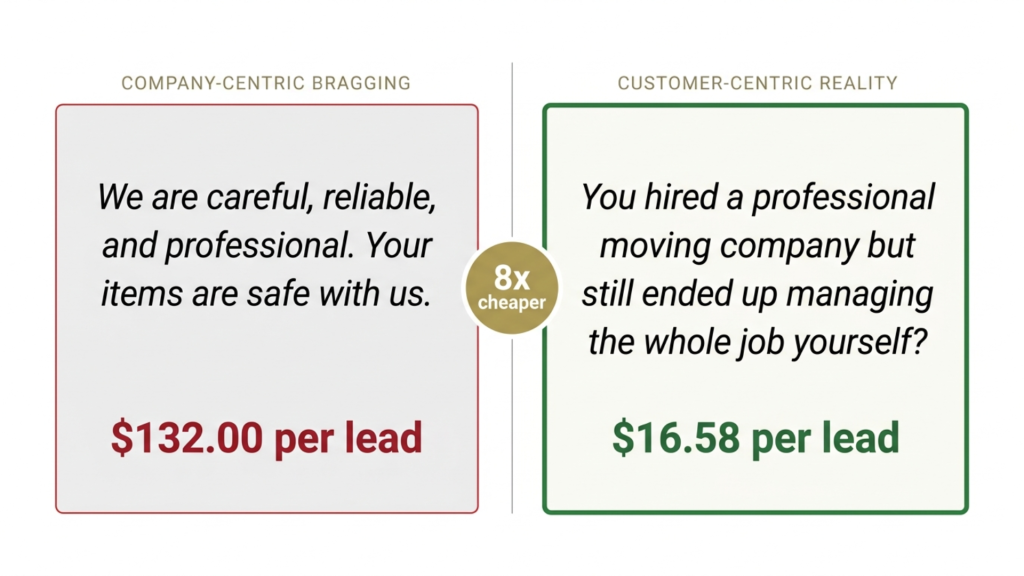
The campaign started with two videos. One focused on moving delicate antique pieces, while the other was a more standard corporate trust video built around the idea that the company was careful, reliable, and professional. Both angles were company-centric. The ads were basically saying, “Look at us,” while the customer was thinking, “But will my furniture survive the move?”

That created a weak starting point. The antique angle was too narrow, and the trust angle sounded too similar to what every other moving company already says. Instead of giving Meta one clear, emotionally sharp message to optimize around, the budget was split between two weak creative directions. The result was a painful $132 CPL.

132$ CPL Video Example:


🤝 Phase 2 ($90 CPL): The Consolidated Trust Trap

After that, we stopped splitting the budget between two weak directions and gave the Trust/VIP video a cleaner test. This helped the campaign slightly because the algorithm had a clearer path, but the message itself was still not strong enough.

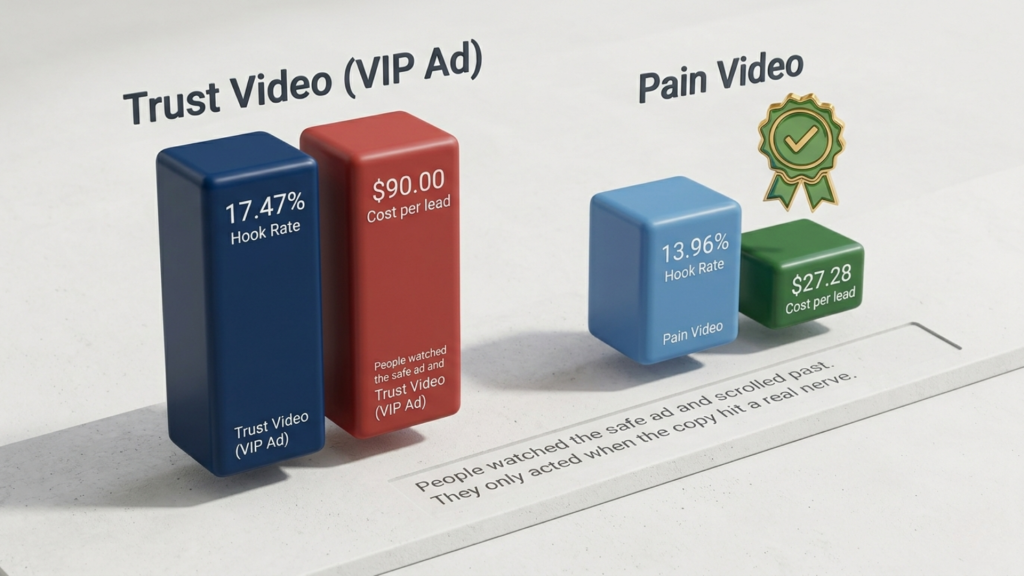
This is where the trap became obvious. The trust video was not a bad-looking ad, and it even had the strongest hook rate in the account at 17.47%. People were watching it, but watching is not the same thing as converting. The angle was still asking customers to believe the company’s claims instead of speaking to what they had actually felt during a stressful move, which kept CPL around $90.

😱 Phase 3 ($27 CPL): Flipping the Script to the Customer’s Nightmare

This was the turning point. We moved away from the “we are amazing” angle and went straight to the real pain: paying movers and still becoming the unpaid project manager of your own move. That worked because it was not about the company anymore; it was about the frustration the customer already understood.

The account reacted almost immediately. The pain-based video generated 15 leads at $27.28 CPL in its first run without needing a long optimization window. That was around 69% cheaper per lead compared to the trust angle. The difference was not that the audience suddenly changed; the message finally matched the buyer’s real concern.

🏆 Phase 4 ($24.67 CPL): The Pain-Point Elimination Bracket

After the pain angle started working, the next step was not to reinvent everything again. We looked at the two pain-point video variants and compared the performance gap between them. One version was clearly doing a better job of turning attention into leads.

24$ CPL Video Example:

So we deactivated the weaker asset and moved the budget into the stronger creative. This helped stabilize the lead flow because Meta was no longer spreading spend across a lower-performing variation. It was a simple clean-up sprint, but it mattered. Once you find the message that works, the next job is to remove anything that slows it down.

🚀 Phase 5 ($16.58 CPL): The Setup That Cracked the Meta Algorithm

The final breakthrough came when we stopped treating pain and trust like two competing ideas. Instead of choosing between pain and trust, we used them together in a simple sequence. The pain video became the main hook because it stopped the scroll and made the prospect feel understood first.

Then we brought back trust, but in the right role. A re-edited, faster-paced trust video with fresh captions worked as a secondary validator instead of the lead message. That made all the difference. Trust finally helped the campaign, not because it grabbed attention, but because it reduced doubt after the pain angle had already pulled the right people in.

🧠 Why Pain Beats Bragging in Advertising for Movers

Trust is not a bad message, but it is not a strong hook by itself. In the moving industry, trust is a baseline expectation. Customers already assume a moving company should be careful, professional, and reliable because that is the minimum requirement for being hired.

Pain works differently because it connects to memory. If someone has had a bad moving experience before, they remember the stress, the delays, the broken promises, and the feeling of having to manage everything themselves. A pain-first message validates that experience instead of asking the customer to believe another polished claim. That is why the trust angle got attention but the pain angle got action.

🔗 The Hook-and-Seal Rule

The winning formula was not “pain only” or “trust only.” It was the sequence. Pain was used as the hook because moving day is full of anxiety, pressure, and fear of things going wrong.

Once the pain message got people to stop, trust helped them feel safe enough to take the next step. That is where the VIP positioning, professionalism, equipment, and reliability became useful because the prospect was already emotionally engaged. In simple terms, pain made them stop, and trust made them feel safe enough to submit the form. When those two ideas were placed in the right order, the campaign finally had both attention and conversion power.

💰 Show Me the Money: What the Final Results Actually Look Like

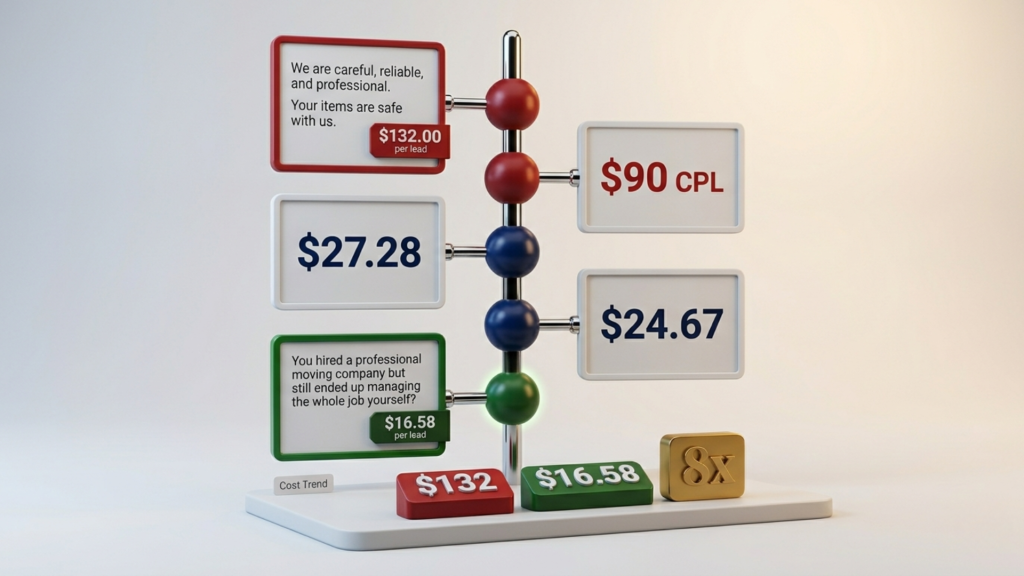
This is what the actual campaign results look like in the ad account. The campaign started with a $132 CPL when the creative was built around narrow hooks and company-first messaging. After the creative strategy was rebuilt around customer pain, cleaned up through testing, and supported with the right trust layer, the CPL dropped to $16.58.
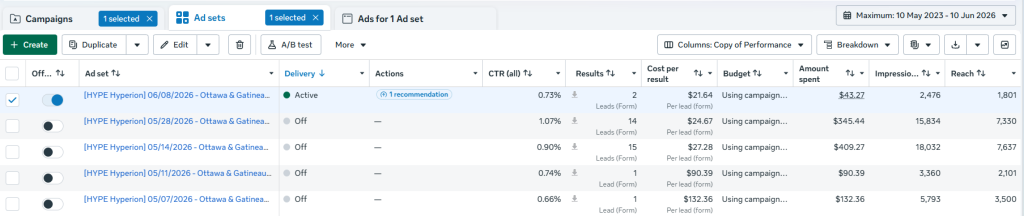
That is not a small improvement. That is roughly an 8x reduction in lead cost inside a premium Canadian market where the audience is expensive, sharp, and harder to convert. The trust angle generated only 3 leads from around $260 CAD in spend, with an average CPL near $87 CAD. The pain angle brought in 15 leads at $27.28 CPL in its first run, and the final optimized setup pushed the system even lower.

The client did not just walk away with cheaper moving leads. They walked away with a more predictable client acquisition framework. Instead of relying on generic claims, the campaign now had a clear structure: use pain to stop the right people, use trust to remove doubt, and let Meta optimize around the strongest creative signals. That is the real win here. Cheap leads are great, but a repeatable system is better. Once you know which message makes the market respond, your ad spend stops feeling like a gamble and starts becoming something you can actually build around.
A sincere thank you to Ottawa Pro Movers for trusting HYPE Hyperion Digital with this campaign and being open to testing. The best results usually come from clients who are willing to move past safe, generic messaging and let the data show what the market actually cares about. This campaign is a strong example of what happens when creative strategy, clean testing, and customer psychology work together.

Gary K. Avatar

Advertising for Moving Company: Best Way to Market Moving Business

Moving Company Advertising: How a Pivot to Pain-First Copy Cut CPL by 68%

Most moving companies play it safe in their ads. They talk about being professional, reliable, careful, experienced, and trusted. That may sound professional on the surface. But Meta does not reward a message just because it sounds professional.

Over a 5-week split test for Ottawa Pro Movers, we tested two very different messaging angles against the same audience. One angle used the traditional trust-based approach most moving companies rely on. The other went straight into the customer’s frustration and called out the real pain people feel when hiring movers.

The result was clear. The trust angle produced expensive leads. The pain-first angle cut CPL from around $87 CAD to $27.28 CAD, creating a roughly 68% drop in lead costs without changing the audience or relying on a bigger budget.

🏢 Client Overview & Moving Services Market Reality

Moving company advertising is not easy in a saturated local market like Ottawa and Gatineau. Moving company advertising becomes even harder when every competitor is making the same promise: “We are careful, safe, reliable, and professional.”The campaign was for Ottawa Pro Movers, a local mover serving Ottawa and Gatineau in a market where every company is fighting to sound trustworthy. Most ads look the same, sound the same, and give customers no real reason to choose one mover over another.

Check our previous work with Ottawa Pro Movers: How Meta Ads Helped a Moving Company Convert Early-Stage Leads into Loyal Clients

The goal was to build a more efficient moving company marketing strategy that could cut through that noise and create a steadier stream of inbound inquiries. Instead of increasing the budget or building a complicated audience setup, the experiment focused on the message itself. We wanted to see what would actually push a local customer to take action: a safe corporate trust message or a pain-first message that reflected the customer’s real moving-day fears.

⚠️ Why Trust-Based Messaging Alone Crashes Moving Ads

Moving ads often fail because they say what every customer already expects a moving company to say. Moving ads that lead with “we are careful” or “your belongings are safe with us” may sound professional, but they rarely create urgency on their own.

📉 Why the traditional corporate message fell flat

The traditional trust angle led with standard industry promises. The ads talked about being careful, reliable, professional, and experienced. The core message was simple: your belongings are safe with us.

On the surface, there is nothing wrong with that message. The problem is that every moving company says the same thing. When customers have already heard those claims many times before, the words start to lose weight. Over a 2-week run, this trust-based framing produced only 3 leads at around $87 CAD average CPL because it asked people to believe another familiar marketing promise without giving them a stronger emotional reason to act.

The result with high CPL:

🎥 Why high video engagement does not equal conversions

The trust video created an important trap in the data. It had the highest 3-second video hook rate in the account at 17.47%, which means people were stopping and watching the creative. A lot of advertisers would see that number and assume the ad was working.

But the lead data told a different story. The VIP/Trust video generated only 1 lead at a $90 CAD CPL. That means the video caught attention, but the message did not create enough intent. This is why engagement and conversion cannot be treated as the same thing. A visual hook can stop the scroll, but if the message underneath feels generic or unbelievable, the customer still will not take action.

😤 Mirroring the Customer’s Frustration: Why Pain-First Ads Outperform Trust

The winning shift came when we stopped talking like a moving company and started speaking like the customer. Instead of saying, “We are professional,” the new angle focused on a frustration many people already understand: hiring movers and still having to manage the whole job yourself.

😱 Exposing past moving horror stories

The pain-first angle called out a common moving nightmare. You hire a moving company because you want help, but then you still end up coordinating, reminding, managing, and worrying the entire time. That is the kind of experience people remember because it makes them feel like they paid for relief but got more stress instead.

This message worked because it validated the customer’s past frustration instead of asking them to trust another polished claim. In its very first run, the pain-based angle generated 15 leads at $27.28 CAD CPL without any major account optimization. That was a major shift from the trust angle, which had only produced 3 leads after more than 2 weeks. The difference was not a new audience or a bigger budget; the difference was that the message finally matched what the buyer actually cared about.

🔄 Shifting from credentials to customer experience

For service-based accounts, this is the bigger lesson. The fix for high customer acquisition costs is not always more testing budget, tighter targeting, or constant campaign tweaking. Sometimes the fastest fix is changing what you say to the buyer.

Trust messaging asks the prospect to take your word for it. Pain messaging shows them you understand the exact problem they are trying to avoid. That creates authority much faster because it feels specific, real, and grounded in the customer’s experience. By moving away from dry credentials and into the actual user experience, the campaign started attracting ready-to-act leads at a much lower cost.

📊 Tracking the Cost of Moving Leads

This is what the actual results look like in the ad account:


The contrast between the trust-based message and the pain-first message was clear. The safe corporate angle looked professional, but it produced expensive leads. The pain-first angle felt more direct, more human, and more connected to what the buyer had already experienced.

Metric / Creative AngleCost Per Lead (CPL)Campaign Yield & Context
Trust-Based Angle (Careful, Safe, Professional)~$87.003 total leads across a 2+ week run
The Hook Rate Trap (VIP/Trust Video Setup)$90.001 lead (Highest account hook rate at 17.47%)
Pain-Based Angle (Micro-management & Poor Service)$27.2815 leads in its very first unoptimized run
The Win (Overall Improvement)$87.00 → $27.28Massive 68% drop in lead costs

The biggest takeaway is that the trust angle did not fail because people ignored the video. They watched it. The VIP/Trust video had the strongest scroll-stop rate in the account.

It failed because attention alone is not enough.

The pain-first message worked because it connected the ad to a real customer problem. It reminded prospects of the thing they were actually trying to avoid: hiring movers and still feeling like the project manager of their own move. That is a much stronger reason to submit a lead form than simply hearing another company say it is careful and professional.

🚚 The Ultimate Rule for Local Moving Service Advertising

What feels safe and professional to write is often the least effective thing to say to a buyer who has already been burned by local contractors.

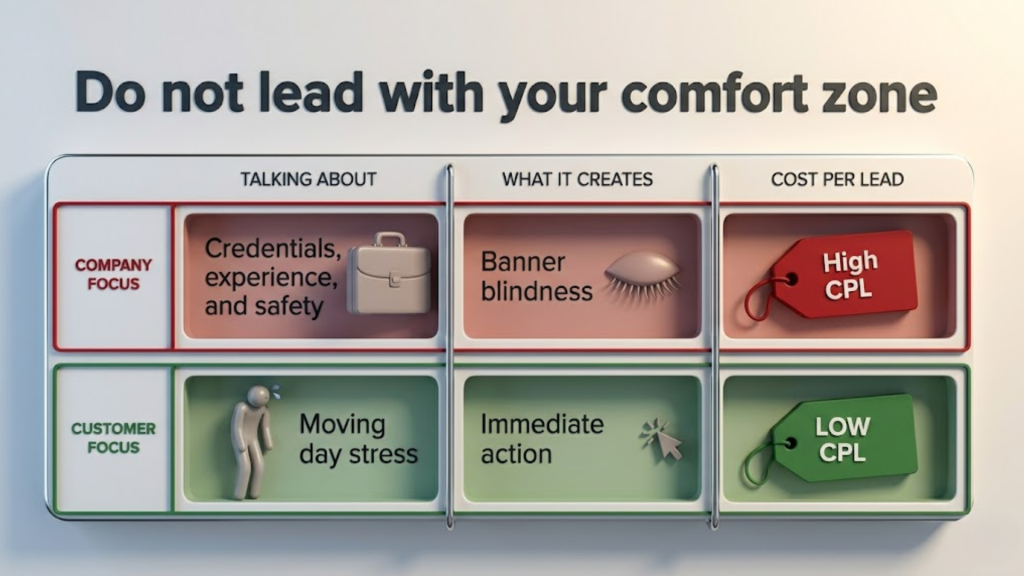
Most moving companies lead with credentials because it feels polished. They talk about years of experience, careful crews, safe handling, and professional service. Those points still matter, but they are not always strong enough to lead the ad. In a crowded local market, those claims often blend into the background because the customer has heard them too many times.

To scale local lead generation, the video scripts and ad copies has to begin with the customer’s real problem. Lead with the frustration they want to escape. Show them that you understand what went wrong in their past experience. Then, once you have their attention, use your trust points to make them feel safe enough to convert.

That is the rule this test proved – Do not lead with the company’s comfort zone. Lead with the customer’s friction.

A massive thank you to the team at Ottawa Pro Movers for their trust and for letting us dissect these raw campaign metrics for the community.

Gary K. Avatar

Facebook Ads for Healthcare Case: How We Cut Vein Clinic CPL by 73%

📱 Facebook Advertising for Vein Clinic: Inside the $18 Lead Engine for The Vein Place

Advertising for cosmetic surgery and medical clinics on Meta is hard because people do not casually trust health ads in their feed. Advertising for cosmetic surgery, vein treatment, or any patient-focused service has one major problem from the start: the audience is cautious before they even read the offer.

That was the challenge with The Vein Place OC.

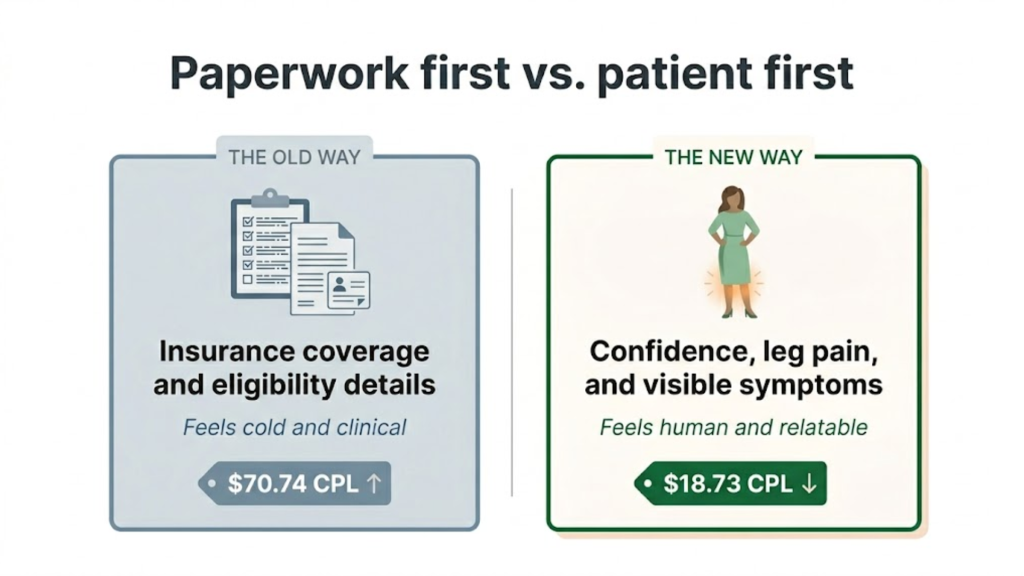
The original campaign leaned heavily on insurance coverage, eligibility, and administrative clinic messaging. On paper, that sounds practical. In the ad account, it failed because it made the process feel cold, clinical, and complicated before the patient had a reason to care.

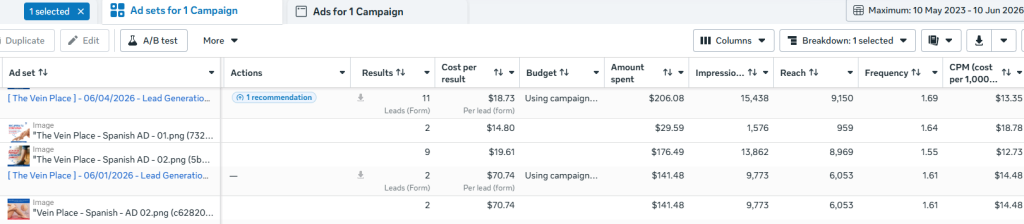
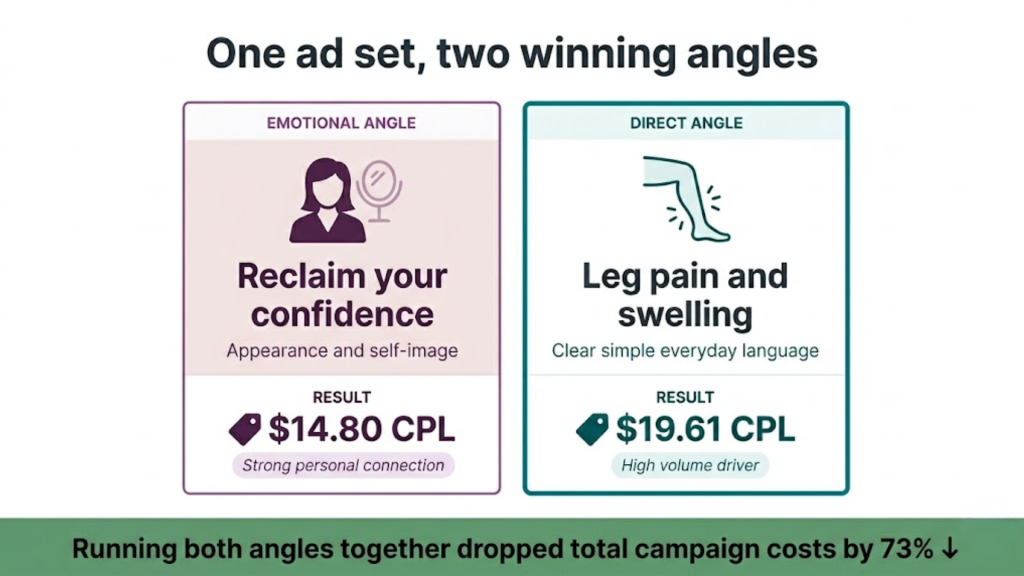
This case study breaks down how HYPE Hyperion Digital introduced two new human-centered creative angles for The Vein Place. One angle focused on confidence and appearance. The other focused on direct symptoms like leg pain, swelling, and varicose veins. Together, inside one ad set, these two angles dropped CPL from $70.74 to $18.73 and turned a stiff medical campaign into a real patient lead engine.

📈 Fighting High Competition with Facebook Ads for Vein Clinic Scaling

The client was The Vein Place OC, a specialized vein and vascular clinic serving patients in Orange County, California. The campaign focused on a Spanish-speaking audience of women 35+ within a 10-mile radius of Santa Ana, targeting concerns around varicose veins, leg pain, swelling, and restless leg symptoms.

This is a competitive market because vein treatment sits in a space where patients often compare multiple clinics, delay action, and need trust before booking. The audience is not just shopping for a service. They are dealing with a visible or uncomfortable health concern that may affect how they feel, move, dress, and live every day.

The goal was to break through local noise and create a steady stream of patient inquiries without burning through the testing budget. Instead of forcing the campaign to work harder with more spend, we changed the message. Instead of opening with coverage and eligibility, we shifted the message toward the real reasons a patient would stop scrolling and think, “Okay, this is for me.”

🛑 The Problem of Medical Marketing on Meta

🤝 The Trust Barrier: Why cold health ads get skipped

Healthcare ads have a built-in trust problem. Nobody sees a health-related ad in their feed and instantly thinks, “Yes, this brand definitely deserves my trust.” People are naturally protective of their bodies, their symptoms, and their medical decisions, so they do not respond to healthcare ads the same way they respond to a restaurant, gym, or home service offer. If the creative feels too corporate, too cold, or too clinical, the user immediately puts up a wall.

This is why an advertisement for clinic services cannot sound like a policy document. It has to feel clear, human, and relevant to what the patient is already experiencing. On Meta, people are not searching for a doctor in that moment. They are scrolling through their day, so the ad has to meet them with language that feels familiar enough to stop the scroll and safe enough to keep reading.

📉 The Mistake: Why the insurance angle fell flat

The old creative focused on insurance coverage and eligibility messaging. It led with the kind of information clinics often think patients need first: what may be covered, who may qualify, and how the process works. The problem was that this made the ad feel administrative before it felt helpful. The ad was basically saying, “Let’s talk eligibility,” while the patient was thinking, “Can we talk about my concerns first?”

That framing pushed the campaign to a painful $70.74 CPL with only 2 leads from $141.48 in spend. The audience treated it like another generic health notice because it did not connect to the discomfort or emotion behind the condition. Insurance details matter later, but when they show up too early, they signal paperwork, friction, and effort. That creates distance instead of conversions.

🧪 Testing Emotional Angles vs. Direct Symptoms in Varicose Vein Ads

✨ The Emotional Angle: Testing identity and appearance copy

The first new creative variation was the “Reclaim Your Confidence” angle. Instead of talking about clinic coverage or eligibility, it spoke to how visible vein conditions can affect a woman’s confidence, appearance, and daily life. This was not about making the issue feel shallow. It was about acknowledging that visible symptoms can change how someone feels in their own body.

Emotional Ad example:

That emotional angle worked because it reached women who may not have fully framed their problem as a medical issue yet. They may have been thinking about how their legs looked, how they felt wearing certain clothes, or how much they had started hiding the condition. By speaking to identity first, the ad created a personal connection before asking for action. The CPL dropped to $14.80 and generated 2 leads, proving that emotion could break the trust barrier faster than clinic-first copy.

🎯 The Direct Symptom Angle: Capturing high-volume demand

The second creative variation was more direct. It named the symptoms clearly: leg pain, swelling, and varicose veins. There was no complicated terminology, no heavy medical language, and no attempt to sound overly polished.

This angle worked because it captured women who already knew what they were dealing with. They did not need a confidence-based message to help them recognize the problem. They needed a clear ad that said, “Yes, this is the issue, and there is a place that can help.” This direct symptom angle became the volume driver, generating 9 out of the 11 total leads at a stable $19.61 CPL.

💥 How a single ad set triggered a 73% drop in costs

The biggest win came from running both angles together inside the same ad set. We did not overcomplicate the account with separate campaigns, heavy audience splits, or a messy testing structure. We let Meta see both angles and find the people most likely to respond to each one.

The emotional ad reached women who needed a personal connection before thinking about treatment. The symptom-based ad reached women who were already aware of their discomfort and ready to look for relief. Together, those two mindsets created a stronger campaign than either angle could have created alone. The combined ad set brought CPL down from $70.74 to $18.73, generating 11 leads from $206.08 in spend and creating a 73% drop in costs.

💡 Lessons from Advertising for Cosmetic Surgery and Vein Medical Brands

💃 Treating appearance as identity, not vanity

The emotional test showed an important lesson for medical brands that deal with visible conditions. When a condition affects how someone looks, it can also affect how they feel about themselves. That does not make the concern vain or superficial.

ADS examples:

For varicose vein ads, the “Reclaim Your Confidence” angle worked because it respected the emotional side of the problem. It did not just say, “Here is a treatment.” It reflected how the condition can affect confidence, clothing choices, social comfort, and daily self-image. That kind of copy makes the patient feel seen, which is often the first step toward trust.

🗣️ Ditching clinical jargon for normal speech

The direct symptom ads worked because they used the same language patients use in real life. People do not usually describe their discomfort with technical medical terms when talking to a friend. They say things like “my legs hurt,” “my legs feel swollen,” or “these veins are getting worse.”

That simple language removed friction from the ad. The audience did not have to translate the message or wonder if it applied to them. It felt familiar right away, which made it easier to take the next step. For medical ads, clarity often beats complexity because the patient is already carrying enough uncertainty.

📑 Leading with patient relief over clinic paperwork

The ultimate rule for health and medical clients is simple: lead with the patient’s life, not the clinic’s process. Insurance coverage, eligibility, and appointment details are important, but they should not be the first emotional impression. When those details appear too early, the ad feels like work.

A better approach is to lead with relief. Talk about the discomfort the patient wants to reduce, the confidence they want back, or the daily problem they want solved. Once the person feels understood, the practical details can support the decision later in the funnel. In this campaign, patient-first messaging did what administrative copy could not do: it made the audience care before asking them to convert.

📊 Before and After the Split Test

This is what the actual results look like in the ad account.

The difference between the old approach and the new creative strategy was clear. The old insurance angle gave the audience information, but it did not create enough emotional or symptom-based urgency. The new angles spoke to the patient’s real life, and the numbers changed quickly.

Metric / AngleCost Per Lead (CPL)Results & Spend
Old Approach: Insurance & Eligibility
$70.742 leads, $141.48 total spend
New Angle 1: Emotional, “Reclaim Your Confidence”$14.802 leads
New Angle 2: Direct Symptoms, Pain & Swelling$19.619 leads
New Ad Set: Combined Hybrid Setup$18.7311 leads, $206.08 total spend
The Big Win: CPL Improvement
$70.74 → $18.7373% drop in costs

The most important part is not just that the CPL dropped. It is why it dropped. The campaign stopped treating the audience like insurance applicants and started speaking to them like real patients.

The emotional angle created connection. The symptom angle created clarity. Together, they helped the campaign capture two different levels of awareness without making the setup complicated. That is why the combined ad set was able to produce patient inquiries at a much healthier cost.

🏆 The Ultimate Rule for Scaling Medical Ads on Meta

The main takeaway is clear: health and medical marketing scales when you stop acting like an insurance bureaucracy and start writing like a human who understands the patient’s reality.

If the ad opens with process, paperwork, and eligibility, people feel the effort before they feel the value. If you lead with real life impact, visible symptoms, confidence, discomfort, and relief, the audience has a reason to stop and listen.

For The Vein Place, the winning shift was not a bigger budget or a more complicated campaign structure. It was a better message. The campaign moved from coverage-first copy to patient-first copy, and that one shift turned a $70.74 CPL into an $18.73 lead engine.

A major thank you to the team at The Vein Place OC for trusting us with their data and letting us pull back the curtain on these performance metrics.

Gary K. Avatar

Advertising for Construction Company: Qualified Leads via Facebook Ads for SoCal Seismic

Facebook Ads for Construction Company: Real Insight of $18 SoCal Seismic Story

Running contractor ads in Los Angeles is expensive, and the market does not give you enough room for lazy and generic messaging. Ads for contractors become even harder when you are targeting homeowners aged 25+ in one of the most competitive paid traffic markets in the country, especially when you are trying to reach LA homeowners who have already seen every “trusted local contractor” ad under the sun.  

HYPE Hyperion Digital took over a local lead generation campaign for SoCal Seismic in Los Angeles, California. The goal looked simple from the outside: generate more foundation repair and earthquake retrofit leads at a lower cost. 

But this case study had a bigger lesson hiding inside the numbers. A low cost-per-lead can be a trap.

At one point, we brought the campaign down to a $17 CPL, which looked amazing on paper. The problem was that the leads were poor quality and were not converting downstream for the sales team. So the real win was not getting the cheapest possible lead. The real win was finding the balance: a stable $18 CPL with qualified homeowners who actually had real structural concerns and were much more likely to turn into paid work.

🏢The Client and the Reality of Advertising for Construction Company Brands

🔍Who is SoCal Seismic?

SoCal Seismic is a Los Angeles foundation and seismic retrofit company specializing in professional earthquake retrofitting, foundation inspections, and structural repair work. They work with different foundation types and serve property owners who need more than a quick handyman fix. Their projects are high-ticket, technical, and often tied to serious home safety or property value concerns.

They are also positioned around specialized Earthquake Brace & Bolt services, which help California homeowners protect their properties and potentially secure state grant support for qualifying retrofit work. That matters because this is not a casual service where someone clicks an ad because they are mildly curious. The right lead is usually a homeowner with a visible issue, a real inspection concern, or a time-sensitive reason to act. So our campaign could not chase cheap clicks. It had to attract serious property owners with real structural problems.

⚠️The Industry Scare-Tactic Trap

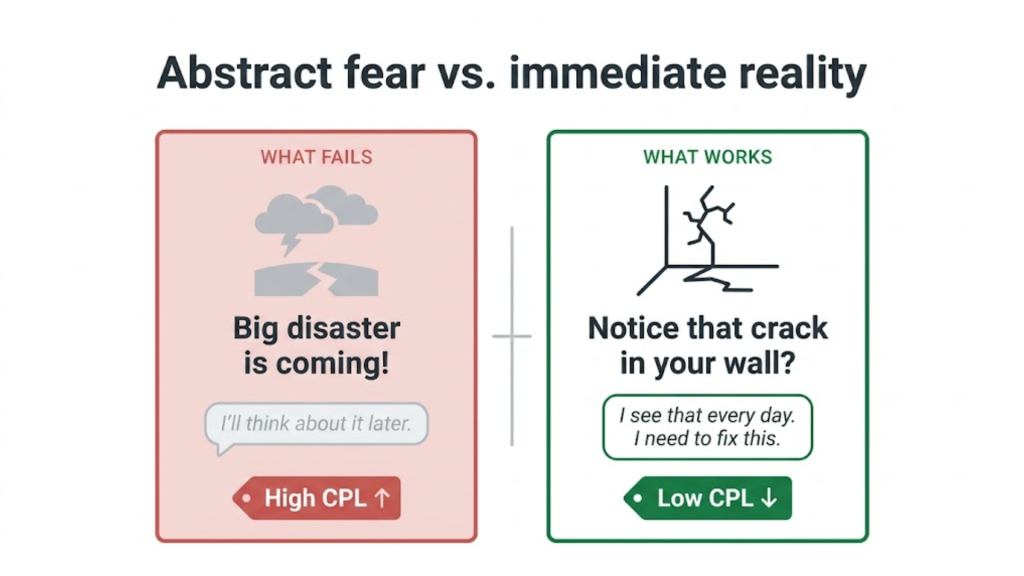
Most foundation and seismic companies in California lean heavily on fear. They talk about massive earthquakes, future disasters, and what could happen if a homeowner does nothing. That angle feels obvious because earthquake retrofitting is connected to safety, but obvious does not always mean effective.

In modern Meta ads, fear-based messaging can easily turn into background noise. People in Los Angeles already know earthquakes exist, and many have learned to emotionally block out that stress because it feels too big, too distant, or too uncomfortable to think about every day. When an ad leads with an invisible future disaster, homeowners often skip it instead of acting on it. That is why fear-based ads can spend money quickly without giving the sales team leads they can actually work with.

🏚️Why Visual Damage Defeats Invisible Fear

📉The Initial Test ($113 CPL Failure)

The first test launched with two video creative angles running at the same time. One video focused on abstract earthquake risk, while the other showed visible home issues like wall cracks, uneven floors, and signs that something might already be wrong with the foundation. The goal was to see whether homeowners would respond more to future fear or present damage.

Video Ad Example:

The results were clear. The earthquake angle produced zero leads, while the visible damage creative did all the work. Even then, the campaign was still expensive, starting at $113.47 CPL with only 3 leads. That told us the account had a signal, but the message was not sharp enough yet. Homeowners were not responding to broad earthquake fear; they were responding to problems they could physically see in their own homes.

👀What We Can See

This happened because people react faster to what feels immediate. A future earthquake is scary, but it is also abstract. A crack in the wall, a sloping floor, or a door that suddenly stops closing properly is much harder to ignore because the homeowner sees it every day.

That is present bias in action. People tend to prioritize the problem right in front of them over a possible problem that might happen later. For this campaign, that meant the creative had to focus less on “what if an earthquake hits?” and more on “what is already happening inside your house?” The visible damage angle gave homeowners a concrete reason to stop, click, and ask for help.

🚨The Emergency Pivot to the “Buy & Sell” Roadblock Segment

🔄Urgent Strategy Shift

After the $113 CPL launch, the account needed a sharper entry point. We did not cut the cost in half by changing Meta interest targets or trying to build some overly complicated audience stack. The real shift came from changing the message and introducing a new reason someone would need help right now.

That new angle focused on homeowners involved in a property transaction. These were people trying to buy or sell a house, but a foundation issue had become a roadblock. This gave the campaign a stronger sense of urgency because the problem was no longer just about maintenance. It was about a deal, a timeline, and money being stuck until the structural concern was handled.

💰The Real Estate Value Trigger

The buy/sell angle worked because it spoke to a different kind of motivation. Some homeowners do not act on foundation issues when the only message is about long-term protection. But when a home inspection flags cracks, settling, or possible foundation movement during a sale, the issue suddenly becomes immediate.

That homeowner is not casually browsing. They may be trying to save a closing, avoid losing a buyer, negotiate repairs, or protect the value of the property. By positioning SoCal Seismic as the solution to a real estate deal getting blocked, the campaign unlocked a highly motivated segment. This helped bring CPL down to $56.98 with 10 leads because the ad was now speaking to people with both a structural problem and a financial reason to solve it quickly.

🎯The Quality Filter: Finding the Performance Sweet Spot in Facebook Ads for Contractors

⚠️How Direct Pain-Point Videos Backfired on Quality

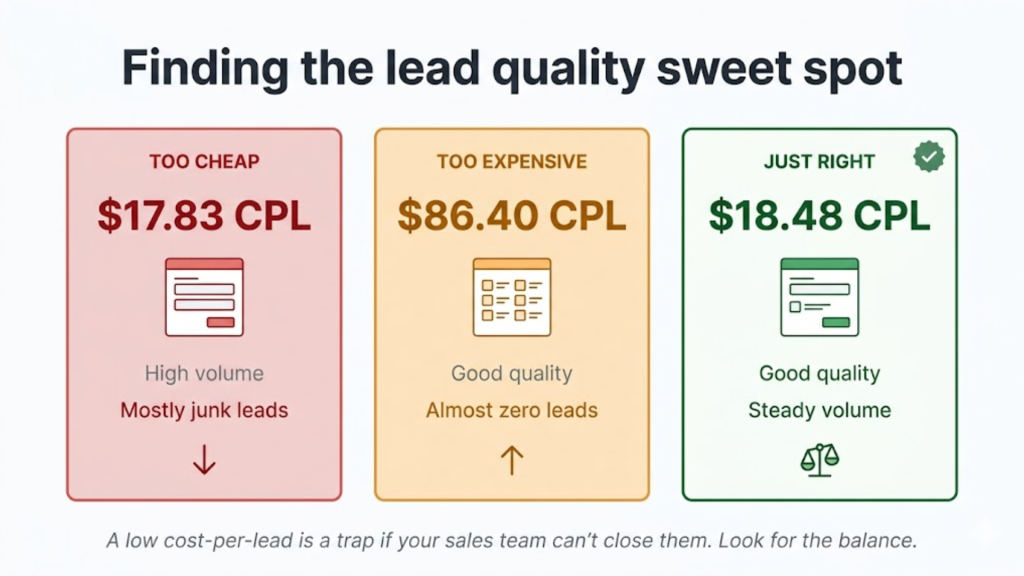
Once the visible damage and buy/sell angles started working, we pushed the creative even harder. We launched more direct pain-point videos around warning signs getting worse and the risk of buying or selling a home with foundation issues. The CPL dropped sharply to $17.83 across 12 leads, which looked like a big win at first glance.

But the sales feedback told a different story. The leads were cheaper, but low cost does not help much when the sales team is stuck chasing unserious prospects. This is one of the most important lessons in advertising for construction company campaigns: low CPL does not always mean healthy performance. If the leads are not serious, qualified, or ready for the service, then the campaign is just creating a different kind of waste. The client pays less per lead, but the team loses time chasing people who were never likely to become customers.

📝How Too Much Form Friction Killed Volume

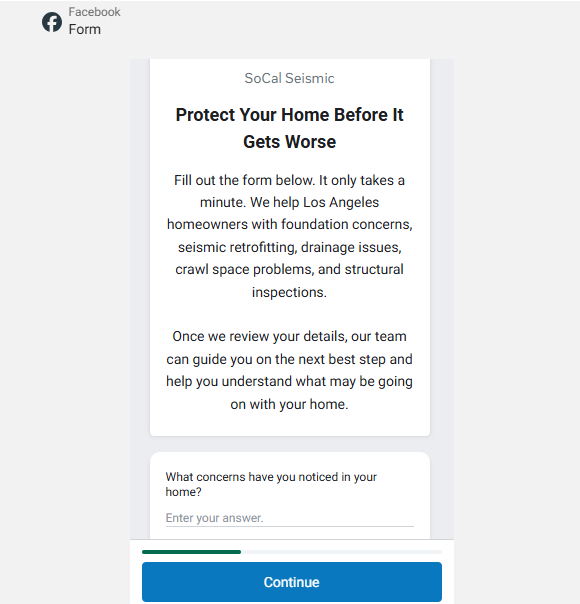
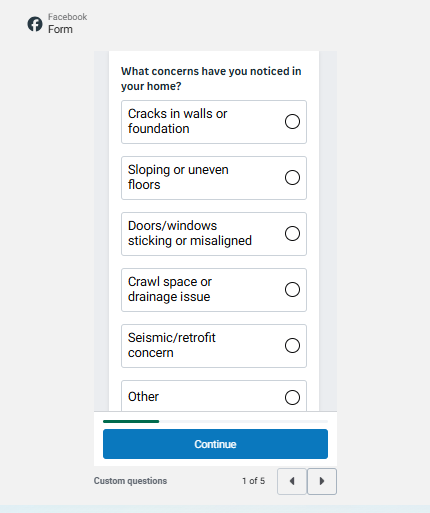
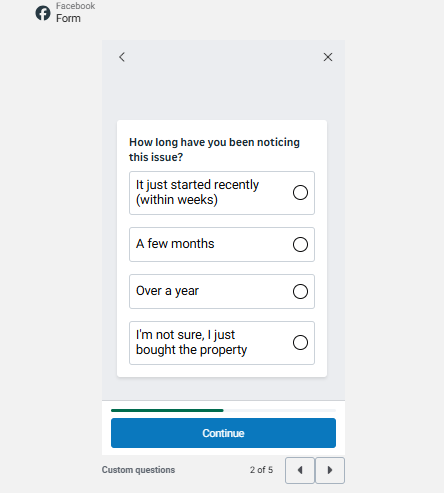
To fix the quality issue, the next move was to add more filtering inside the lead form. We updated the form with two multiple-choice qualifier questions so the campaign could better separate serious homeowners from weak inquiries. In theory, this made sense because the sales team needed better context before spending time on each lead.

The filter worked, but it worked too aggressively. Lead quality improved, but the form became too heavy for users to complete. That extra friction caused volume to drop and pushed CPL up to $86.40 with only 2 leads. This showed us that qualification is important, but too much qualification too early can kill the campaign’s momentum. The form has to filter the noise without making real buyers feel like the process is too much work.

✅Trimming the Lead Form to One Specific Issue Question

The final adjustment was simple but important. We removed one of the multiple-choice questions and kept only one specific qualifier about the homeowner’s actual issue. That gave us the filter we needed without making the form feel heavy.

This one-question setup created the right balance. It helped remove low-intent leads while still allowing serious homeowners to move through the form quickly. The campaign settled at $18.48 CPL with 5 genuinely qualified leads, which was far more valuable than the earlier $17 CPL with weak lead quality. This became the performance sweet spot: low enough to scale, but qualified enough to support real sales conversations.

📊What a Healthy Lead Engine Looks Like

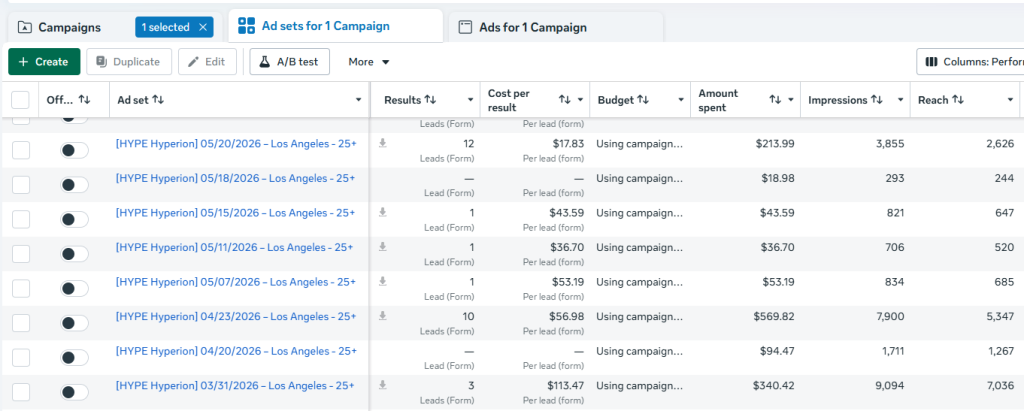
This is what the actual campaign results look like in the ad account.

The campaign started at $113.47 CPL with 3 leads across two video angles. The earthquake-risk angle brought in no leads, while the visible cracks and uneven floors angle carried the test. That first result showed us that homeowners were not reacting to abstract fear. They were reacting to damage they could already see.

After refining the angle and adding the buy/sell roadblock message, CPL dropped to $56.98 with 10 leads. This was the first major improvement because the campaign now had two stronger reasons for homeowners to respond: visible foundation concerns and property transaction pressure.

Then the creative push dropped CPL all the way to $17.83 with 12 leads, but the quality was not there. That was the trap. A cheaper CPL looked good in the ad account, but the leads were not converting well enough for the sales team.

The first form update tried to fix quality with two qualifier questions, but it went too far. CPL jumped to $86.40 and volume dropped to only 2 leads. The final version removed one question and kept only the most important issue-based qualifier, bringing the campaign to a current CPL of $18.48 with qualified leads that actually convert.

That is what a healthy lead engine looks like:

Starting CPL$113.47  (3 leads — two video angles)
After angle refinement$56.98  (10 leads — cracks + buy/sell)
After creative push$17.83  (12 leads — low quality)
After form update$86.40  (2 leads — form too heavy)
Current CPL$18.48  (5 leads — quality leads, 1 MCQ)

Not the absolute cheapest number. Not the highest volume. Not the most complicated setup. 

A healthy campaign produces leads that are affordable, qualified, and useful for the sales team. For SoCal Seismic, the winning formula came from visible-problem creative, a smart buy/sell angle, and one precise lead form question that filtered out noise without scaring away real buyers. 

A big thank you to SoCal Seismic for trusting HYPE Hyperion Digital to navigate one of the most competitive construction markets in Los Angeles. This campaign is a strong reminder that in high-ticket contractor advertising, the goal is not just cheaper leads. The goal is qualified opportunities that can actually turn into revenue.

Gary K. Avatar