How We Cut Facebook Lead Costs by 73% for a Moving Company
Facebook advertising for moving company campaigns can look simple from the outside: launch ads, collect leads, and wait for the sales team to close jobs. But the campaign only becomes profitable when the creative, lead form, audience callout, and conversion flow are pulling in the same direction.
That was the case with Global Elegance Moving & Logistics, a long-distance moving company running Facebook Lead Generation campaigns across Georgia, North Carolina, South Carolina, and New Mexico.
When the campaign launched, the expensive CPL looked like a creative problem. The first assumption was that the ads were not strong enough, and that better creatives would solve most of the issue. But the optimization process revealed something bigger.
Several hidden problems were quietly hurting performance at the same time. The ad messaging was too generic, the first video did not hook people fast enough, and the Meta lead form had a friction point that made serious customers drop off before submitting. By fixing those problems one by one, HYPE Hyperion Digital dropped CPL from $106.80 to $28.39 — a 73% reduction.
This case study follows every stage of that journey and shows why improving the full conversion funnel usually beats chasing one “winning ad.”
The Client Wanted Image Ads. We Wanted Video. The Data Decided.
Global Elegance came into the campaign with a clear preference. They wanted image ads. Our view was different. For long-distance moving, especially on a newer Meta account without enough learning data, video usually gives the algorithm more signal. A good video can show movement, build trust, create emotional tension, and qualify the right audience faster than a static image.
But instead of turning it into an opinion debate, we launched both formats together.
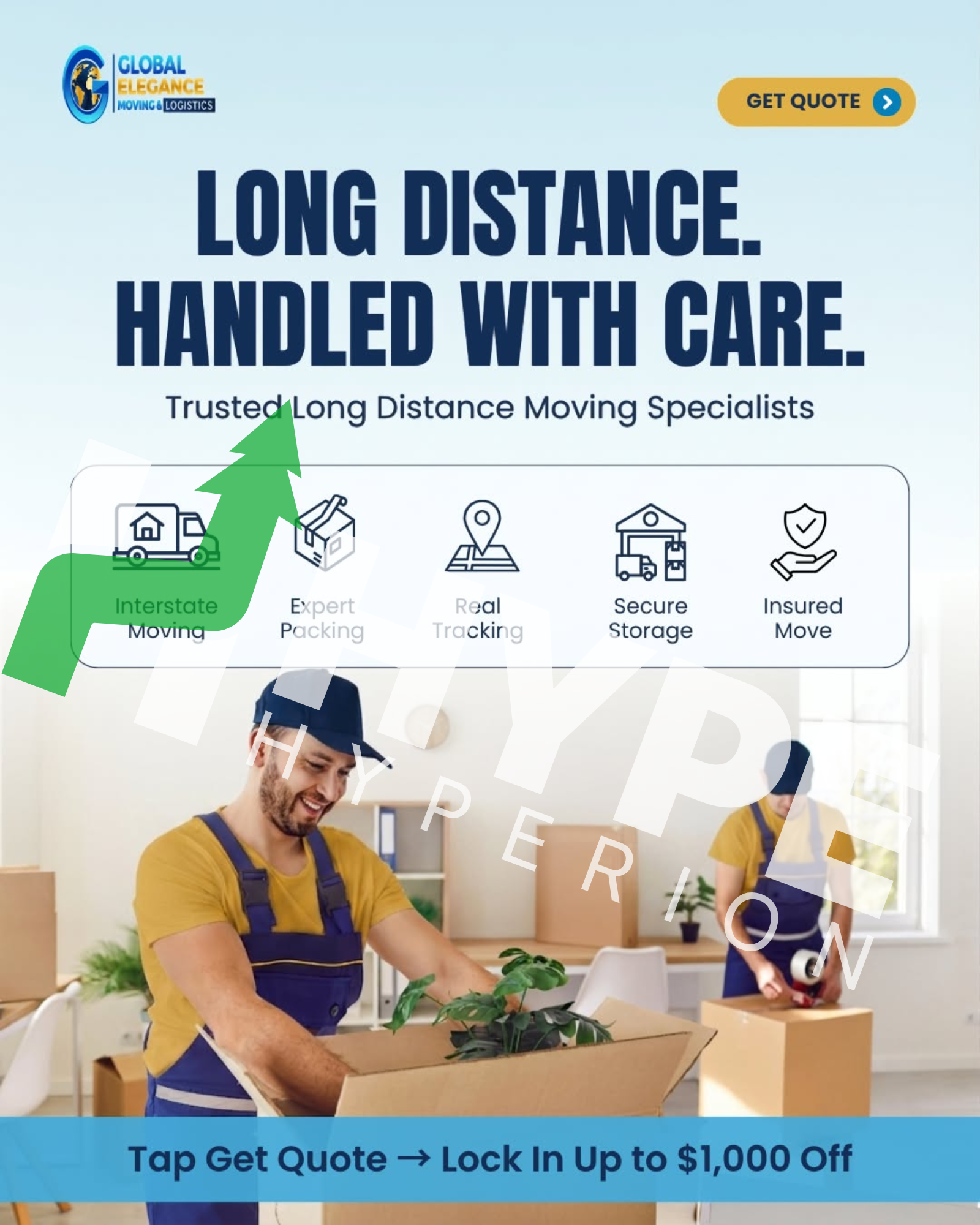
The first round included two image ads and one video ad. Creative 01 was a polished long-distance moving image focused on trust, services, and a discount. Creative 02 was another image ad built around reassurance, careful handling, and the promise of a smoother move. Creative 03 was a pain-point video that spoke to the fears people have when trusting a company with a long-distance move. The goal was simple: let the data show which direction had the strongest chance of working.
The Image Ads Built Trust but Didn’t Differentiate the Brand
The first image ad used the headline “Long Distance. Handled With Care.” It listed services like interstate moving, expert packing, real tracking, secure storage, and insured moves. It looked professional, but the message was built around credentials and service features.
The second image ad used the line “You Plan, We Move,” with supporting copy around careful service, trust, no surprises, and safe delivery to any state. This version was slightly more emotional because it tried to reduce anxiety around the move going wrong. Still, it was mostly built around the company’s promise.

That was the problem. The problem is that “trusted, reliable, insured, and careful” is what every moving company says. When everyone sounds the same, the only differentiator left is price — and that is a race nobody wants to run. The ads built trust on paper, but they did not create enough tension or urgency for someone actively comparing moving companies.
The First Video Addressed Real Fears but Started Too Slowly
The first video moved closer to the right direction. Instead of just listing services, it spoke to the fears people already carry when planning a long-distance move. Late crews, changing prices, damaged belongings, and companies disappearing after something goes wrong are all real concerns in this market.
That part was strategically correct. The video was not trying to convince people that moving is stressful. It was validating what they already feared.
But the opening line was too slow. The video started with: “Most people move once or twice in their entire life…” That line was true, but it did not create enough immediate pressure. On Meta, the first few seconds have to make the right customer feel like the ad is about their exact situation right now. This video had the right pain points, but the hook needed to be sharper, faster, and more specific.
The First Round of Testing Revealed There Was a Bigger Problem
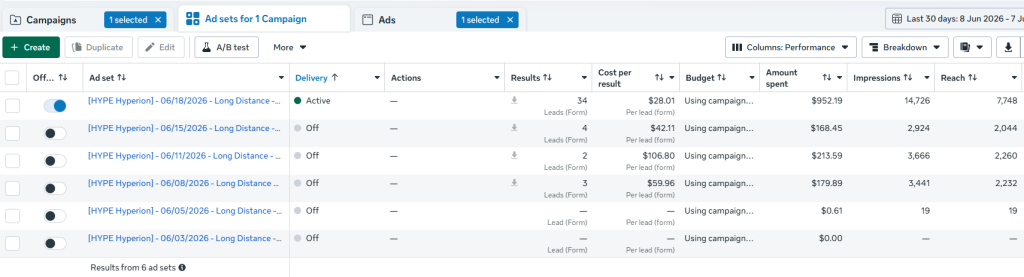
The first round produced a $59.96 CPL. That was not where the campaign needed to be. The image ads were not standing out, and the pain-point video was not gaining enough traction either. At that point, small creative tweaks were not going to be enough.
So we removed all three creatives and reassessed the campaign more carefully. That decision mattered. Optimization without diagnosis is just spending money faster. The issue was not only that the ads needed better visuals or cleaner copy. The whole conversion path needed to be checked, from the message people saw in the ad to the experience they had inside the lead form.
Why a Higher CPL Helped Us Find the Real Conversion Bottleneck
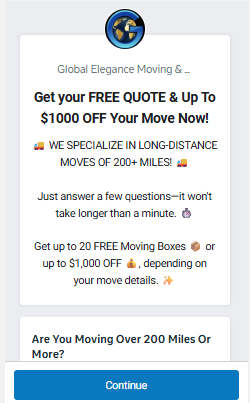
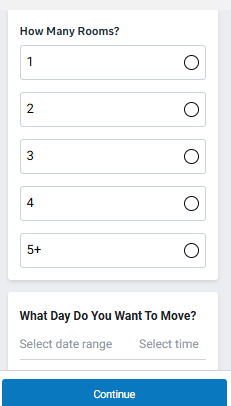
After the first creatives were removed, CPL unexpectedly jumped from $59.96 to $106.80. To anyone watching the numbers, it looked like the campaign was falling apart. But the increase exposed a deeper issue that had been hurting conversions from the beginning: the Meta lead form. The old form asked the right general questions, but one part created unnecessary friction.
The original version included:
| Old Form Question | Format |
| Are you moving over 200 miles or more? | Yes / No |
| How many rooms? | 1 / 2 / 3 / 4 / 5+ |
| When are you planning to move? | Date range picker + time selector |
| Where are you moving to? | Zip code field |
The issue was the moving date question. Meta’s built-in date and time picker sounds useful, but in practice, it made the form feel heavier than it needed to be. Someone had to stop scrolling, think about an exact moving date, open a calendar interface, select a date range, choose a time, and then continue through the form.
For a long-distance moving lead, that is too much precision too early. Many people know they are moving soon, but they may not know the exact day yet. Forcing them into a calendar can make the form feel like work, and that extra friction can stop real prospects before they submit.
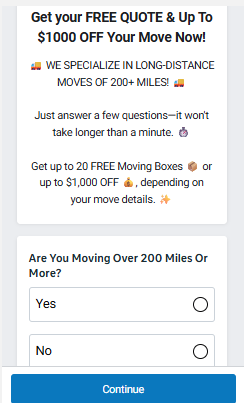
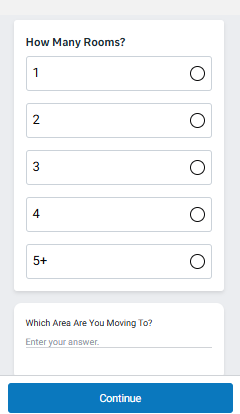
So we rebuilt the form to feel more natural.
| New Form Question | Format |
| Are you moving over 200 miles or more? | Yes / No |
| How many rooms? | 1 / 2 / 3 / 4 / 5+ |
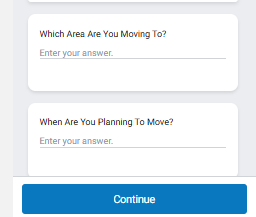
| Which area are you moving to? | Open text answer |
| When are you planning to move? | Open text answer |
Replacing the date picker with open-text answers removed the friction point. People could answer in their own words, like “next month,” “late August,” or “within 60 days,” without being forced into an exact calendar selection.
That one form change – no new creatives, no audience rebuild, no budget adjustment – brought CPL from $106.80 to $42.11. We simply made the form easier to complete while keeping the qualification value for the sales team.
The 90-Day Hook That Qualified Buyers Before They Clicked
Once the form was fixed, the campaign was in a much better place. But $42.11 CPL still had room to improve.
The next step was a new creative angle built around urgency and a direct audience callout.
The hook was:
“Planning a move in the next 90 days? Don’t trust your entire life to some random company you found online.”
This line worked because it did three jobs at once.
First, it identified the right person immediately. The ad was not for everyone who might move someday. It was for someone planning a move in the next 90 days.
Second, it created urgency around a realistic timeframe. Long-distance moving is a decision people sit on for weeks. People research, compare, request quotes, and plan ahead. A 90-day window was specific enough to qualify serious buyers without being too narrow.
Third, it challenged the audience’s biggest fear: choosing the wrong moving company. That fear matters because a long-distance move is not just about boxes and furniture. This is not a grocery delivery. Someone is handing a stranger the keys to a truck carrying their furniture, their kids’ stuff, and everything they own — and then following it across state lines hoping it arrives. The hook made that fear visible and positioned Global Elegance as the safer alternative. This new angle brought CPL down from $42.11 to $28.39, while the campaign stayed active and continued running.
Why Creative, Form, and Messaging Had to Work Together
The biggest mistake would be treating this campaign like one creative solved everything.
That is not what happened. The improvement came from fixing several connected pieces in the right order.
| Phase | What Changed | CPL |
| Phase 1 | 2 image ads + 1 pain point video launched | $59.96 |
| Phase 2 | Creatives removed, old form still running | $106.80 |
| Phase 2 — Form Fix | Date picker replaced with open text fields | $42.11 |
| Phase 3 | 90-day FOMO urgency angle introduced | $28.39 |
The creative strategy confirmed what experience already suggested. Image ads built around credentials and service lists struggle in the long-distance moving industry. Every competitor promises to be trusted, careful, reliable, insured, and professional. Those claims may help support a decision later, but they rarely create enough differentiation at the top of the funnel.
The first pain-point video moved closer to the right direction. It validated real fears around late crews, price changes, damaged belongings, and poor communication. But it still lacked a strong opening hook and a specific timeframe that immediately qualified the right buyer.
Then the lead form became one of the biggest conversion improvements. A lead form is not just a data collection tool. It is part of the conversion funnel. If the form feels clunky, confusing, or too demanding, it can undo the work of a good ad.
Meta’s date picker added extra actions to what should have been a simple form. Replacing it with open-text answers reduced cognitive effort while preserving lead quality. It also gave the sales team more natural responses because customers could describe their timeframe in the way they actually thought about it.
Finally, the 90-day hook brought the campaign together. Long-distance moving is a planned purchase. Calling out a specific timeframe qualified buyers before they even opened the lead form. Pairing that urgency with the line “Don’t trust your entire life to some random company you found online” addressed the exact hesitation people feel when comparing moving companies.
That is why the campaign improved. The creative, form, and message finally worked as one system.
What This Campaign Revealed About Facebook Ads for Moving Companies
The first lesson is that a rising CPL during optimization is not always a sign that something is broken. Sometimes it is diagnostic.
In this campaign, the jump from $59.96 to $106.80 exposed a hidden lead form issue that had been reducing performance from the beginning. If we had only focused on replacing creatives, we may have missed one of the biggest bottlenecks in the funnel.
The second lesson is that form fixes and creative fixes can compound. Changing the form reduced friction and brought CPL down to $42.11. Then the new 90-day urgency angle brought CPL down again to $28.39. Neither change would have created the same final result on its own.\
For long-distance moving campaigns specifically, the takeaway is clear. Credentials do not convert by themselves. Generic trust messaging does not create attention. Even a strong creative can underperform if the lead form makes people work too hard before they submit.
What converts is specificity.
- ⏳ A specific timeframe
- 😟 A specific fear
- 🎯 A specific audience callout
- 📝 And a lead form that gets out of the way
That is how HYPE Hyperion Digital helped Global Elegance Moving & Logistics reduce Facebook lead costs by 73%. Not by chasing one magic ad, but by improving the full path from scroll to submission.