How AI Video Can Explain Complex Services and Lower Facebook CPL
Some services are easy to show in Facebook Advertising. However, a moving company can show its crew loading a truck. An e-commerce brand can show the product. But what happens when the actual problem is somewhere the customer cannot see?
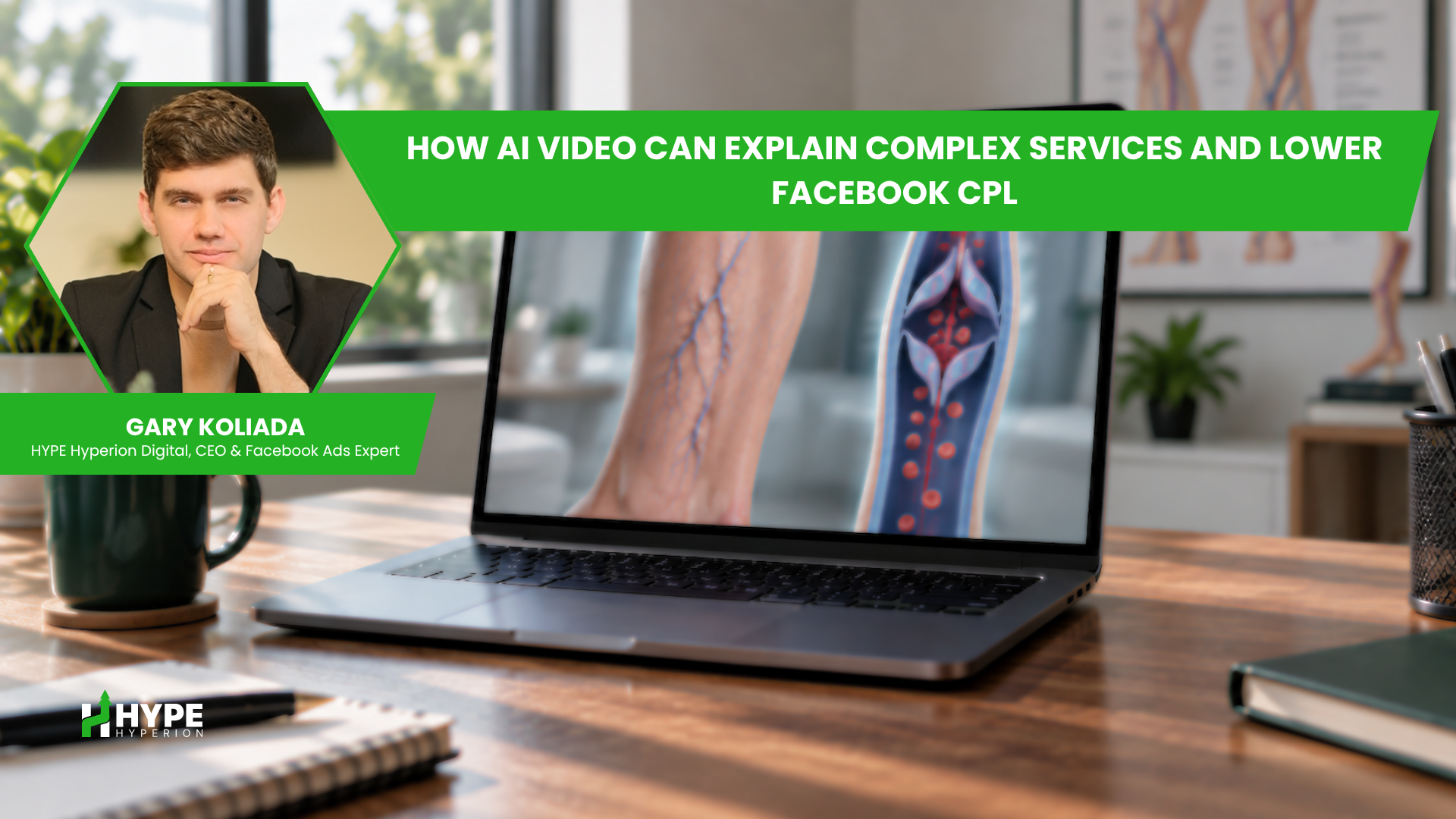
That is where AI video can become useful. In Facebook Ads, services such as foundation repair, vein treatment, insulation, HVAC, and restoration often need more explanation because the real problem is happening beneath a floor, inside a wall, inside a vein, or above the ceiling. A well-built AI explainer video can make that invisible problem understandable in under 30 seconds.
This is not about replacing real video or filling ads with generic AI content. It is about using AI when a camera cannot show the thing the customer actually needs to understand. For complex services, that difference can have a direct impact on lead generation and Facebook CPL.
🧠The Problem — Some Services Cannot Sell Themselves With a Photo
Traditional visual facebook advertising works well when the customer can immediately see the product or service. A moving company can show a truck, a crew, and furniture being loaded. An e-commerce company can show exactly what someone is buying.
But some services have a much harder communication problem.
A foundation repair company might show a crack in a wall, but the homeowner may simply think it is normal settling. A vein clinic can show a person’s leg, but that does not explain what is happening inside the veins. An insulation company can show pink foam in an attic, but the image does not explain heat transfer, energy loss, or air quality.
The common problem is that the customer can see the symptom but not the cause.
That changes the job of the ad. The creative is no longer just promoting a service. It has to explain why the problem exists and why professional treatment or repair is necessary. When the important part of the problem is invisible, the audience needs the ad to show them something they normally cannot see.
| Service | What a Traditional Photo Can Show | What Remains Unexplained | What an AI Visual Can Demonstrate |
| Foundation repair | A visible crack | Movement and pressure beneath the surface | How the foundation is shifting |
| Vein treatment | Swelling or visible veins | Valve malfunction and blood flow | What is happening inside the vein |
| Insulation | Insulation material | Heat transfer and energy loss | How heat moves through the attic |
| HVAC | Equipment or vents | What is causing the underlying issue | Internal airflow or system problems |
| Restoration | Visible damage | What is happening behind or beneath the damage | The hidden source and progression of the problem |
The goal is not to make the ad more complicated. It is to make the problem easier to understand.
🎥Real Video Still Wins — But It Depends on How It Is Made
This is not an argument against real video. When the service itself is visual, real footage can be incredibly powerful. A moving company can show its crew loading furniture, protecting belongings, and completing a move. An e-commerce brand can demonstrate the product, show an unboxing, or capture the product being used. In these situations, the camera can show the customer almost everything they need to know.
The challenge starts when the important part of the service happens somewhere the camera cannot easily reach. A foundation may be shifting underground. A vein problem may be happening inside the body. Insulation may be affecting heat movement above the ceiling. A restoration issue may be developing behind a wall. In these cases, real footage can show the people doing the work, but it may not explain what actually needs to be fixed.
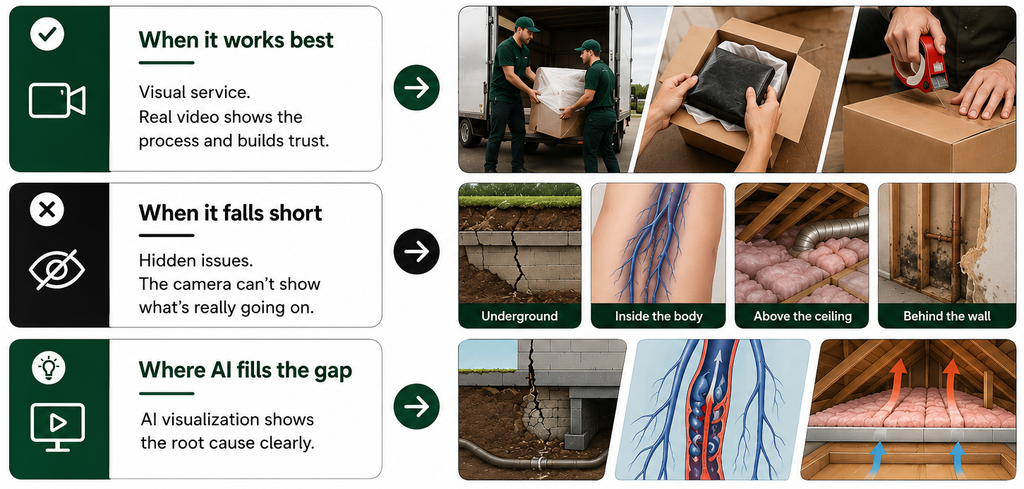
That is where AI visualisation can fill the gap. Video ads still depend on the same fundamentals as any other creative: a strong hook, a clear message, and audience relevance. Production quality alone does not guarantee better creative performance. A simple AI explainer with a clear explanation can be more useful than an expensive real video that never explains the actual problem.
💡Complex Topics Need Explanation — And AI Makes That Affordable
Large companies have used animation studios, medical illustrators, and 3D production teams for years to explain technical ideas. The problem is that this type of production has traditionally been expensive and time-consuming.
For a local business, spending around $15,000 on a single explanatory animation is rarely realistic. AI has changed that equation. A business can now create visual explanations in a fraction of the time and at a much lower production cost.
That does not mean the creative should be rushed or treated as disposable. The advantage is that smaller businesses can now access a type of visual communication that was previously available mainly to brands with large production budgets.
We have seen this approach applied across several different service categories.
SoCal Seismic
For SoCal Seismic, the creative showed what happens beneath the surface when a foundation shifts. Instead of simply showing a cracked wall, the visual explained the movement and pressure happening behind it.
The reported result was a drop in CPL from $133 to $20.
That change came from making the underlying problem easier to understand. The viewer was not simply being shown a crack. They were being shown why that crack could matter.
The Vein Place
For The Vein Place OC, the approach used visual symptom recognition alongside emotional messaging. The creative helped people connect what they were seeing and feeling with a condition they may not have previously understood.
The source does not provide a CPL figure for this campaign, so no specific performance result is being assigned to it here.
Attic Fanatics
For Attic Fanatics, AI visualisation was used to show concepts that a photograph of insulation could not communicate clearly. The creative illustrated heat transfer, energy loss, and the air-quality implications associated with degraded attic insulation.
A photograph can show insulation sitting in an attic. It cannot easily show heat moving through the space or explain how that affects the home. The source does not provide a CPL figure for this campaign.
EZ Home Solutions
For EZ Home Solutions, the creative combined real photography with AI-enhanced visuals to demonstrate attic cleaning and rodent proofing. The goal was to make the condition of the attic feel immediate while also showing that the problem could be addressed.
The source does not provide a CPL figure for this campaign.
Across these examples, the common idea was simple: when the audience could actually see the problem instead of only hearing about it, the creative had more information to work with.
🧭Where AI Video Actually Belongs — And Where It Doesn’t
AI explainer video is not automatically the right choice for every business.
The better question is simple:
Can you show the audience the actual problem and the actual solution with a camera?
If the answer is yes, real video should generally be the first choice. If the most important part of the problem happens somewhere a camera cannot reach, AI can offer something that conventional footage cannot.
That makes AI especially useful for insulation, foundation repair and seismic retrofitting.
It also supports vein and vascular clinics, HVAC, construction, restoration, and other medical or technical services.
Moreover, customers need to understand the underlying issue before understanding the treatment.
Facebook Advertising is less necessary for businesses where the product or service is already highly visual.
| AI Explainer Is a Strong Fit | Real Video Is Usually Better |
| Foundation repair | Moving companies |
| Insulation | E-commerce |
| Vein and vascular treatment | Restaurants and food service |
| HVAC | Haircuts and beauty services |
| Construction and restoration | Fitness and coaching |
| Medical or clinical services | Other services where the result is easy to show |
The deciding factor is not whether AI is popular. It is whether the technology solves a communication problem that real footage cannot solve as effectively.
🛠️How to Implement AI Video: Start With the Concept, Not the Tool
The easiest mistake to make with AI video is opening an AI tool and immediately generating footage. That is starting at the wrong end.
Before thinking about animation, camera angles, or visual styles, identify what the audience does not understand. The technology should serve the explanation, not become the explanation.
1. Identify What the Audience Cannot See But Needs to Understand
Start by identifying the invisible problem and the misconception standing in its way. With foundation repair, the homeowner may see a crack and assume it is cosmetic. The creative needs to show the structural movement behind it. The question is simple: what could the audience see that would change the way they understand their problem?
2. Write the Outline Before the Script
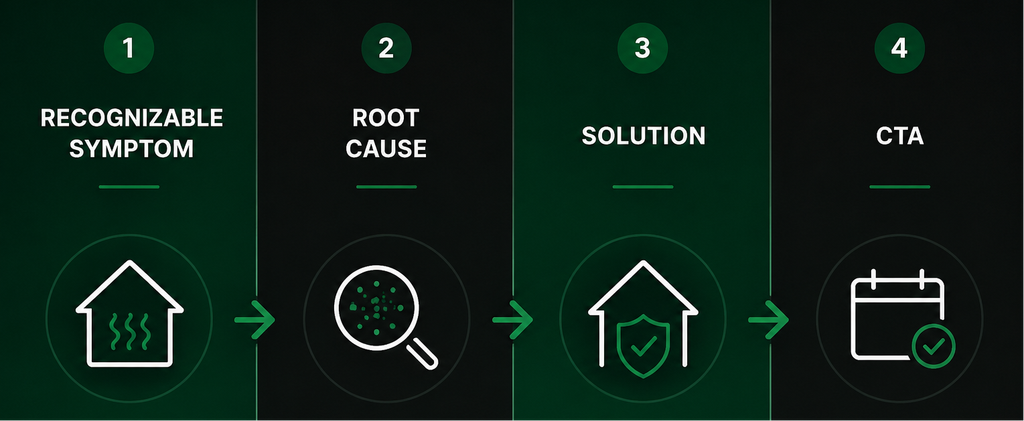
Once the communication problem is clear, map out the explanation using a tight structure:
A simple framework is:
3. Write the Script Before Generating Anything
The script determines what the visuals need to show, what the voice-over needs to explain, where the hook needs to appear, and what the audience should understand by the end. For most Facebook ads, keeping the video under 30 seconds is a useful target.
4. Generate Visuals That Match the Script
Every visual should have a reason to exist. If the script says the foundation is shifting, show the foundation shifting. Specificity is what makes AI useful here. The visual should explain the exact process being discussed rather than simply decorate the ad.
5. Keep the Production Clean and Simple
A Facebook ad does not need Hollywood-level animation. Clear visuals, simple editing, purposeful movement, and strong relevance matter more than technical complexity.
🎯AI Video Is a Communication Tool, Not a Production Shortcut
Real video is generally the better choice when the service is visual and the audience already understands what it is buying. If a camera can show the product, the process, the people, and the result, there is usually a strong reason to use it.
AI video becomes valuable when the problem is invisible, the service is complex, and the audience needs to understand something before it is ready to act. The CPL improvements in the examples above did not come simply because the videos used impressive animation. The creative worked because it showed audiences something they could not normally see and helped them understand what was happening.
That is the real use case for AI in facebook video ads. Not replacing real footage. Not generating content just because AI can. Using visual technology to explain something that would otherwise remain invisible.
Get the concept right, get the outline right, get the script right, and then build the video around it. AI simply makes that visual explanation affordable for businesses that previously could not produce it.