🚚How a Moving Company Achieved a 10x ROAS on Facebook Ads
Facebook advertising can generate moving leads fast, but leads alone don’t close deals. Facebook advertising for moving company growth only becomes profitable when those leads turn into booked moves, real revenue, and a sales process that does not let good opportunities go cold.
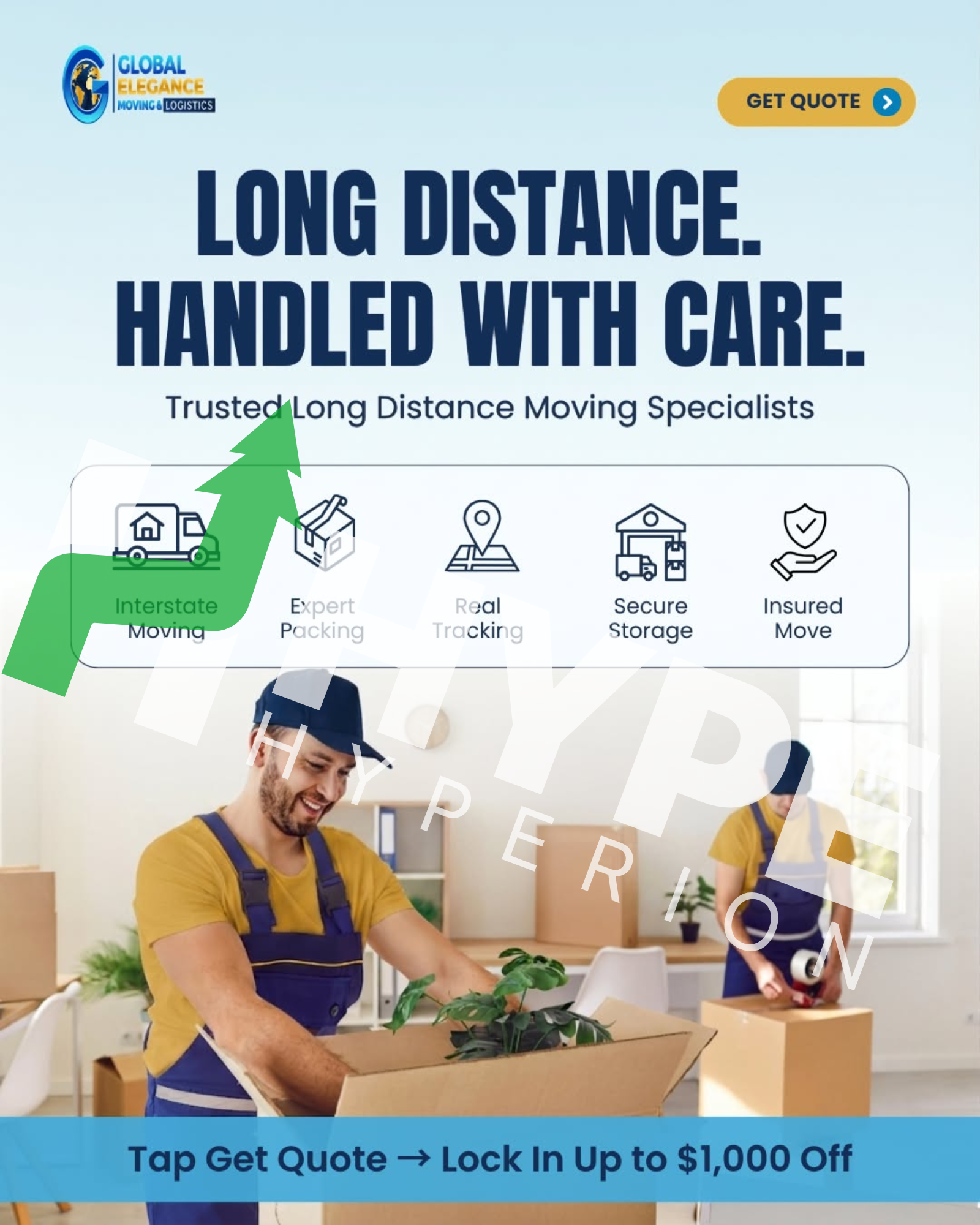
That was the actual goal for Cross Country Movers, a long-distance moving company serving customers across the United States.
The goal was never just more leads. The goal was to turn ad spend into booked moves and measurable revenue. This case study is not just about Facebook Ads. It is about building a lead generation system where the ad attracts the right customer, the form filters the wrong ones, and the follow-up process turns qualified inquiries into paid moving jobs.
By the end, the campaign generated 135 leads, 12 closed jobs, and $46,900 in revenue from $4,887.08 in ad spend. That came out to a 9.6x ROAS, which is close to a 10x return on the money spent.
🎯Why More Leads Didn’t Mean More Customers
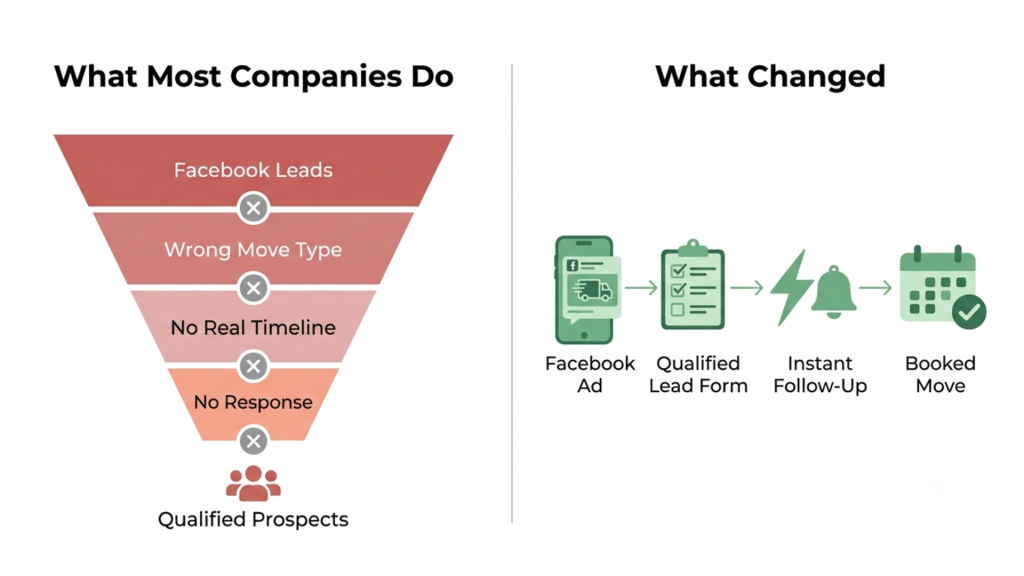
The biggest challenge was not lead volume. Cross Country Movers could generate inquiries through Facebook. The harder part was making sure those inquiries were actually worth the sales team’s time.
This is where most moving campaigns fail quietly. A low CPL can look great in the ad account, but it does not mean much if the leads are local moves, wrong timelines, low-intent shoppers, or people who are not serious about booking. The sales team can spend hours calling leads that were never a good fit in the first place.
For a long-distance moving company, quality matters more than raw volume. One qualified long-distance move can be worth thousands of dollars, while dozens of poor-fit leads can drain time without producing revenue. So the campaign had to do more than bring in names and phone numbers. It had to help the team identify which customers were actually ready for a long-distance move.
🔍The Difference Between More Leads and Better Leads
The campaign was not struggling to generate leads. The real issue was separating serious long-distance customers from people who were only browsing, planning a small local move, or not ready to speak with a mover yet. Without that filter, the sales team had to do too much qualification after the lead came in.
Better leads made every step after the click faster and easier. When the ad called out the right person early, fewer poor-fit customers entered the funnel. When the form asked the right questions, the team could understand the move type, timeframe, and destination before the first call. That meant the sales process started with more context and less wasted effort.
📣The Ad Strategy That Called Out the Right Audience First
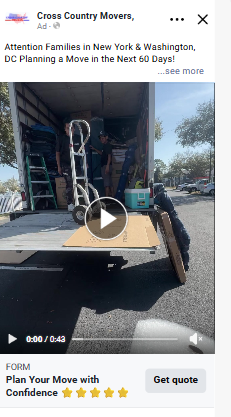
One of the biggest decisions was to keep targeting intentionally broad. Instead of stacking interests or narrowing audience segments, the campaign let Meta find the right people based on the creative itself rather than restrictive audience filters.
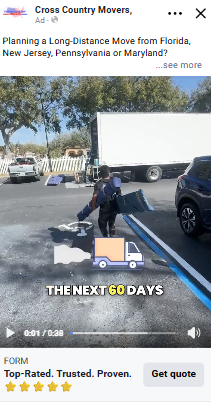
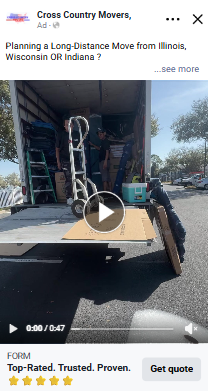
The ads used a FOMO-driven angle with a direct audience callout. Instead of speaking to everyone who might need movers someday, they focused on people with an immediate need.
Example:
One of the strongest-performing hooks was:
“If you’re planning a move in the next 60 days, this is for you.”
Example:
That simple message qualified intent before anyone even clicked. People who weren’t planning a move within that timeframe naturally kept scrolling, while those actively preparing to relocate immediately recognized the ad was meant for them.
Example:
From there, different ad variations focused on the biggest concerns long-distance customers already have, including:
the stress of coordinating a move across state lines;
the fear of hiring the wrong company and having belongings damaged or delayed;
the overwhelm of managing timelines, logistics, and communication with a company that goes quiet after booking;
the frustration of receiving quotes that increase dramatically by moving day.
Example:
By qualifying people at the ad level, the campaign attracted higher-intent prospects before they ever reached the lead form.
⚙️The Small Changes That Made People More Likely to Book a Move
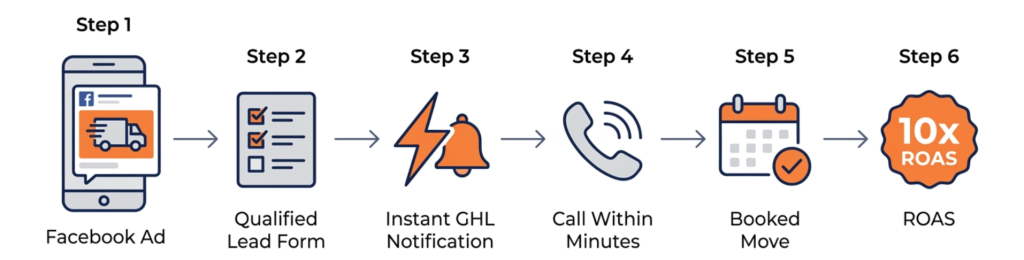
The biggest improvement did not come from changing one ad and hoping everything would work. It came from tightening every part of the customer journey. The ad, the lead form, and the follow-up system all had to work together.
The ads were built to call out people who were already planning a long-distance move. The form was built to filter out poor-fit inquiries before they reached the sales team. The automation was built to make sure qualified leads were contacted while they were still warm.
That combination mattered because moving customers usually request quotes from multiple companies. If the campaign only generates a lead but the team responds too late, the opportunity can disappear fast. The system had to capture attention, qualify the inquiry, and trigger follow-up without delay.
📈Changes That Had the Biggest Impact
The first major change was the ad angle. Instead of using generic moving company language, the ads spoke directly to planning a move within a clear window, such as the next 60 days. This helped qualify intent before anyone even clicked because people who were not planning a move soon would naturally ignore the ad.
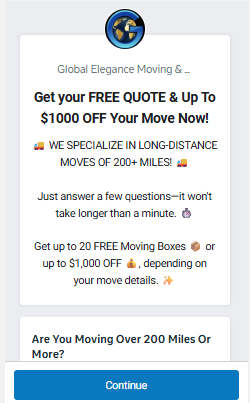
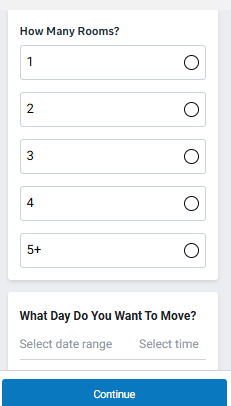
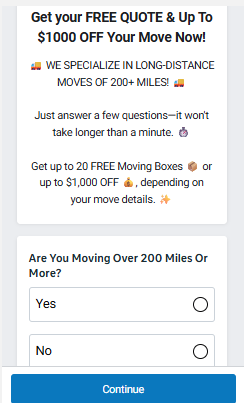
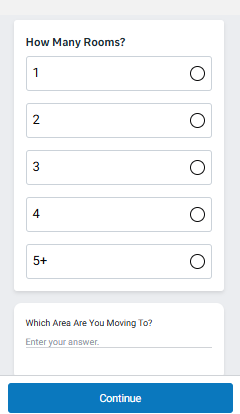
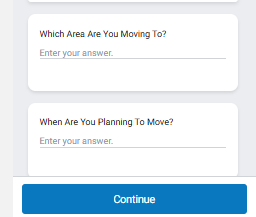
The second change was the lead form. It asked practical questions around move type, timeframe, and relocation details so the sales team could quickly spot high-value long-distance opportunities. This reduced the number of local move inquiries and made the incoming leads easier to prioritize.
The third change was automation. Every qualified lead was pushed into GHL, and the sales team received an immediate notification. That meant leads were not sitting untouched in Meta, waiting for someone to manually check the account. The faster the team responded, the better the chance of turning the inquiry into a booked job.
✅How We Made Every Lead Count
This is where most moving company campaigns quietly bleed money. The account might show a reasonable CPL, but if the sales team is spending time on local moves, wrong-fit customers, or people with no real timeline, the actual cost of acquisition becomes much higher.
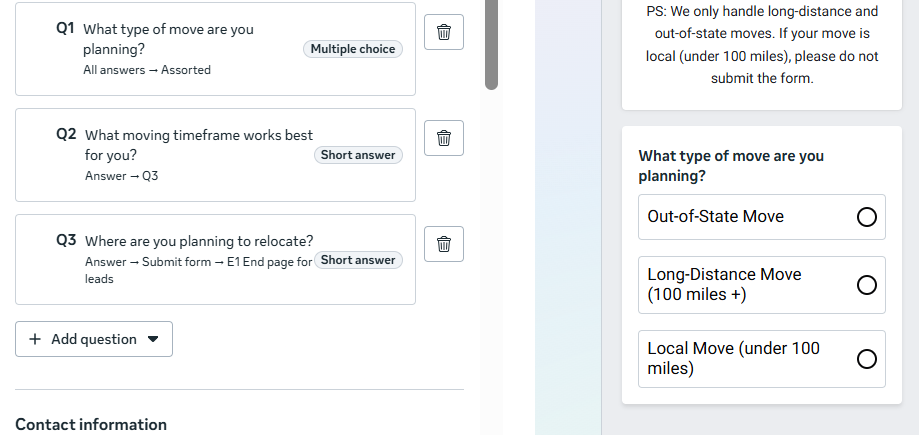
To solve that, HYPE Hyperion Digital built qualification directly into the Meta lead form. The form made it clear that Cross Country Movers handled long-distance and out-of-state moves, not local moves under 100 miles. This helped stop the wrong type of customer before they entered the pipeline.
The form asked what type of move the customer was planning. Anyone selecting a local move under 100 miles could be disqualified immediately, while long-distance and out-of-state inquiries were treated as priority leads. It also asked about the moving timeframe, which helped filter out people who were only casually browsing with no real plan to move soon.
Another key question focused on relocation details. Instead of creating friction, the form collected the information the sales team needed to assess job size, distance, and logistics. The result was a form that still felt simple for the customer, but worked much harder in the background. Every lead that came through had already shared useful information before the first sales call happened.
⚡Why Calling People Within Minutes Changed the Results
Speed matters in the moving industry because most customers do not request one quote and wait patiently. They usually contact several moving companies at once, compare prices, and often book with the team that responds quickly and sounds organized. A good lead can go cold fast as most customers are requesting quotes from multiple movers at the same time.
That is why the follow-up system was just as important as the ad campaign. Every Facebook lead was instantly pushed into GHL, so the sales team did not have to manually check Meta or wait for delayed notifications. The moment a qualified form was submitted, the team had the information they needed to act.
This changed the campaign from a basic lead generation setup into a real sales pipeline. Leads were not just collected. They were routed, notified, tracked, and followed up with in a structured way. That removed one of the biggest reasons moving leads fail: slow response time.
🔄What Happened When Every Lead Got an Immediate Response
Once every Facebook lead was sent into GHL, the sales team received immediate notifications the moment someone submitted the form. That created a much tighter connection between the ad and the sales call. Instead of letting a customer sit for hours, the team could reach out while the move was still fresh in their mind.
This helped keep leads warm. A customer who just filled out a quote form is usually still thinking about the move, comparing options, and expecting a call. Reaching them in that moment makes the conversation easier because the intent is still active.
The automation made sure no qualified lead slipped through the cracks. If a lead did not answer the first call, they were not forgotten. They could move through a structured follow-up sequence instead of disappearing into a spreadsheet or inbox. That consistency helped turn a $36.20 average CPL into real booked revenue.
📊The Results After Everything Started Working Together
Once the ads, form, and follow-up system started working together, the numbers became much stronger. The campaign generated 135 total leads at an average CPL of $36.20. From those leads, Cross Country Movers closed 12 jobs and generated $46,900 in revenue.
The total ad spend was $4,887.08. That means every $1 spent on ads brought back about $9.60 in revenue. The average job value came out to roughly $3,908 per closed move, which shows why quality mattered more than chasing the cheapest possible lead.
Metric
Value
Total Leads
135
Average CPL
$36.20
Clicks
831
CPC
$5.88
Total Ad Spend
$4,887.08
Closed Jobs
12
Total Revenue
$46,900.00
ROAS
9.6x
Average Job Value
~$3,908
The lead-to-close rate was about 8.9%, which is strong for long-distance moving. These customers often compare multiple companies, ask for several quotes, and take more than one touchpoint before booking. There were also additional leads still active in the pipeline, which means the final ROAS could rise even further as more deals close.
The important part is that this result did not come from Facebook Ads alone. The ads created the opportunity, but the system turned that opportunity into revenue. The campaign worked because the right customers were called out early, the form filtered the lead quality, and the sales team responded before the lead went cold.
💡The Biggest Lesson from This Campaign
A profitable Facebook campaign is not built on ads alone. It depends on attracting the right people, qualifying them before the sales call, and responding while they are still ready to buy. When those pieces work together, better results follow naturally.
Most moving companies are obsessed with lowering CPL. That is understandable, but it is not the full picture. A cheap lead that never books is still expensive. A slightly higher-quality lead that turns into a $3,908 job is what actually grows the business. For Cross Country Movers, Facebook Ads generated the opportunity. A better lead qualification and follow-up system generated the revenue. That is how HYPE Hyperion Digital helped turn $4,887.08 in ad spend into $46,900 in revenue and a 9.6x ROAS.
The real takeaway is this: Stop chasing leads. Start building a system that turns the right people into booked moves.
🩺How We Stopped Meta Ads from Wasting Healthcare Ad Budget
Healthcare advertising can get expensive quickly when the campaign is not giving you clean data. It becomes even harder when Meta starts automatically mixing your creatives, headlines, and descriptions in ways that make the results almost impossible to understand.
That was the main problem inside this Spanish language lead generation campaign for Inland Vein & Wound Specialists.
The campaign was targeting Spanish-speaking women 35+ in the Inland Empire area. The goal was simple: generate qualified patient leads for vein and wound services. But the setup became messy because Meta’s automated testing features started controlling the combinations instead of letting us test each angle clearly.
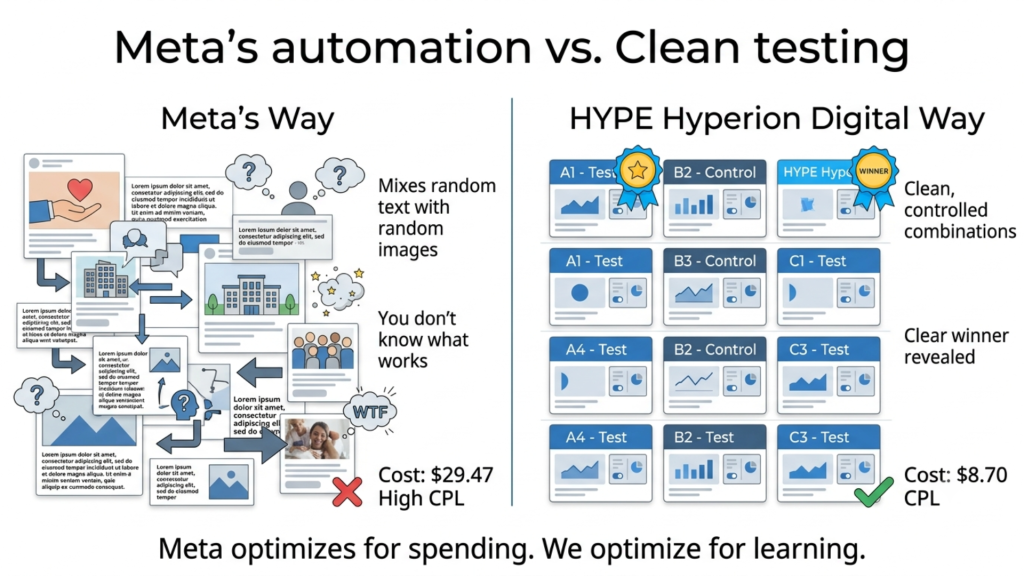
On paper, automation sounds helpful. Meta promises to find the best combination, send budget to the right assets, and make testing easier. In reality, relying too heavily on automation can leave you with high CPL, messy data, and no clear answer on which creative actually made the patient opt in.
🎯The Strategy: Adapting Proven Ad Angles for a Spanish-Speaking Audience
The client was Inland Vein & Wound Specialists, a medical clinic serving Spanish-speaking patients in California. Instead of starting from scratch, HYPE Hyperion Digital took four ad creatives that had already worked well in English and adapted them into Spanish. The goal was not just translation. The goal was to see which angle would resonate most with this specific audience.
We wanted to run a clean test between four different creative directions. Each one had its own purpose, message, and reason for being in the campaign. If the data came back clean, we would know which angle deserved more budget and which ones needed to be cut.
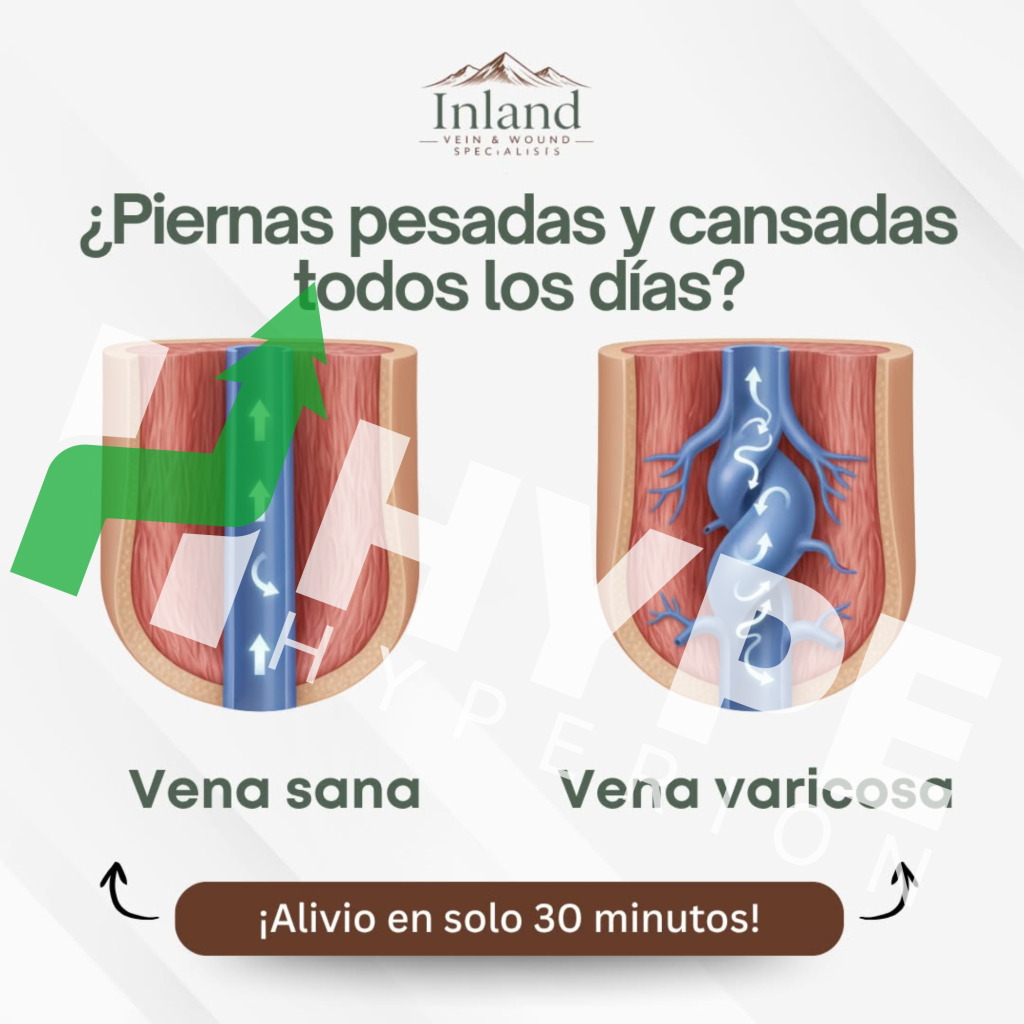
Creative 01 focused on the Heavy Legs angle. It focused on morning symptoms and opened with the kind of problem the audience might feel every day: heavy, tired legs. The visual used a healthy vs. varicose vein diagram and promised relief in 30 minutes, which made the message simple and symptom-driven.
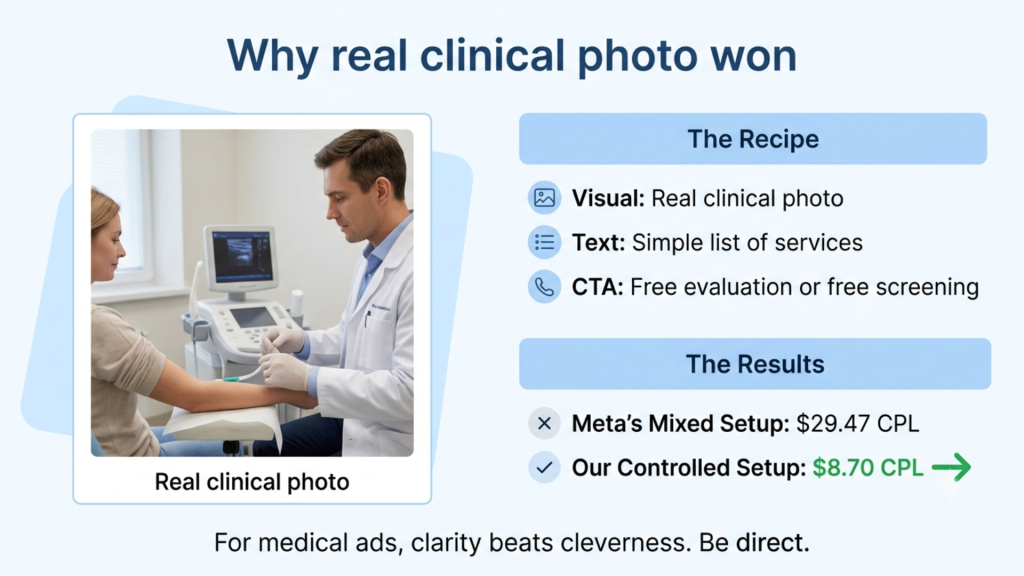
Creative 02 focused on the Services & Expertise angle. This one was the most direct creative in the group. It used a real clinical photo, listed the conditions the clinic treats, and gave a clear free evaluation CTA without trying to be clever.
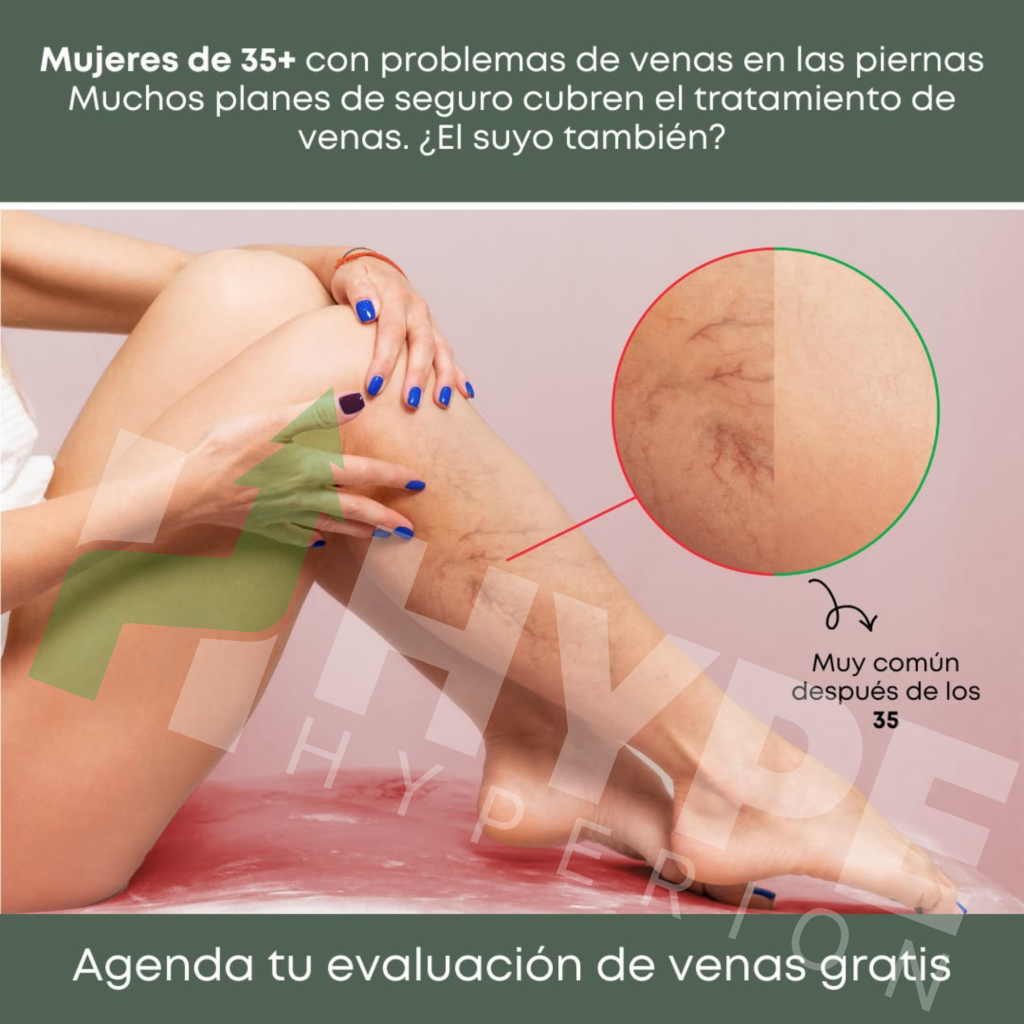
Creative 03 focused on the Insurance & Objections angle.This ad tackled two big barriers upfront: age relatability and treatment cost. It used insurance coverage as the hook so the audience could immediately understand that treatment might be more accessible than they assumed.
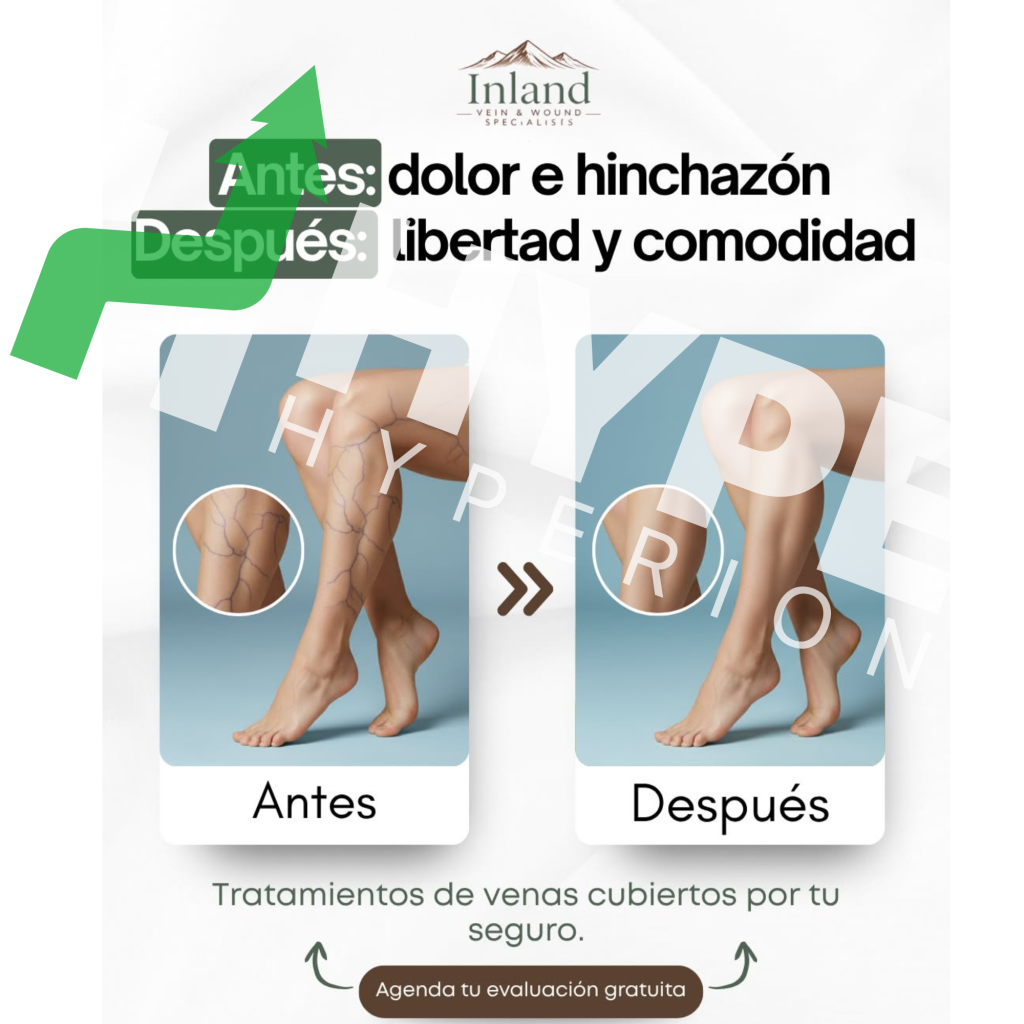
Creative 04 focused on the Before & After angle. It showed a clear transformation from pain and swelling to freedom and comfort. It also supported the message with insurance information underneath, so the creative handled both the emotional desire for relief and the practical concern around cost.
🚗When Meta Takes the Wheel
🚫The Missing Toggle That Ruined Our Setup
The issue started when Meta removed the classic Dynamic Creative toggle and pushed the Single Media format instead. This new setup allows advertisers to upload multiple images, videos, text options, headlines, and descriptions into one bucket. Then Meta decides how everything gets mixed and matched.
That might sound efficient, but it creates a serious problem for anyone trying to learn from the campaign. We did not want one big blended result where every asset was randomly combined. We needed to know which Spanish creative angle was actually driving leads. When Meta took control of the combinations, that clean testing structure disappeared.
🤖The Algorithm Messed Up All Our Ads
Meta started randomly pairing our four Spanish creatives with different headlines and descriptions. That meant the image from one angle could end up matched with copy that belonged to another angle. A strong visual could be weakened by the wrong headline, and a clear message could be diluted by the wrong description.
This is where automated testing becomes dangerous. The campaign no longer tells you which idea is working. It only tells you that some random combination produced a result. That makes the data hard to trust because the creative, headline, and copy are no longer working as one intentional message.
💸Spending Budget Without Getting Clean Data
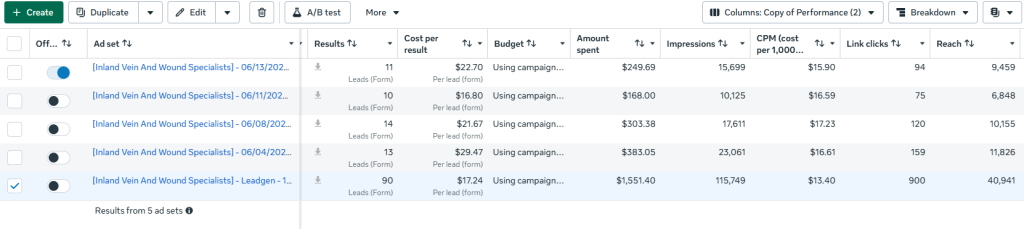
The financial impact showed up quickly. One early ad set hit a $29.47 CPL with 13 leads from $383.05 in spend. The campaign was still producing leads, but the cost was inflated because budget was being spread across random, unoptimized asset combinations.
The bigger issue was not just the CPL. The bigger issue was that we were spending without learning. We could not clearly say which creative angle triggered the patient to submit the form. For a healthcare campaign, that is a major problem because every dollar should either produce a lead or teach you something useful about the audience.
🛠️How We Fixed the Dashboard to Take Control of Our Advertising for Healthcare
HYPE Hyperion Digital fixed the problem by bypassing Meta’s default recommendations and launching a separate campaign with a manually controlled setup. Instead of giving Meta a messy bucket of assets, we took back control over which creative paired with which copy and headline. Every combination had a reason behind it, and every result became easier to read.
This turned the campaign from a noisy automated test into an organized structure. We could finally see which angle was pulling its weight and which one was not. That matters because in medical lead generation, you are not just looking for cheap clicks. You are looking for the clearest message that makes a cautious patient feel safe enough to take action.
The winner was Creative 02, the Services & Expertise angle. It was the most direct creative in the campaign: real clinical photo, clear list of treated conditions, and one simple free evaluation CTA. No complicated hook, no layered storytelling, no overbuilt marketing angle.
That result made sense for this audience. Spanish-speaking users making a medical decision often value clarity and trust over clever creative tricks. They want to know what the clinic treats, whether the service feels real, and what the next step is. In this case, clarity beat cleverness because the most straightforward ad gave people the least amount of work to understand the offer.
📉How We Trashed a $29 CPL and Hit $8.70
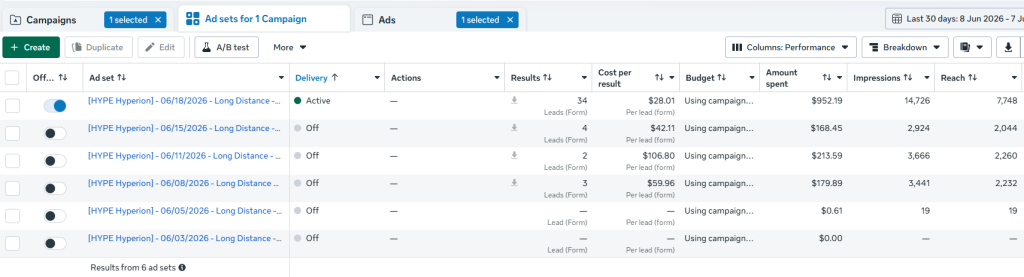
The results showed a massive difference between automated chaos and manual control. Under the earlier Meta-controlled setup, one ad set produced 13 leads at a $29.47 CPL with $383.05 in spend. After we moved into the controlled Dynamic Creative setup, the campaign produced 13 leads again, but this time at an $8.70 CPL from only $113.16 in spend.
That is the key part. The lead volume was the same, but the cost was completely different. We did not need to spend more to get the same number of leads. We needed to stop letting Meta waste budget across combinations that did not give us a clear signal.
Here is what the campaign performance looked like:
Ad Set
Leads
CPL
Spend
Base: Meta automated
90
$17.24
$1,551.40
06/04/2026
13
$29.47
$383.05
06/08/2026
14
$21.67
$303.38
06/11/2026
10
$16.80
$168.00
06/13/2026
11
$22.70
$249.69
06/15/2026: Controlled Dynamic Creative
13
$8.70
$113.16
The controlled setup dropped CPL from $29.47 to $8.70, the lowest this campaign had ever produced. It brought in 13 leads from $113.16 in spend, which was the same lead volume as the earlier 06/04 ad set that cost more than 3x as much. It also came in at roughly half the CPL of the large base ad set while using less than 10% of that total spend.
This is why the result mattered. The $8.70 CPL was not a lucky spike. It was what happened when the winning creative got focused budget without random asset noise. Once the setup became readable, the campaign finally showed us what the audience actually wanted.
🤖Human Beats AI Every Time
The biggest lesson is simple: Meta’s algorithm may optimize for delivery, but not always for clean learning
That does not mean automation is useless. It means you cannot hand over the entire testing process and expect Meta to tell you which creative angle actually won. The platform will spend the budget where it sees short-term delivery signals, but it will not always protect your strategy, your message, or your need for clean data.
In this Spanish campaign, taking control of the asset combinations revealed the winning creative clearly and cut CPL by 3x. We stopped the data noise, focused the budget, and gave the campaign a structure that made the results easy to understand. That is what made the difference between a $29.47 lead and an $8.70 lead.
This is especially important in facebook advertising for vein clinic lead generation, where the audience is cautious and every message has to build trust quickly. You need to know exactly which creative makes someone feel safe enough to respond. When Meta mixes everything randomly, you lose that insight. When you control the test, you find the winner faster, waste less budget, and scale the local campaign with confidence.
🩺How Facebook Ads Built Trust for a Local Vein Clinic from California
Facebook advertising for vein clinics is not always about generating direct leads from day one. Sometimes, facebook advertising for vein clinic campaigns needs to solve a quieter problem first: does the clinic look active, trusted, and real when a potential patient checks the page?
That was the idea behind this campaign.
HYPE Hyperion Digital launched a low-budget local strategy for a clinic in California with one simple goal: build real local social proof without wasting thousands of dollars on heavy content production. The campaign was not built to book appointments directly. It was built to make the clinic’s Facebook page look more established, more active, and more trustworthy when potential patients checked it before reaching out.
This matters because follower count can quietly influence conversion. Many patients may see an ad, like the offer, and then check the Facebook page before deciding whether to call. A patient might see your ad, like the offer, and then check your page before calling. If the page looks empty, inactive, or too new, that hesitation can quietly kill the booking before it ever shows up in your lead data.

📍Landing Patients in a Local Vein Clinic
The client wasThe Vein Place, a specialized vein and vascular clinic based in Santa Ana, California. The clinic handles high-ticket medical treatments, which means trust is not optional. Patients are not buying a small product or clicking into a casual offer; they are making a health-related decision that requires confidence before they take the next step.
That creates a very different advertising environment. A local clinic can have strong doctors, real treatment options, and a clean offer, but if the social presence looks weak, some patients will still hesitate. They want to know the clinic is active. Before they share personal health information or book an appointment, they want the clinic to feel active, visible, and trusted by others.
So the goal was not just “get more followers” for the sake of a number. The goal was to build a local credibility layer that supports every other campaign the clinic runs. When someone sees a lead ad, visits the website, checks Facebook, or compares clinics, the page should help build trust instead of creating doubt.
📉The Page Follower Count Problem
Potential patients often check social media before booking. They want to see if the clinic is real, if it is active, and if other people in the local area seem connected to it. This step happens quietly, and most clinics never see it directly in their lead reports.
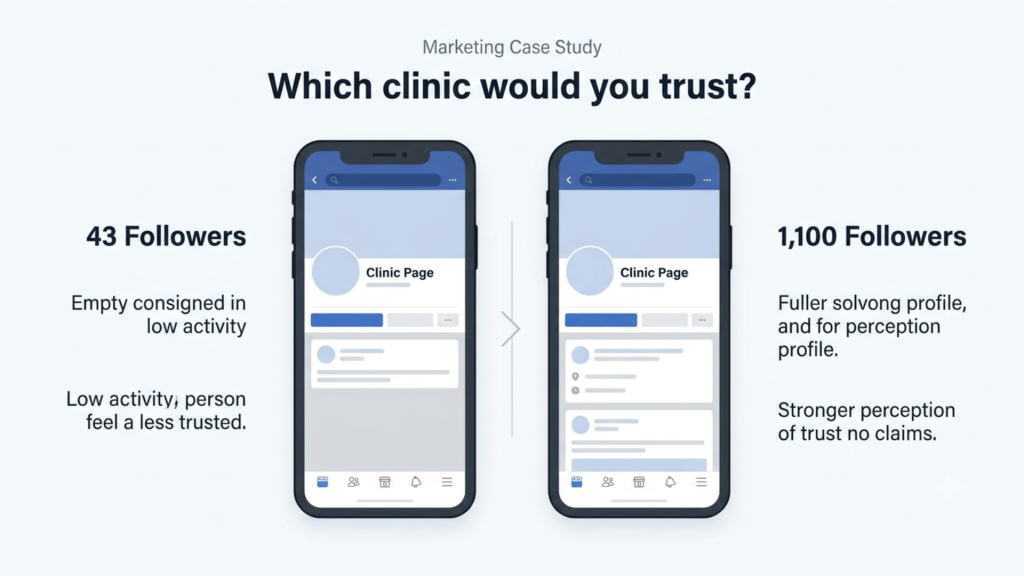
A page with only 43 followers can create hesitation, especially for a patient who is already cautious about choosing a medical provider. It may not be fair, but it changes how people feel. A patient might think the clinic is new, inactive, or not known locally. Even if the clinic is excellent in real life, the page can send the wrong signal before the patient ever speaks to the team.
This is especially important in healthcare. People are cautious when it comes to their body, their symptoms, and their treatment choices. An empty or inactive page does not say, “We are just building our online presence.” To a nervous patient, it can feel like something is missing. That small doubt can be enough to make them keep searching.
❌Three Growth Strategies That Fail Local Medical Clinics
📋Option 1: Relying Only on Organic Posting
Organic posting is usually the first solution that comes to mind. In theory, the clinic could post educational content, patient-friendly graphics, short reels, and clinic updates until the page starts to grow. That is a solid long-term strategy, but it is painfully slow for a small local medical team.
Most clinic teams do not have the time, energy, or internal creative support to run social media every day. They are busy managing patients, appointments, treatment rooms, follow-ups, and actual clinic operations. On top of that, Facebook’s organic reach in 2026 makes this route even harder because even good posts often reach very few people without paid distribution. A clinic could post consistently for months and still end up with a page that looks too small to build instant trust.
👥Option 2: Hiring a Social Media Manager Too Early
Hiring a social media manager can help, but it is usually not the smartest first move for a small clinic with an empty page. A good specialist costs money every month, and the cost adds up quickly. Before the page has a real local audience, even strong content has limited room to perform.
This is where many clinics overspend too early. Many clinics start paying for captions, designs, reels, calendars, and reports before solving the basic trust issue: the page still has very little local audience. A social media manager can maintain and grow a brand, but hiring one too early can turn into a monthly expense with slow visible progress. For a clinic that simply needs the page to look credible, there is a cheaper first step.
🤖Option 3: Buying Fake Followers
Buying fake followers may look like the fastest shortcut, but it usually creates the weakest long-term result. It gives the page a bigger number, but the people behind that number are not real local patients. They will not book, comment, ask questions, share posts, or build trust around the brand.
The bigger problem is that fake followers can damage the page long-term. They inflate the audience without creating real engagement, which makes future content look weaker. If a page has thousands of followers but almost no interaction, that can make the clinic look even less trustworthy. It also sends poor signals to Facebook because the audience is full of people who will never respond to future posts or offers.
🚀The Solution: A Low-Budget Campaign Built for Real Local Followers
HYPE Hyperion Digital used a fourth option that many agencies ignore because it sits between social proof building and paid advertising. We launched official ad campaigns for engagement with the Page Likes performance goal. The point was not to get random traffic or cheap clicks. The point was to force Meta to find local people who were likely to actually follow the page.
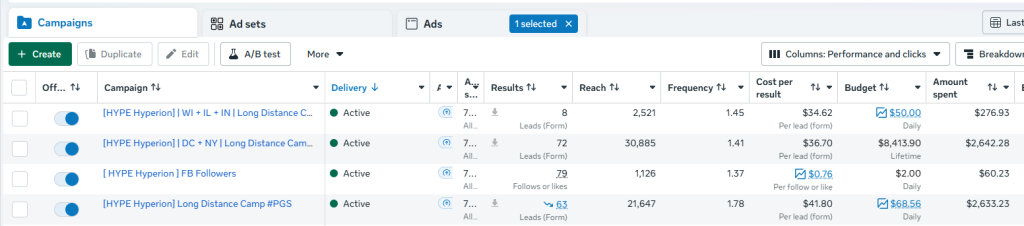
The setup was simple. We used 2–3 clean banners with clear messaging for local residents and set a micro-budget of around $2 to $3 per day. There was no complicated funnel, no massive creative production, and no heavy campaign structure. The campaign was designed to do one job well: grow the page with real local followers at a very low cost.
The results showed why this approach worked. HYPE Hyperion Digital spent $258.99 and generated 1,035 real local followers. That brought the cost per follower down to just $0.25.
For a local clinic, that is a strong asset. These are people in the market who have now connected with the page and can keep seeing the clinic in their feed. They become more familiar with the brand over time. When they or someone in their family starts looking for vein treatment, The Vein Place is no longer a random clinic they just discovered. It is a name they have already seen before.
⚠️Meta’s New Account Traps
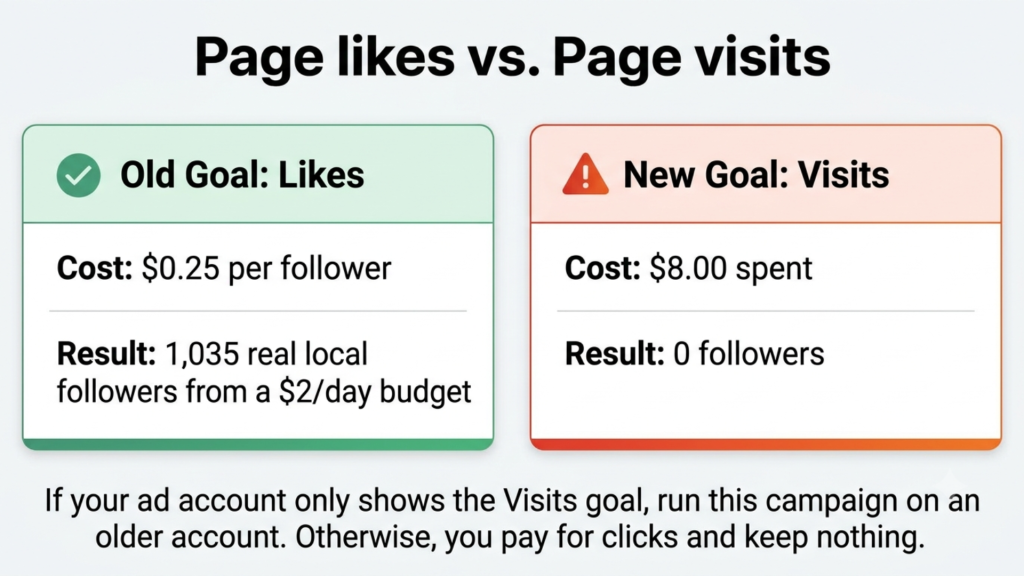
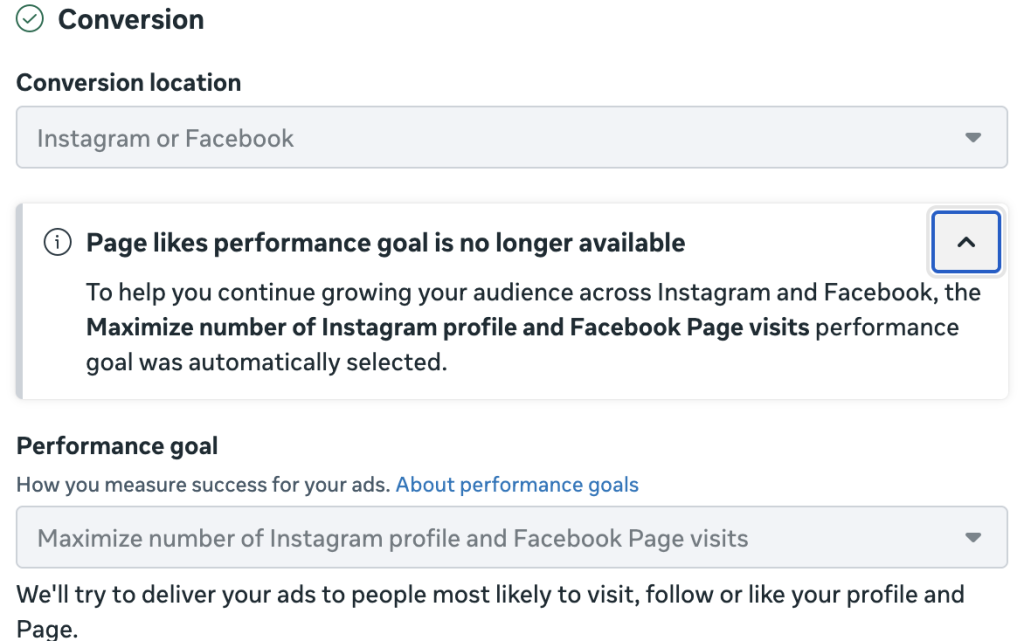
There is one important warning before anyone tries to copy this setup. Meta has been updating ad accounts and removing the classic Page Likes goal from newer dashboards. Instead, Meta now pushes the Page Visits performance goal, which sounds similar but does not produce the same result.
This is where the campaign can go wrong. Page Visits can get people to land on the page, but it does not mean they will follow it. A user can click, look around briefly, leave, and the campaign may still count that as a successful result. That is a completely different outcome from a real page follow.
We tested this newer setup and the results proved the problem. The campaign spent around $8, generated page visits, and produced exactly zero followers. That means the budget created temporary traffic but left no lasting audience behind. In simple terms, the campaign created temporary traffic, but it did not build a lasting audience and leave.
The solution is clear. If the Page Likes performance goal is missing in the new dashboard, this campaign should be run through an older generation ad account where the right goal is still available. Otherwise, the budget can easily go down the drain. For this strategy, the goal matters because visits and followers are not the same asset.

🏆Social Proof Is More Than a Vanity Metric
Here is the only question that really matters.
Imagine a patient choosing between two similar local clinics. One page has 47 followers. The other has 1,100.
Which one feels more established? Which one feels safer? Which one is the patient more likely to call?
Most people already know the answer.
Building a thousand followers for a couple of hundred dollars is not about bragging rights. It is not about vanity. It is about building instant trust with anyone who visits the page before booking. In healthcare, that trust can be the difference between someone calling the clinic and quietly choosing another provider.
For The Vein Place, the follower campaign created a local credibility layer that supports the entire marketing system. Lead ads work better when the brand looks established. Website visits feel safer when the social page looks active. Patient trust builds faster when the clinic does not look invisible online