🚚How a Moving Company Achieved a 10x ROAS on Facebook Ads
Facebook advertising can generate moving leads fast, but leads alone don’t close deals. Facebook advertising for moving company growth only becomes profitable when those leads turn into booked moves, real revenue, and a sales process that does not let good opportunities go cold.
That was the actual goal for Cross Country Movers, a long-distance moving company serving customers across the United States.
The goal was never just more leads. The goal was to turn ad spend into booked moves and measurable revenue. This case study is not just about Facebook Ads. It is about building a lead generation system where the ad attracts the right customer, the form filters the wrong ones, and the follow-up process turns qualified inquiries into paid moving jobs.
By the end, the campaign generated 135 leads, 12 closed jobs, and $46,900 in revenue from $4,887.08 in ad spend. That came out to a 9.6x ROAS, which is close to a 10x return on the money spent.
🎯Why More Leads Didn’t Mean More Customers
The biggest challenge was not lead volume. Cross Country Movers could generate inquiries through Facebook. The harder part was making sure those inquiries were actually worth the sales team’s time.
This is where most moving campaigns fail quietly. A low CPL can look great in the ad account, but it does not mean much if the leads are local moves, wrong timelines, low-intent shoppers, or people who are not serious about booking. The sales team can spend hours calling leads that were never a good fit in the first place.
For a long-distance moving company, quality matters more than raw volume. One qualified long-distance move can be worth thousands of dollars, while dozens of poor-fit leads can drain time without producing revenue. So the campaign had to do more than bring in names and phone numbers. It had to help the team identify which customers were actually ready for a long-distance move.
🔍The Difference Between More Leads and Better Leads
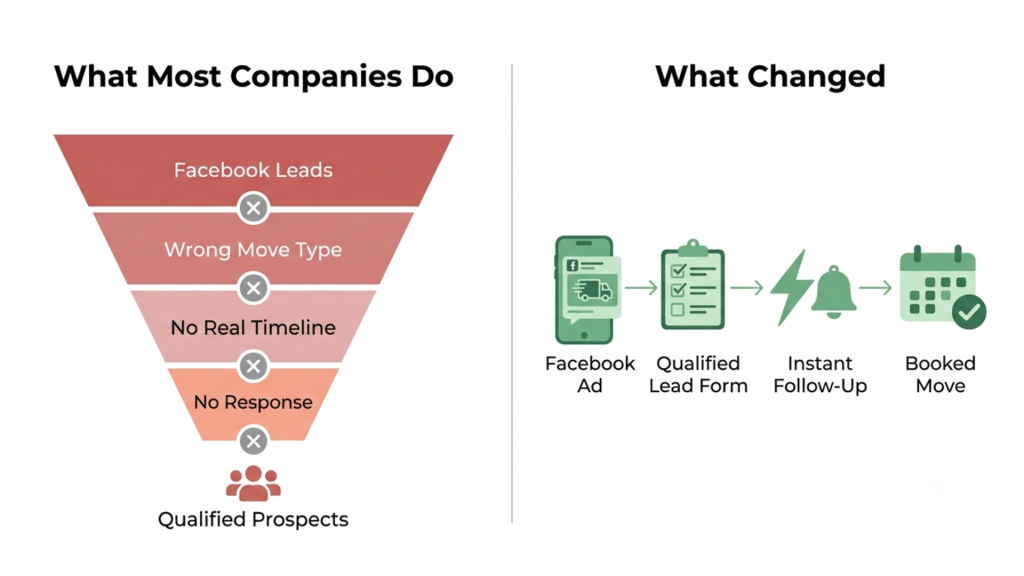
The campaign was not struggling to generate leads. The real issue was separating serious long-distance customers from people who were only browsing, planning a small local move, or not ready to speak with a mover yet. Without that filter, the sales team had to do too much qualification after the lead came in.
Better leads made every step after the click faster and easier. When the ad called out the right person early, fewer poor-fit customers entered the funnel. When the form asked the right questions, the team could understand the move type, timeframe, and destination before the first call. That meant the sales process started with more context and less wasted effort.
📣The Ad Strategy That Called Out the Right Audience First
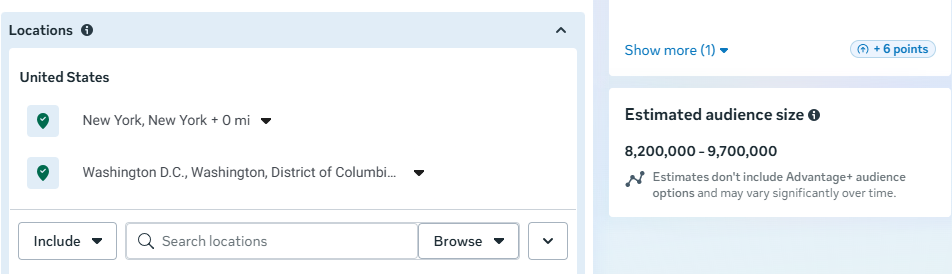
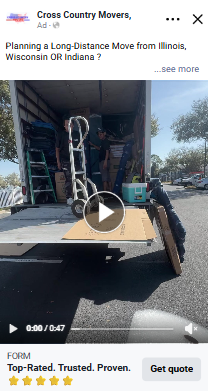
One of the biggest decisions was to keep targeting intentionally broad. Instead of stacking interests or narrowing audience segments, the campaign let Meta find the right people based on the creative itself rather than restrictive audience filters.
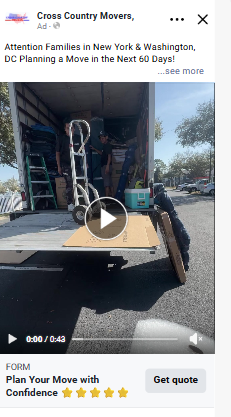
The ads used a FOMO-driven angle with a direct audience callout. Instead of speaking to everyone who might need movers someday, they focused on people with an immediate need.
Example:
One of the strongest-performing hooks was:
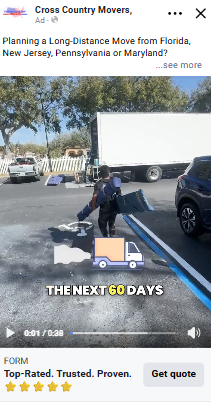
“If you’re planning a move in the next 60 days, this is for you.”
Example:
That simple message qualified intent before anyone even clicked. People who weren’t planning a move within that timeframe naturally kept scrolling, while those actively preparing to relocate immediately recognized the ad was meant for them.
Example:
From there, different ad variations focused on the biggest concerns long-distance customers already have, including:
the stress of coordinating a move across state lines;
the fear of hiring the wrong company and having belongings damaged or delayed;
the overwhelm of managing timelines, logistics, and communication with a company that goes quiet after booking;
the frustration of receiving quotes that increase dramatically by moving day.
Example:
By qualifying people at the ad level, the campaign attracted higher-intent prospects before they ever reached the lead form.
⚙️The Small Changes That Made People More Likely to Book a Move
The biggest improvement did not come from changing one ad and hoping everything would work. It came from tightening every part of the customer journey. The ad, the lead form, and the follow-up system all had to work together.
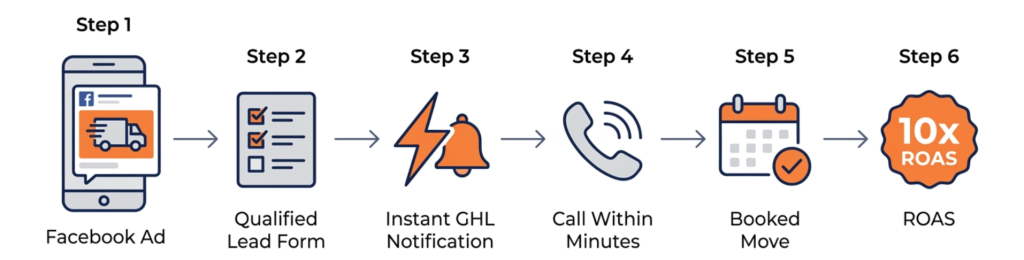
The ads were built to call out people who were already planning a long-distance move. The form was built to filter out poor-fit inquiries before they reached the sales team. The automation was built to make sure qualified leads were contacted while they were still warm.
That combination mattered because moving customers usually request quotes from multiple companies. If the campaign only generates a lead but the team responds too late, the opportunity can disappear fast. The system had to capture attention, qualify the inquiry, and trigger follow-up without delay.
📈Changes That Had the Biggest Impact
The first major change was the ad angle. Instead of using generic moving company language, the ads spoke directly to planning a move within a clear window, such as the next 60 days. This helped qualify intent before anyone even clicked because people who were not planning a move soon would naturally ignore the ad.
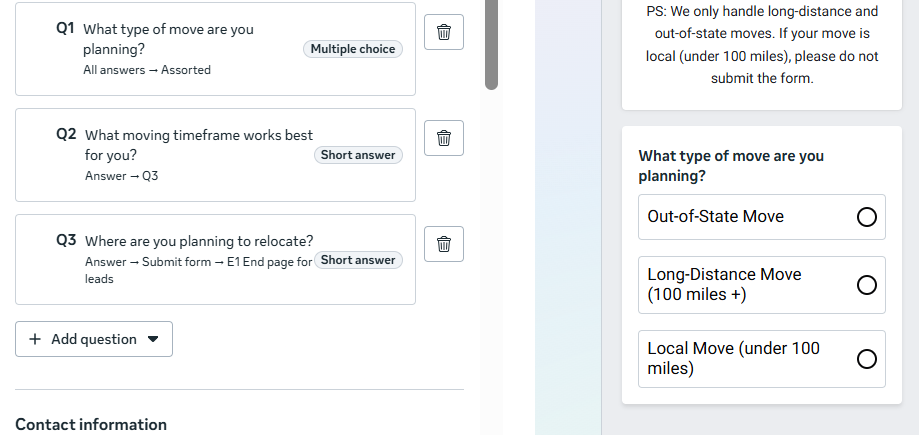
The second change was the lead form. It asked practical questions around move type, timeframe, and relocation details so the sales team could quickly spot high-value long-distance opportunities. This reduced the number of local move inquiries and made the incoming leads easier to prioritize.
The third change was automation. Every qualified lead was pushed into GHL, and the sales team received an immediate notification. That meant leads were not sitting untouched in Meta, waiting for someone to manually check the account. The faster the team responded, the better the chance of turning the inquiry into a booked job.
✅How We Made Every Lead Count
This is where most moving company campaigns quietly bleed money. The account might show a reasonable CPL, but if the sales team is spending time on local moves, wrong-fit customers, or people with no real timeline, the actual cost of acquisition becomes much higher.
To solve that, HYPE Hyperion Digital built qualification directly into the Meta lead form. The form made it clear that Cross Country Movers handled long-distance and out-of-state moves, not local moves under 100 miles. This helped stop the wrong type of customer before they entered the pipeline.
The form asked what type of move the customer was planning. Anyone selecting a local move under 100 miles could be disqualified immediately, while long-distance and out-of-state inquiries were treated as priority leads. It also asked about the moving timeframe, which helped filter out people who were only casually browsing with no real plan to move soon.
Another key question focused on relocation details. Instead of creating friction, the form collected the information the sales team needed to assess job size, distance, and logistics. The result was a form that still felt simple for the customer, but worked much harder in the background. Every lead that came through had already shared useful information before the first sales call happened.
⚡Why Calling People Within Minutes Changed the Results
Speed matters in the moving industry because most customers do not request one quote and wait patiently. They usually contact several moving companies at once, compare prices, and often book with the team that responds quickly and sounds organized. A good lead can go cold fast as most customers are requesting quotes from multiple movers at the same time.
That is why the follow-up system was just as important as the ad campaign. Every Facebook lead was instantly pushed into GHL, so the sales team did not have to manually check Meta or wait for delayed notifications. The moment a qualified form was submitted, the team had the information they needed to act.
This changed the campaign from a basic lead generation setup into a real sales pipeline. Leads were not just collected. They were routed, notified, tracked, and followed up with in a structured way. That removed one of the biggest reasons moving leads fail: slow response time.
🔄What Happened When Every Lead Got an Immediate Response
Once every Facebook lead was sent into GHL, the sales team received immediate notifications the moment someone submitted the form. That created a much tighter connection between the ad and the sales call. Instead of letting a customer sit for hours, the team could reach out while the move was still fresh in their mind.
This helped keep leads warm. A customer who just filled out a quote form is usually still thinking about the move, comparing options, and expecting a call. Reaching them in that moment makes the conversation easier because the intent is still active.
The automation made sure no qualified lead slipped through the cracks. If a lead did not answer the first call, they were not forgotten. They could move through a structured follow-up sequence instead of disappearing into a spreadsheet or inbox. That consistency helped turn a $36.20 average CPL into real booked revenue.
📊The Results After Everything Started Working Together
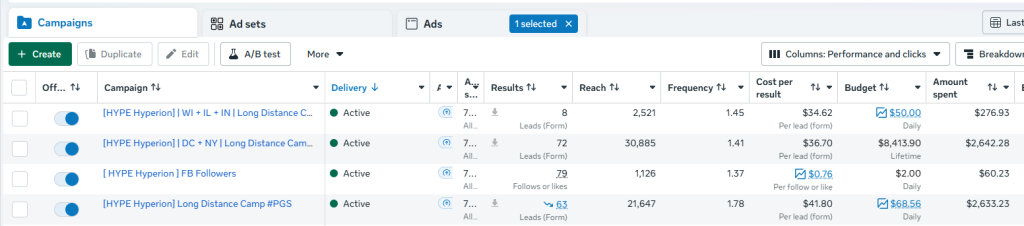
Once the ads, form, and follow-up system started working together, the numbers became much stronger. The campaign generated 135 total leads at an average CPL of $36.20. From those leads, Cross Country Movers closed 12 jobs and generated $46,900 in revenue.
The total ad spend was $4,887.08. That means every $1 spent on ads brought back about $9.60 in revenue. The average job value came out to roughly $3,908 per closed move, which shows why quality mattered more than chasing the cheapest possible lead.
Metric
Value
Total Leads
135
Average CPL
$36.20
Clicks
831
CPC
$5.88
Total Ad Spend
$4,887.08
Closed Jobs
12
Total Revenue
$46,900.00
ROAS
9.6x
Average Job Value
~$3,908
The lead-to-close rate was about 8.9%, which is strong for long-distance moving. These customers often compare multiple companies, ask for several quotes, and take more than one touchpoint before booking. There were also additional leads still active in the pipeline, which means the final ROAS could rise even further as more deals close.
The important part is that this result did not come from Facebook Ads alone. The ads created the opportunity, but the system turned that opportunity into revenue. The campaign worked because the right customers were called out early, the form filtered the lead quality, and the sales team responded before the lead went cold.
💡The Biggest Lesson from This Campaign
A profitable Facebook campaign is not built on ads alone. It depends on attracting the right people, qualifying them before the sales call, and responding while they are still ready to buy. When those pieces work together, better results follow naturally.
Most moving companies are obsessed with lowering CPL. That is understandable, but it is not the full picture. A cheap lead that never books is still expensive. A slightly higher-quality lead that turns into a $3,908 job is what actually grows the business. For Cross Country Movers, Facebook Ads generated the opportunity. A better lead qualification and follow-up system generated the revenue. That is how HYPE Hyperion Digital helped turn $4,887.08 in ad spend into $46,900 in revenue and a 9.6x ROAS.
The real takeaway is this: Stop chasing leads. Start building a system that turns the right people into booked moves.