How a Free 5-Day Program Generated High-Quality Leads for a Weight Loss Coach

When we started working with Callum, a personal fitness coach focused on sustainable weight loss, one thing became immediately clear: his audience — busy professionals — didn’t have time to spend hours in the gym. That insight shaped every step of our campaign.

Rather than trying to convince people to change their lives drastically, we aligned the message with their current lifestyle. That meant no long sessions at the gym, no complicated routines. We suggested that Callum offer a free 5-day weight loss program designed for at-home training sessions that take just 20 to 30 minutes a day — realistic, accessible, and immediately valuable.

This Headline Hooked Facebook Leads Before They Even Touched a Dumbbell

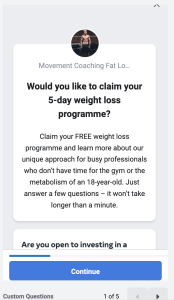
The free 5-day offer for weight loss lead generation wasn’t just a gimmick. It served as both a lead magnet and a trust builder. Users who saw the ad could sign up directly through a lead form on Facebook. During submission, they had the option to immediately schedule a consultation with Callum — streamlining the journey from ad view to potential client.

This approach let us meet people where they already were — on their phones, between meetings, or in the middle of a busy day — and offer something valuable that required no upfront payment and minimal time investment.

Our 3-2-2 Testing Model: Building 12 Ad Variants to Identify Top Performers

We launched the campaign using our go-to 3-2-2 testing framework:

  • 3 ad creatives
  • 2 ad copy variations
  • 2 headline variants

This simple matrix gave us 12 unique ad combinations to run in parallel. With a modest budget, we quickly gathered performance data, identifying underperformers and optimizing toward the best combinations.

The strongest creative used a transformation-style image, paired with a headline like “No Gym? No Problem — Try This Free 5-Day Weight Loss Plan”. It outperformed others by more than 40% in engagement and lead form completions.
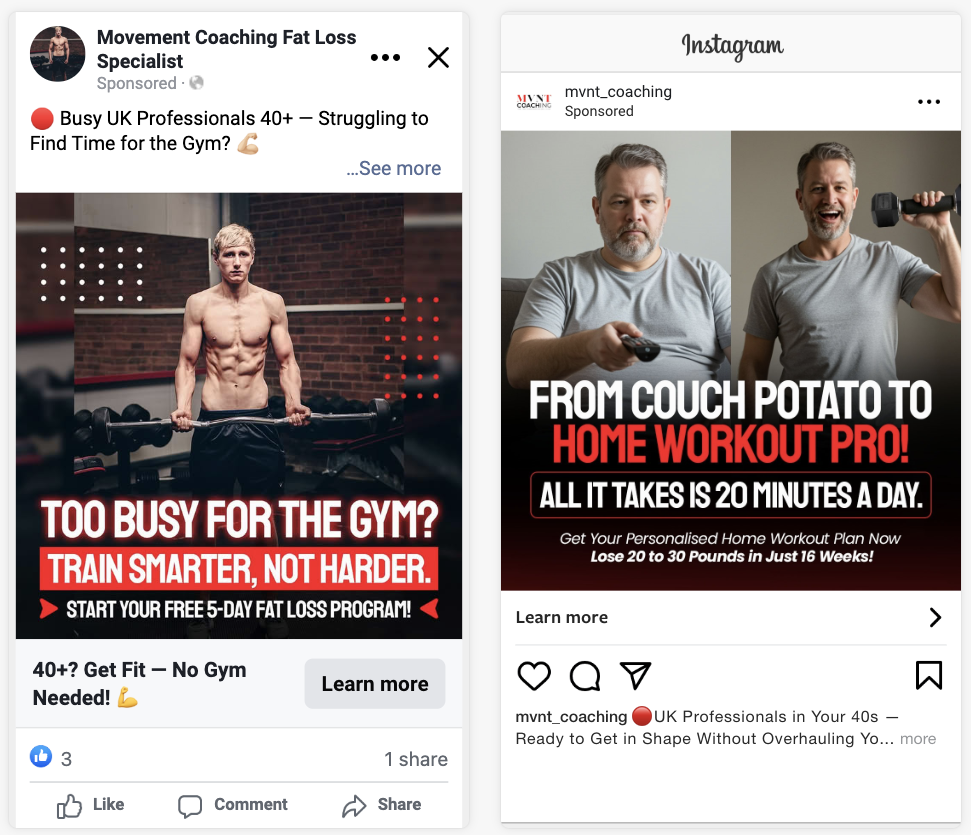
mvny_coaching ads examples-1
Image Creative Ads Examples

Throughout the testing phase, our average cost per lead (CPL) dropped to a highly competitive rate, making this case one of the more cost-efficient campaigns we’ve recently run.

How Automated Follow-Ups Turned Cold Leads Into Booked Calls

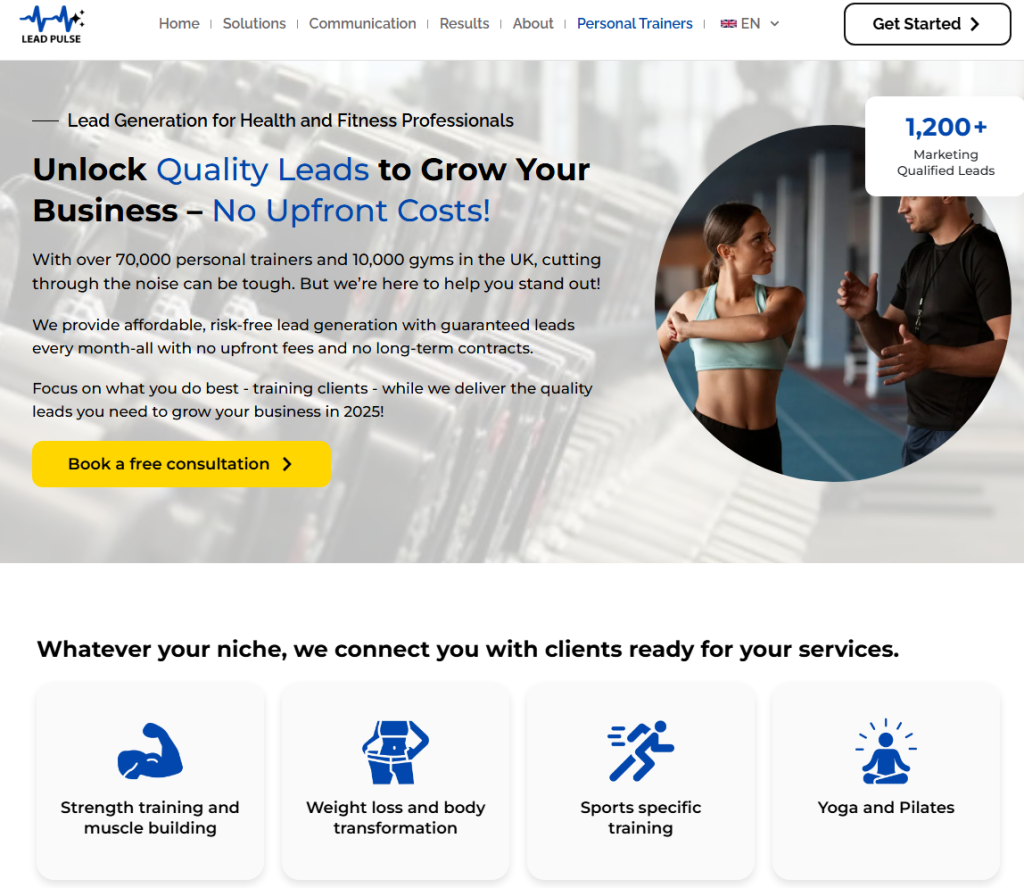
One major challenge when generating dozens of leads per week is processing them without delay. That’s where our partners at LeadPulse came in — their automation tools helped Callum follow up with new signups in real time, making it easy to schedule calls and send reminders with no manual effort required.

This partnership meant no lead was left cold and every new contact was nurtured automatically — saving time and increasing show-up rates for appointments.
lead pulse partnership
Lead Pulse Ads Reference

Crafting the Message: What Makes People Click?

Through iterative testing and direct feedback from Callum’s team, we discovered that the word “free” combined with phrases like “short sessions” and “no gym needed” generated the most clicks.

People didn’t want a life overhaul. They wanted something that works and fits into their life. The free 5-day weight loss program was a clear, low-risk invitation to see results quickly, and once they opted in, the optional call offered a more personalized experience.

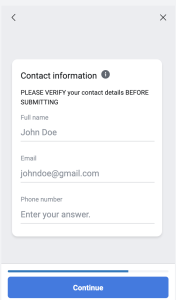
The form itself asked only for essential details and gave users the power to decide whether they wanted to book a consultation immediately or just receive the free plan — giving them control over the process.
Real Results From Simple Execution

MVMNT Coaching case is a great example of what happens when you deeply understand your audience and structure a campaign around their actual needs. We didn’t rely on overly polished videos or complex funnels. Instead, we offered a clear solution to a common pain point — lack of time — and delivered it in a format that worked with people’s lives.

In total, the campaign generated a high number of leads at a low cost, with a consistent flow of new consultations added to Callum’s calendar each week. Engagement rates remained high throughout the campaign, showing that the message resonated with the target market.

Final Results

Why the Campaign Worked So Well

There were several factors that contributed to the campaign’s success:

  • The free 5-day offer for weight loss lead generation aligned perfectly with the target audience’s time constraints.
  • The lead form with optional consultation offered a seamless and non-pushy user experience.
  • Ad creative and messaging were optimized through structured testing, reducing ad fatigue and improving relevance.
  • Automation from partners like LeadPulse Ads ensured leads were handled promptly and effectively.

Instead of pushing hard on sales, we used a helpful, no-strings-attached approach to gain trust and initiate relationships — and that made all the difference.

Affordable Leads for Renovation via DMs & Retargeting

🌐 Lead Generation for Renovation Services

Generating affordable leads for renovation services has traditionally relied on Facebook Ads lead forms or landing pages. But in this case study, HYPE Hyperion adopted a different strategy: initiating conversations through Instagram DMs and Facebook Messenger, completely bypassing the use of lead forms. This unconventional approach not only lowered the cost per lead but also increased the quality of conversations and conversions.

By integrating automated messages and retargeting strategies, we were able to turn interest into action more efficiently. This case highlights how messaging-based campaigns, combined with tailored creatives and smart positioning, can outperform traditional tactics.

📲 Why We Chose DMs Over Lead Forms

One of the key decisions in this campaign was to drive potential clients to DMs instead of lead forms. While forms require users to fill out multiple fields and wait for a response, messaging platforms create instant interaction. This builds trust and makes it easier to answer objections or provide more detail in real time.

The cost-efficiency became clear quickly. With DMs, we had the ability to qualify leads naturally through conversation. For renovation services where timing, location, and scope matter, this made it easier to filter serious inquiries from casual ones.

🎟️ Creative Testing: Video Ads vs Image Ads

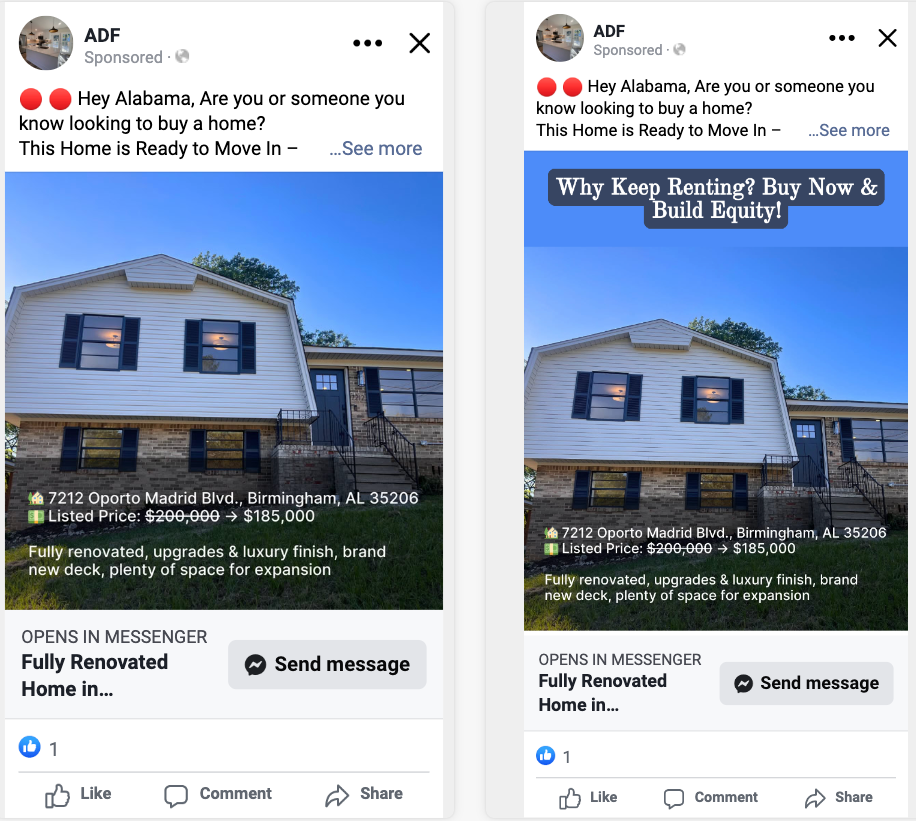
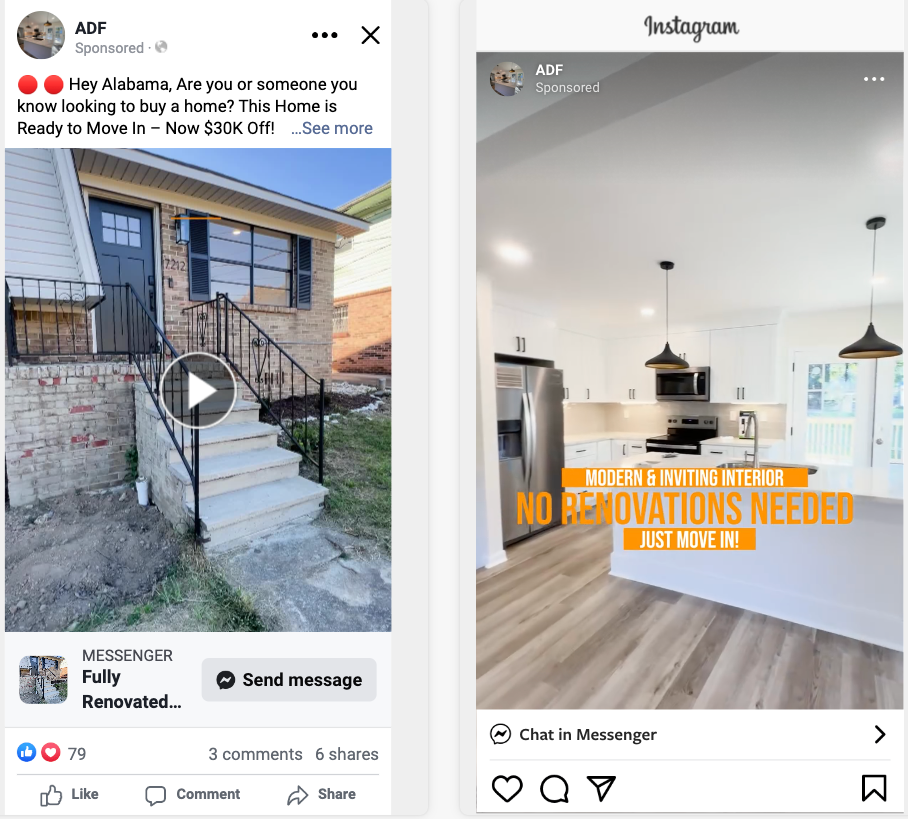
We ran two separate ad sets to compare image creatives against video creatives. Each was targeted to the same audience segment to ensure consistency in results. The video ads, showcasing renovation transformations and client testimonials, performed better in terms of engagement rate. However, image ads with clear, aesthetically pleasing visuals of finished interiors attracted more click-throughs.

Image Creatives Ads Examples
Video Ads Examples

Both formats had a role to play:

  • Video ads helped build emotional appeal and show craftsmanship
  • Image ads worked well to initiate action with stronger calls to DM

The combination of both formats created a full-funnel experience that moved users from interest to inquiry.

🫳 Positioning Strategy: Lifestyle vs Investment

In this renovation lead generation campaign, we promoted specific properties. The main messaging challenge was whether to sell the dream of living in a beautifully renovated space or highlight it as an investment opportunity.

We tested both strategies across creatives and ad copy. The lifestyle approach, focusing on how the property could improve daily life, significantly outperformed the investment angle. Ads featuring visuals of cozy kitchens, serene bathrooms, and happy families in newly finished living rooms created an emotional connection that led to more inquiries.

This insight was crucial: people buy the dream first, then justify it as an investment.

🧬 The Power of Retargeting in Facebook Lead Campaigns

Retargeting was a core element of our approach. We created custom audiences of users who had interacted with the first round of ads, watched at least 50% of the video, or messaged but didn’t convert.

To re-engage them, we ran ads with a personal message from the renovation business owner, talking directly to the audience about common renovation fears, project timelines, and quality guarantees. This personalization added credibility and triggered follow-up DMs.

Retargeting allowed us to capture leads that would have otherwise dropped off and lower the final CPL significantly.

🛋️ Using Automated DMs to Collect Phone Numbers

Once a lead entered our DMs, automation took over. We used smart scripts to ask qualifying questions and then request a phone number for a follow-up call. This process filtered the top-quality leads from general inquiries.

Automation didn’t mean impersonal. We crafted the tone to feel natural and conversational, which encouraged higher response rates. The data collected was instantly synced with the sales CRM, enabling rapid follow-up by the sales team.

This approach also ensured data privacy compliance and avoided the spammy reputation sometimes associated with lead forms.

🌟 What We Learned About Lead Generation in Home Renovation Niche

Using Facebook DMs and retargeting for renovation services proved to be a smart move for generating qualified, affordable leads. We discovered that creating a conversation-based journey is more effective than forcing users through forms. Check the results:

Video ads built emotional connections, image ads delivered strong CTAs, and direct messaging opened the door for natural, high-intent conversations. Coupled with smart automation and lifestyle-driven positioning, this campaign provided clear takeaways for similar local service-based businesses:

  • Lead quality improves when people feel in control of the conversation
  • Personal touches in retargeting foster more conversions
  • Automation, when done thoughtfully, can humanize rather than alienate

This Facebook Advertising case study demonstrates how blending messaging, retargeting, and creative testing can transform performance without increasing spend.

If you’re still relying only on forms and cold traffic, it’s time to rethink your approach.

High-Converting Creatives for Promoting Hair Extension Courses

High-Converting Creatives for Promoting Hair Extension Courses

✨ Setting the Scene: Why Creative Matters in Facebook Lead Generation

In an increasingly competitive education market for stylists, promoting a hair extension course on Facebook requires more than just a good offer. With thousands of ads competing for attention, creative strategy is the difference between a campaign that burns budget and one that delivers leads.

HYPE Hyperion partnered with Tony Odisho, a platform offering premium hair extension education and tools, to generate quality leads for their stylist certification program. The mission: to identify which creatives actually convert for hair extension course promotion.

📊 Lead Generation Strategy One: Creative Variety for Performance Clarity

Our first campaign employed a classic lead generation strategy structured around two distinct ad sets:

  • One focused on image creatives.
  • The other featured video content.

Each ad set included 3 versions of copy and 3 headlines. Meta’s machine learning was left to optimize performance based on the lowest Cost Per Lead (CPL) and lead quality. This test campaign generated 188 qualified leads at just $11.85 per lead.

📸 Picture Ads Breakdown: Evolution vs. Before/After vs. Group Shot

We split-test three image approaches:

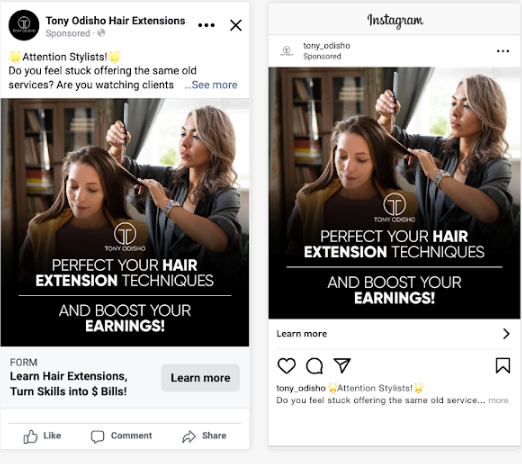
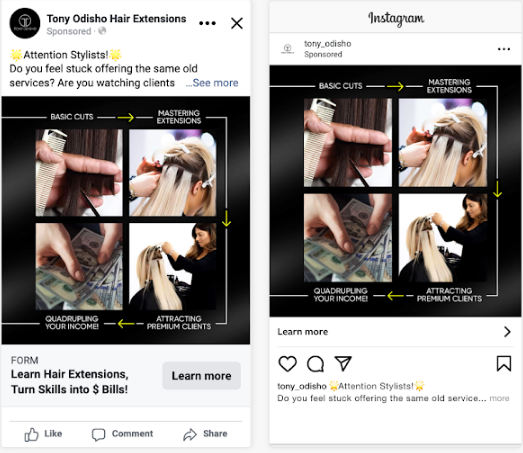
  1. The Evolution Creative — showcased the progression of a stylist’s skills over time, from novice to expert.
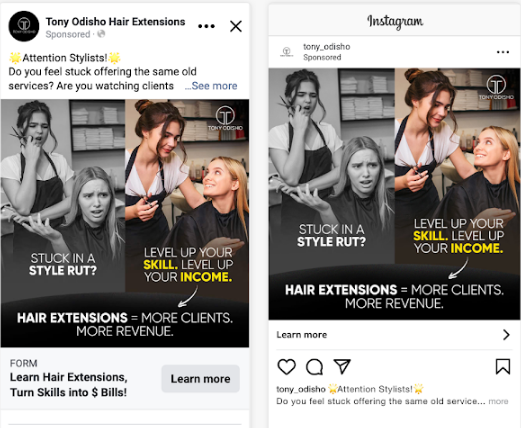
  2. Before and After Split Image — featured dramatic transformations after hair extension applications.
  3. Group Photo of Graduates — showed smiling stylists post-certification.
Group Photo Ads Examples
Before and After Ads Example

Of these, the Evolution Creative emerged as the strongest performer. It visually tapped into the transformation stylists hoped to achieve—not just with clients, but in their careers. This ad resonated emotionally and framed the course as a journey worth taking.

Evolution Creative Ads Examples

🎥 Video Creatives: Real Stories, Real Trust

In the second ad set, video creatives featured authentic testimonials from stylists during hands-on masterclasses. Rather than using polished promo videos, we leaned into raw, vertical smartphone clips with captions—a proven format for driving trust and relatability.

These videos emphasized real feedback:

  • “This course helped me double my bookings.”
  • “It’s the most hands-on training I’ve ever had.”

By sharing genuine voices, we established credibility and humanized the offer—boosting click-through rate (CTR) and lead intent.

🪡 Retargeting Strategy Two: Warm Traffic, Lower Friction

For our second campaign, we built a retargeting strategy centered on engagement. We tracked users who watched at least 50% of the video creatives in campaign one.

These users were retargeted with a fresh lead gen campaign—this time featuring a salon owner speaking directly to the audience, appealing to the entrepreneurial ambitions of stylists. The cost per lead rose slightly to $13.97, but we were able to secure 192 highly engaged leads, many of whom had already shown strong intent.

🔍 Emotional Framing: Why the Right Message Beats the Lowest Price

The success of both campaigns hinged not only on visuals but on the underlying message. Our approach wasn’t just to sell a skill, but to position the hair extension course as a survival tool for stylists navigating a saturated industry.

Learning to install extensions wasn’t just about earning more—it was about staying relevant, growing clientele, and securing long-term success. This emotionally charged framework converted better than generic offers or discount-based pitches.

📊 Results in Numbers and Impact

Combining both strategies, the campaigns drove a total of 380 leads for a blended CPL of $12.89. More importantly, both campaigns captured qualified, motivated prospects who went on to register for live training.

This case study underscores the power of pairing data-backed testing with emotionally intelligent messaging. In the Facebook ecosystem, the right creative format can define the entire outcome of your lead generation efforts—and the numbers back it up.

Campaigns Results

For beauty educators, salon marketers, or digital advertisers targeting niche training courses, this example proves how smart creative direction combined with platform-native tactics can dramatically cut costs and drive real business results.

The Strategy Behind Dave Bondy’s Facebook Ads Campaign

When former mainstream news reporter Dave Bondy launched his independent newsletter, his primary goal was to grow a dedicated subscriber base. The initial strategy leveraged a lead magnet — a free checklist on how to identify fake news. This approach is a common tactic for acquiring low-cost leads, as it incentivizes users to exchange their contact information for valuable content.

However, while lead magnets often yield affordable leads, the results in this case were unexpected. Instead of driving cost-effective sign-ups, the direct newsletter Facebook Advertising campaign significantly outperformed the lead magnet in terms of both cost and conversion rates.

Why Direct Promotion Worked Better

Rather than offering a free resource, the revised strategy positioned Dave Bondy as a former mainstream journalist exposing the truth. This messaging resonated strongly with his target audience, creating a compelling reason to subscribe without an additional incentive. The shift to direct promotion led to three times lower acquisition costs compared to the lead magnet approach.

The success of the direct campaign was driven by:

  • Strong audience alignment with Bondy’s personal brand and messaging.
  • A sense of urgency and exclusivity in the newsletter content.

Long-Term Impact on Newsletter Growth

Beyond immediate sign-ups, the campaign also contributed to long-term audience retention. Subscribers acquired through the direct promotion method demonstrated higher engagement rates, leading to a more loyal readership. As a result, the campaign not only scaled the newsletter rapidly but also helped establish a sustainable content distribution channel.

This case study underscores the importance of testing different acquisition strategies. While lead magnets are a well-known tactic, the success of direct positioning and engagement-based filtering in this campaign highlights the power of audience-centric messaging in Facebook advertising.

Developing an Ad Creative for Dave Bondy

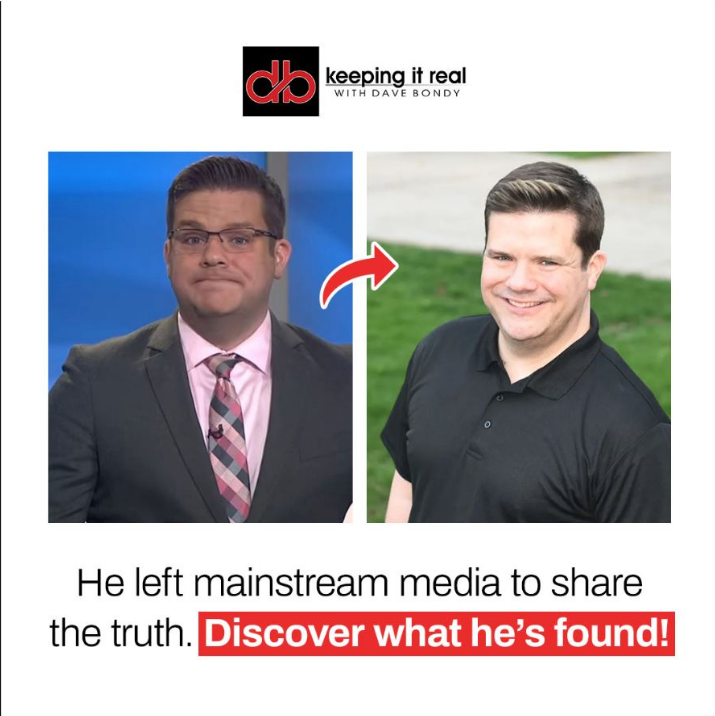
The visual effectively contrasts two versions of Dave Bondy—his past as a mainstream news anchor and his present as an independent journalist—to emphasize his shift toward “revealing the truth.” The red arrow and bold “Discover what he’s found!” create intrigue, prompting engagement. Strategic color accents and emotional appeal make the image memorable and compelling for an audience disillusioned with mainstream media.

Ads Creative Example-1

Cost-Effective Facebook Ads for Newsletter Growth

Newletter Campaign Result-1

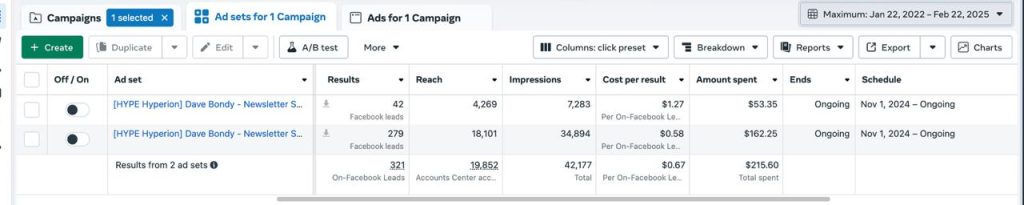
The campaign results spoke for themselves. For just $210, Dave Bondy was able to acquire around 320 new subscribers to his newsletter. This equated to a cost per subscriber of just over 0,60$, significantly lower than industry averages for similar campaigns.

How DTF Prints Company Reached $1M Revenue

When Best Price DTF set out to grow its revenue through Facebook advertising, the team faced an initial roadblock: direct traffic to a sales campaign wasn’t delivering the expected results. Instead of pushing forward with the same approach, they pivoted to a more strategic, two-step engagement funnel—one that not only generated conversions but also built a strong, long-term customer base.

The Role of Engagement Tik Tok Campaigns in Filtering the Right Audience

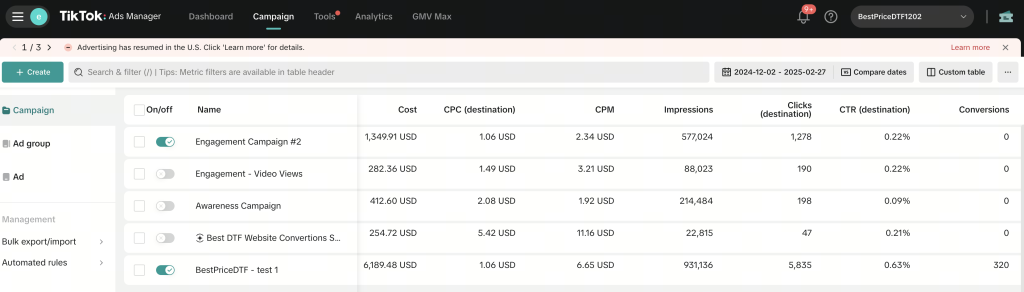
Rather than driving cold traffic directly to a purchase page, Best Price DTF launched an engagement campaign in TikTok Ads featuring an eye-catching video of their DTF printer in action. The goal was simple: attract attention from those genuinely interested in custom apparel printing while filtering out users who had no real intent to buy.

The campaign proved highly effective in narrowing down a qualified audience. TikToks’s algorithm prioritized video viewers who engaged meaningfully, allowing only those who watched at least 50% of the content to enter the next phase. This ensured that the follow-up sales campaign was shown only to warm leads—people who had already demonstrated genuine interest in DTF printing solutions.

TikTok Ads Engagement Campaign-1

Retargeting Warm Leads for Maximum Sales Impact

Once the engagement campaign had done its job, Best Price DTF launched a sales campaign that targeted the warmed-up audience. This phase was crucial in turning curiosity into conversions. Users who had previously interacted with the video were now presented with a compelling offer: the ability to place bulk orders for high-quality DTF prints.

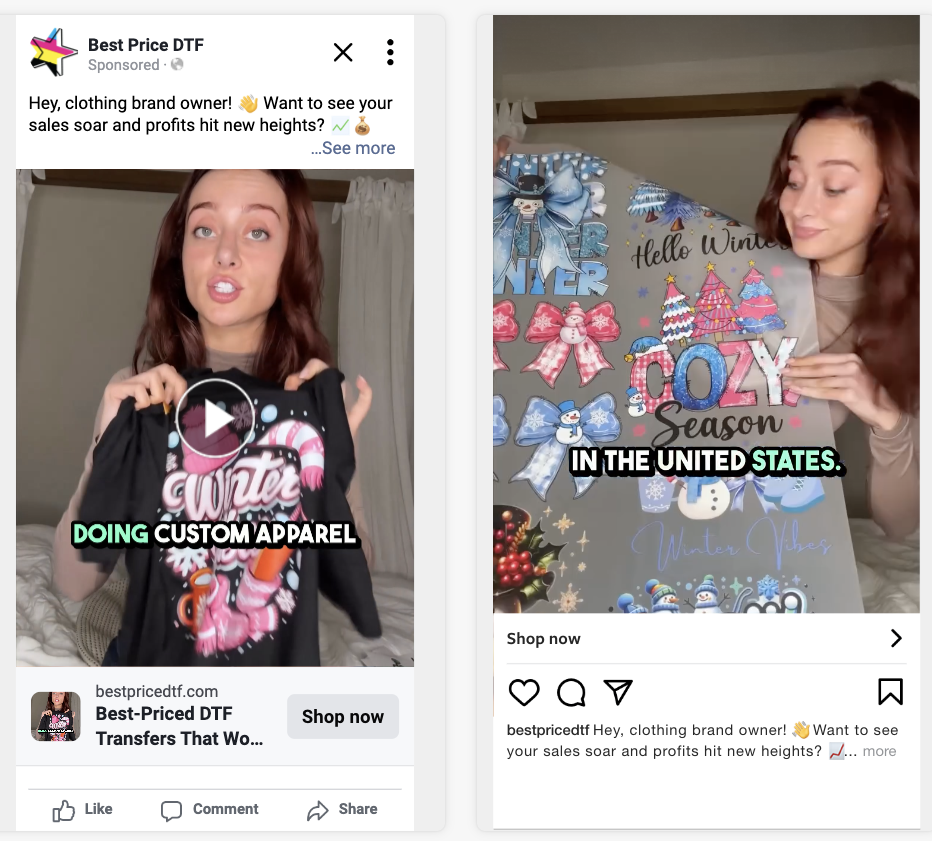
Sales Campaign Video Ads Examples-1

Thanks to Facebook’s retargeting capabilities, the campaign effectively “closed the loop,” re-engaging potential customers at the perfect moment in their decision-making process. This approach eliminated wasted ad spend on unqualified leads and focused resources only on those most likely to convert.

Sales Campaign Result-1

Scaling Revenue Beyond $1M

The results spoke for themselves. The engagement-first approach led to a return on ad spend (ROAS) exceeding 3.5, making the campaign not just profitable but strategically advantageous. The combination of a highly targeted funnel and compelling visuals transformed Best Price DTF’s advertising efforts from an underperforming sales push into a well-oiled lead generation machine.

Beyond the immediate sales impact, an unexpected yet highly valuable outcome emerged: customer retention. Clients who placed an initial order were overwhelmingly satisfied with the print quality, leading to repeat business. As a result, what started as one-off purchases evolved into long-term partnerships, creating a snowball effect that strengthened brand loyalty and fueled sustainable growth.

By shifting from a traditional direct-response model to a smarter, engagement-driven approach,
Best Price DTF not only optimized its ad spend but also built a scalable business foundation—one that ultimately helped the company surpass $1,000,000 in revenue.

TikTok Monetization: How It Drives Creators and Shapes Advertising’s Future in 2025

The Evolution of TikTok Monetization and Its Impact on Advertising

TikTok has rapidly transformed from a short-form video platform into a dominant force in digital advertising. With its sophisticated monetization tools and ever-growing user base, the platform has become a primary space for creators and brands to generate revenue. In 2025, TikTok monetization is not just an incentive for content creators but also a fundamental driver of the advertising industry’s evolution.

The Growth of Creator-Driven Advertising

The success of TikTok as an advertising platform is deeply intertwined with its creator ecosystem. Unlike traditional social media models where brands primarily control ad campaigns, TikTok’s monetization tools empower individual creators to become influential marketers themselves. The TikTok Creator Fund, brand partnerships, and in-app tipping mechanisms provide multiple income streams, incentivizing high-quality content production that directly engages audiences.

This shift toward creator-led advertising blurs the lines between organic content and paid promotions. Audiences trust and connect with their favorite TikTok personalities, making influencer-driven campaigns more effective than traditional display ads. As a result, brands are allocating more budget to collaborations with influencers who can seamlessly integrate promotional content into their storytelling.

TikTok Shop and In-App Commerce: A Game Changer for Brands

E-commerce is at the heart of TikTok’s monetization strategy in 2025. The introduction of TikTok Shop has revolutionized how users discover and purchase products. Brands no longer need to rely solely on external websites to drive conversions; instead, they can showcase products directly within TikTok’s ecosystem.

The seamless integration of shopping experiences within the app has turned TikTok into a powerful direct-to-consumer sales channel. Live shopping events, where creators promote products in real-time, have become a significant revenue driver. This interactive approach enhances consumer engagement and shortens the path to purchase, making advertising more dynamic and conversion-focused.

Paid Subscriptions and Exclusive Content

One of the most significant shifts in TikTok monetization is the rise of paid subscriptions. As the platform competes with other content-driven networks, it has introduced ways for users to support their favorite creators through exclusive content offerings. This model not only provides creators with a stable revenue source but also reshapes advertising strategies.

For brands, partnering with premium content creators allows them to reach a dedicated audience that values high-quality, exclusive content. Unlike traditional ad placements, which may be skipped or ignored, sponsored content within a subscription model holds higher engagement potential.

User-Generated Ads: The Future of Brand Promotion

TikTok monetization has shifted the traditional advertising landscape by placing more power in the hands of users. Rather than relying on polished, high-production ads, brands are encouraging organic participation through user-generated content (UGC). Challenges, branded hashtags, and duets incentivize users to engage with brands in a way that feels authentic and natural.

This trend reflects the growing importance of community-driven marketing. As more brands recognize the value of user-generated campaigns, advertising strategies are becoming more interactive and participatory. TikTok’s monetization tools facilitate this process by allowing brands to reward users for their content contributions, creating a mutually beneficial ecosystem.

How TikTok Monetization Redefines Advertising ROI

The effectiveness of TikTok advertising in 2025 is measured not just by impressions and clicks but by deeper engagement metrics. Traditional return on ad spend (ROAS) models are evolving to incorporate factors such as creator-led sales, live shopping conversions, and long-term brand loyalty generated through TikTok interactions.

Brands that successfully integrate TikTok monetization into their advertising strategies experience higher retention rates and stronger consumer relationships. By leveraging creators, AI-driven targeting, and in-app shopping, they are able to build more meaningful connections with their audiences, ensuring sustained success in the digital marketplace.

What This Means for the Future of Digital Marketing

TikTok’s monetization framework is shaping the future of advertising in ways that extend beyond the platform itself. As brands and marketers adapt to this new landscape, they must embrace a more dynamic, creator-driven, and engagement-focused approach. The lines between content creation and advertising continue to blur, making authenticity the most valuable currency in the digital marketing space.

The innovations in TikTok monetization are not just shaping the platform’s growth; they are setting new industry standards that will influence the broader digital advertising ecosystem for years to come.

You can check out the latest HYPE Hyperion insights on working with TikTok Business Manager here.