🩺How We Stopped Meta Ads from Wasting Healthcare Ad Budget
Healthcare advertising can get expensive quickly when the campaign is not giving you clean data. It becomes even harder when Meta starts automatically mixing your creatives, headlines, and descriptions in ways that make the results almost impossible to understand.
That was the main problem inside this Spanish language lead generation campaign for Inland Vein & Wound Specialists.
The campaign was targeting Spanish-speaking women 35+ in the Inland Empire area. The goal was simple: generate qualified patient leads for vein and wound services. But the setup became messy because Meta’s automated testing features started controlling the combinations instead of letting us test each angle clearly.
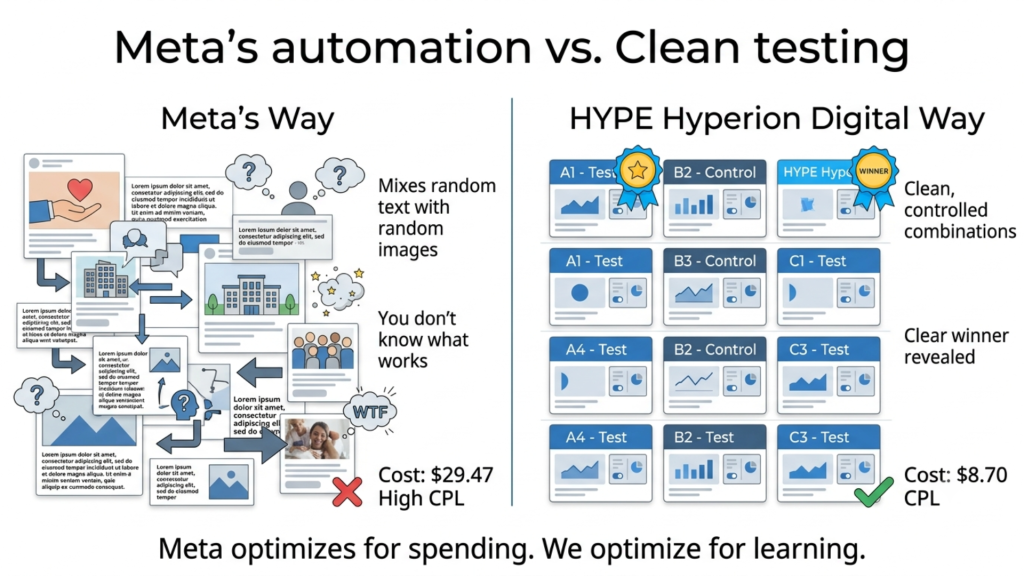
On paper, automation sounds helpful. Meta promises to find the best combination, send budget to the right assets, and make testing easier. In reality, relying too heavily on automation can leave you with high CPL, messy data, and no clear answer on which creative actually made the patient opt in.
🎯The Strategy: Adapting Proven Ad Angles for a Spanish-Speaking Audience
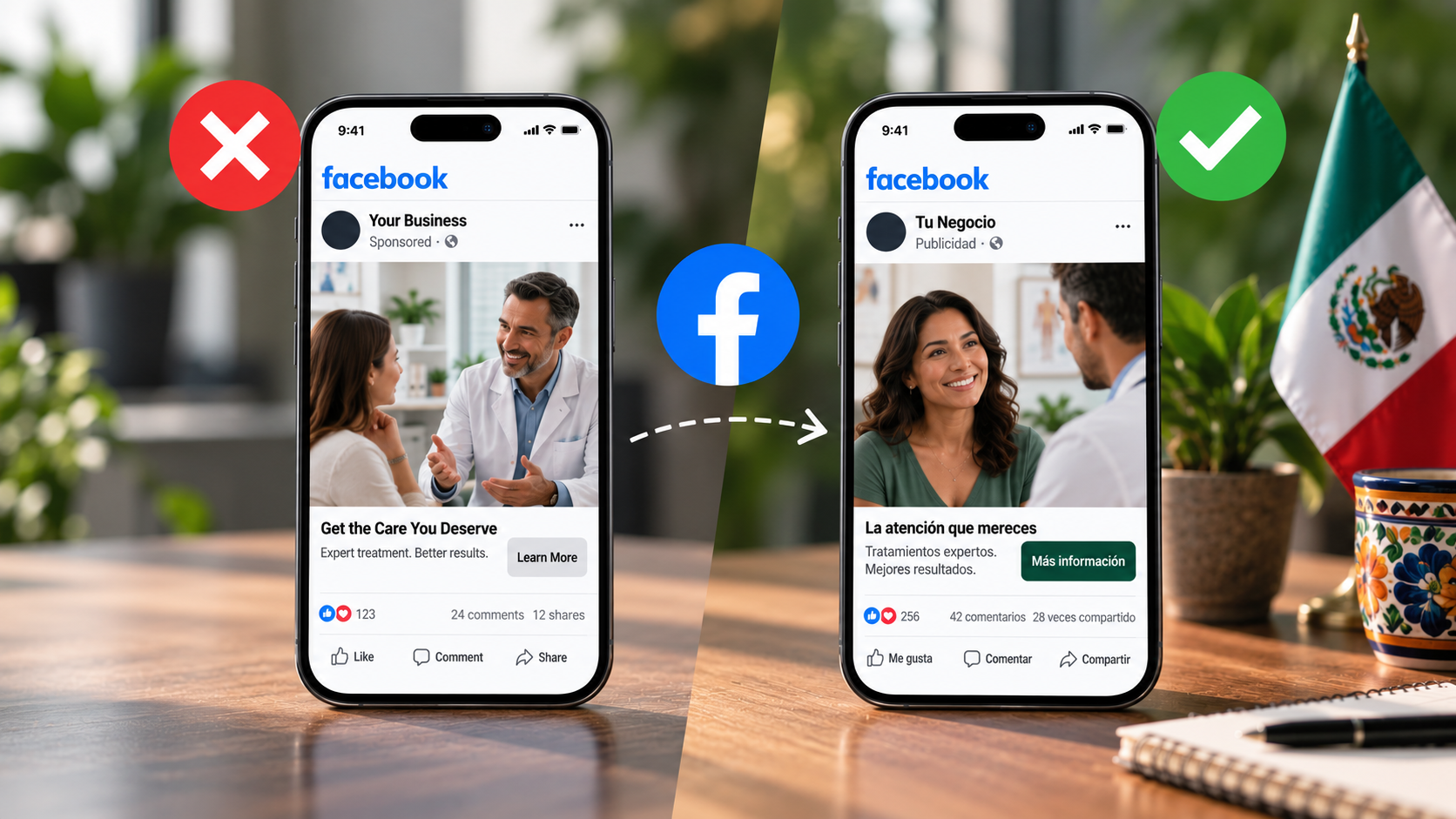
The client was Inland Vein & Wound Specialists, a medical clinic serving Spanish-speaking patients in California. Instead of starting from scratch, HYPE Hyperion Digital took four ad creatives that had already worked well in English and adapted them into Spanish. The goal was not just translation. The goal was to see which angle would resonate most with this specific audience.
We wanted to run a clean test between four different creative directions. Each one had its own purpose, message, and reason for being in the campaign. If the data came back clean, we would know which angle deserved more budget and which ones needed to be cut.
Creative 01 focused on the Heavy Legs angle. It focused on morning symptoms and opened with the kind of problem the audience might feel every day: heavy, tired legs. The visual used a healthy vs. varicose vein diagram and promised relief in 30 minutes, which made the message simple and symptom-driven.

Creative 02 focused on the Services & Expertise angle. This one was the most direct creative in the group. It used a real clinical photo, listed the conditions the clinic treats, and gave a clear free evaluation CTA without trying to be clever.

Creative 03 focused on the Insurance & Objections angle.This ad tackled two big barriers upfront: age relatability and treatment cost. It used insurance coverage as the hook so the audience could immediately understand that treatment might be more accessible than they assumed.

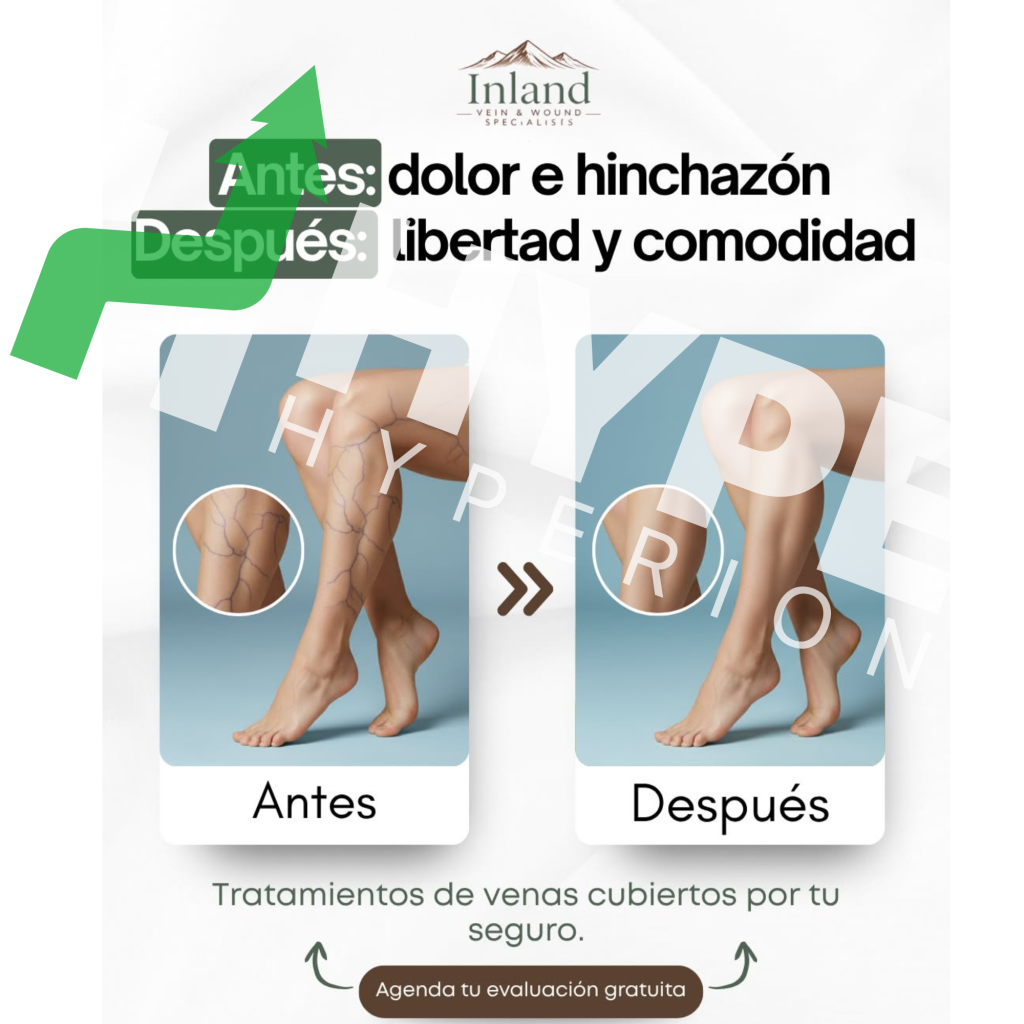
Creative 04 focused on the Before & After angle. It showed a clear transformation from pain and swelling to freedom and comfort. It also supported the message with insurance information underneath, so the creative handled both the emotional desire for relief and the practical concern around cost.
🚗When Meta Takes the Wheel
🚫The Missing Toggle That Ruined Our Setup
The issue started when Meta removed the classic Dynamic Creative toggle and pushed the Single Media format instead. This new setup allows advertisers to upload multiple images, videos, text options, headlines, and descriptions into one bucket. Then Meta decides how everything gets mixed and matched.
That might sound efficient, but it creates a serious problem for anyone trying to learn from the campaign. We did not want one big blended result where every asset was randomly combined. We needed to know which Spanish creative angle was actually driving leads. When Meta took control of the combinations, that clean testing structure disappeared.
🤖The Algorithm Messed Up All Our Ads
Meta started randomly pairing our four Spanish creatives with different headlines and descriptions. That meant the image from one angle could end up matched with copy that belonged to another angle. A strong visual could be weakened by the wrong headline, and a clear message could be diluted by the wrong description.
This is where automated testing becomes dangerous. The campaign no longer tells you which idea is working. It only tells you that some random combination produced a result. That makes the data hard to trust because the creative, headline, and copy are no longer working as one intentional message.
💸Spending Budget Without Getting Clean Data
The financial impact showed up quickly. One early ad set hit a $29.47 CPL with 13 leads from $383.05 in spend. The campaign was still producing leads, but the cost was inflated because budget was being spread across random, unoptimized asset combinations.
The bigger issue was not just the CPL. The bigger issue was that we were spending without learning. We could not clearly say which creative angle triggered the patient to submit the form. For a healthcare campaign, that is a major problem because every dollar should either produce a lead or teach you something useful about the audience.
🛠️How We Fixed the Dashboard to Take Control of Our Advertising for Healthcare
HYPE Hyperion Digital fixed the problem by bypassing Meta’s default recommendations and launching a separate campaign with a manually controlled setup. Instead of giving Meta a messy bucket of assets, we took back control over which creative paired with which copy and headline. Every combination had a reason behind it, and every result became easier to read.
This turned the campaign from a noisy automated test into an organized structure. We could finally see which angle was pulling its weight and which one was not. That matters because in medical lead generation, you are not just looking for cheap clicks. You are looking for the clearest message that makes a cautious patient feel safe enough to take action.
The winner was Creative 02, the Services & Expertise angle. It was the most direct creative in the campaign: real clinical photo, clear list of treated conditions, and one simple free evaluation CTA. No complicated hook, no layered storytelling, no overbuilt marketing angle.
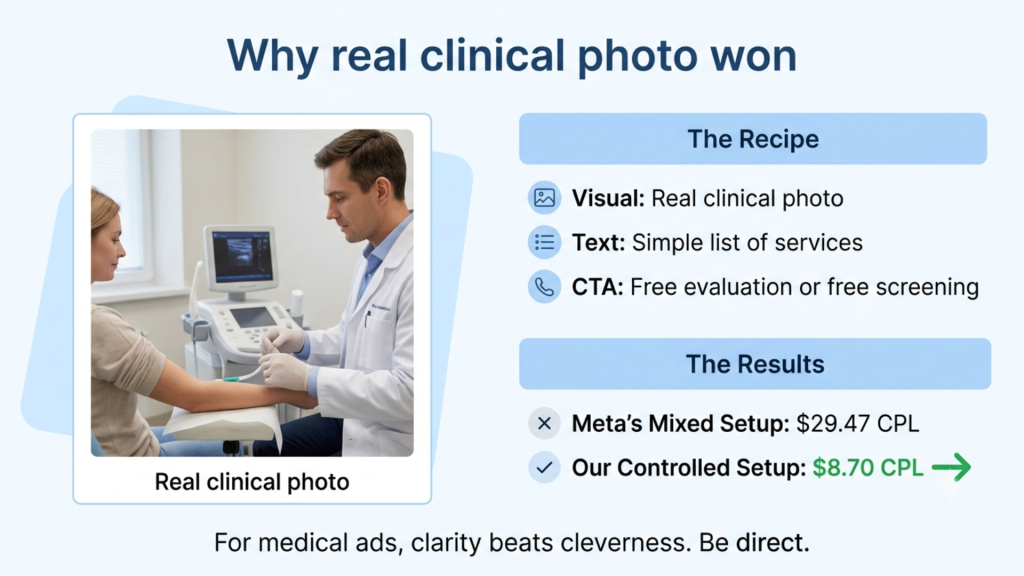
That result made sense for this audience. Spanish-speaking users making a medical decision often value clarity and trust over clever creative tricks. They want to know what the clinic treats, whether the service feels real, and what the next step is. In this case, clarity beat cleverness because the most straightforward ad gave people the least amount of work to understand the offer.
📉How We Trashed a $29 CPL and Hit $8.70
The results showed a massive difference between automated chaos and manual control. Under the earlier Meta-controlled setup, one ad set produced 13 leads at a $29.47 CPL with $383.05 in spend. After we moved into the controlled Dynamic Creative setup, the campaign produced 13 leads again, but this time at an $8.70 CPL from only $113.16 in spend.
That is the key part. The lead volume was the same, but the cost was completely different. We did not need to spend more to get the same number of leads. We needed to stop letting Meta waste budget across combinations that did not give us a clear signal.
Here is what the campaign performance looked like:
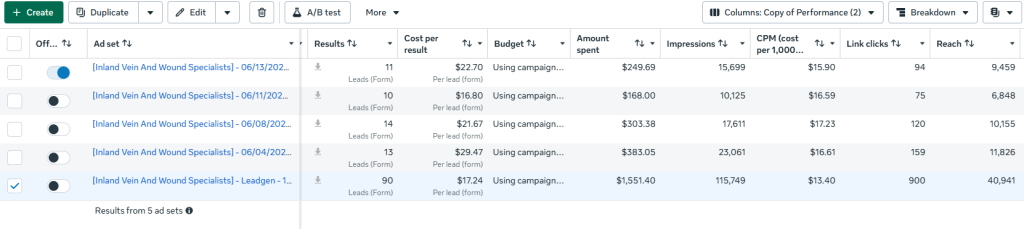
| Ad Set | Leads | CPL | Spend |
| Base: Meta automated | 90 | $17.24 | $1,551.40 |
| 06/04/2026 | 13 | $29.47 | $383.05 |
| 06/08/2026 | 14 | $21.67 | $303.38 |
| 06/11/2026 | 10 | $16.80 | $168.00 |
| 06/13/2026 | 11 | $22.70 | $249.69 |
| 06/15/2026: Controlled Dynamic Creative | 13 | $8.70 | $113.16 |
The controlled setup dropped CPL from $29.47 to $8.70, the lowest this campaign had ever produced. It brought in 13 leads from $113.16 in spend, which was the same lead volume as the earlier 06/04 ad set that cost more than 3x as much. It also came in at roughly half the CPL of the large base ad set while using less than 10% of that total spend.
This is why the result mattered. The $8.70 CPL was not a lucky spike. It was what happened when the winning creative got focused budget without random asset noise. Once the setup became readable, the campaign finally showed us what the audience actually wanted.

🤖Human Beats AI Every Time
The biggest lesson is simple: Meta’s algorithm may optimize for delivery, but not always for clean learning
That does not mean automation is useless. It means you cannot hand over the entire testing process and expect Meta to tell you which creative angle actually won. The platform will spend the budget where it sees short-term delivery signals, but it will not always protect your strategy, your message, or your need for clean data.
In this Spanish campaign, taking control of the asset combinations revealed the winning creative clearly and cut CPL by 3x. We stopped the data noise, focused the budget, and gave the campaign a structure that made the results easy to understand. That is what made the difference between a $29.47 lead and an $8.70 lead.
This is especially important in facebook advertising for vein clinic lead generation, where the audience is cautious and every message has to build trust quickly. You need to know exactly which creative makes someone feel safe enough to respond. When Meta mixes everything randomly, you lose that insight. When you control the test, you find the winner faster, waste less budget, and scale the local campaign with confidence.