🩺How Facebook Ads Built Trust for a Local Vein Clinic from California
Facebook advertising for vein clinics is not always about generating direct leads from day one. Sometimes, facebook advertising for vein clinic campaigns needs to solve a quieter problem first: does the clinic look active, trusted, and real when a potential patient checks the page?
That was the idea behind this campaign.
HYPE Hyperion Digital launched a low-budget local strategy for a clinic in California with one simple goal: build real local social proof without wasting thousands of dollars on heavy content production. The campaign was not built to book appointments directly. It was built to make the clinic’s Facebook page look more established, more active, and more trustworthy when potential patients checked it before reaching out.
This matters because follower count can quietly influence conversion. Many patients may see an ad, like the offer, and then check the Facebook page before deciding whether to call. A patient might see your ad, like the offer, and then check your page before calling. If the page looks empty, inactive, or too new, that hesitation can quietly kill the booking before it ever shows up in your lead data.
📍Landing Patients in a Local Vein Clinic
The client was The Vein Place, a specialized vein and vascular clinic based in Santa Ana, California. The clinic handles high-ticket medical treatments, which means trust is not optional. Patients are not buying a small product or clicking into a casual offer; they are making a health-related decision that requires confidence before they take the next step.
That creates a very different advertising environment. A local clinic can have strong doctors, real treatment options, and a clean offer, but if the social presence looks weak, some patients will still hesitate. They want to know the clinic is active. Before they share personal health information or book an appointment, they want the clinic to feel active, visible, and trusted by others.
So the goal was not just “get more followers” for the sake of a number. The goal was to build a local credibility layer that supports every other campaign the clinic runs. When someone sees a lead ad, visits the website, checks Facebook, or compares clinics, the page should help build trust instead of creating doubt.
📉The Page Follower Count Problem
Potential patients often check social media before booking. They want to see if the clinic is real, if it is active, and if other people in the local area seem connected to it. This step happens quietly, and most clinics never see it directly in their lead reports.
A page with only 43 followers can create hesitation, especially for a patient who is already cautious about choosing a medical provider. It may not be fair, but it changes how people feel. A patient might think the clinic is new, inactive, or not known locally. Even if the clinic is excellent in real life, the page can send the wrong signal before the patient ever speaks to the team.
This is especially important in healthcare. People are cautious when it comes to their body, their symptoms, and their treatment choices. An empty or inactive page does not say, “We are just building our online presence.” To a nervous patient, it can feel like something is missing. That small doubt can be enough to make them keep searching.
❌Three Growth Strategies That Fail Local Medical Clinics
📋Option 1: Relying Only on Organic Posting
Organic posting is usually the first solution that comes to mind. In theory, the clinic could post educational content, patient-friendly graphics, short reels, and clinic updates until the page starts to grow. That is a solid long-term strategy, but it is painfully slow for a small local medical team.
Most clinic teams do not have the time, energy, or internal creative support to run social media every day. They are busy managing patients, appointments, treatment rooms, follow-ups, and actual clinic operations. On top of that, Facebook’s organic reach in 2026 makes this route even harder because even good posts often reach very few people without paid distribution. A clinic could post consistently for months and still end up with a page that looks too small to build instant trust.
👥Option 2: Hiring a Social Media Manager Too Early
Hiring a social media manager can help, but it is usually not the smartest first move for a small clinic with an empty page. A good specialist costs money every month, and the cost adds up quickly. Before the page has a real local audience, even strong content has limited room to perform.
This is where many clinics overspend too early. Many clinics start paying for captions, designs, reels, calendars, and reports before solving the basic trust issue: the page still has very little local audience. A social media manager can maintain and grow a brand, but hiring one too early can turn into a monthly expense with slow visible progress. For a clinic that simply needs the page to look credible, there is a cheaper first step.
🤖Option 3: Buying Fake Followers
Buying fake followers may look like the fastest shortcut, but it usually creates the weakest long-term result. It gives the page a bigger number, but the people behind that number are not real local patients. They will not book, comment, ask questions, share posts, or build trust around the brand.
The bigger problem is that fake followers can damage the page long-term. They inflate the audience without creating real engagement, which makes future content look weaker. If a page has thousands of followers but almost no interaction, that can make the clinic look even less trustworthy. It also sends poor signals to Facebook because the audience is full of people who will never respond to future posts or offers.
🚀The Solution: A Low-Budget Campaign Built for Real Local Followers
HYPE Hyperion Digital used a fourth option that many agencies ignore because it sits between social proof building and paid advertising. We launched official ad campaigns for engagement with the Page Likes performance goal. The point was not to get random traffic or cheap clicks. The point was to force Meta to find local people who were likely to actually follow the page.
The setup was simple. We used 2–3 clean banners with clear messaging for local residents and set a micro-budget of around $2 to $3 per day. There was no complicated funnel, no massive creative production, and no heavy campaign structure. The campaign was designed to do one job well: grow the page with real local followers at a very low cost.

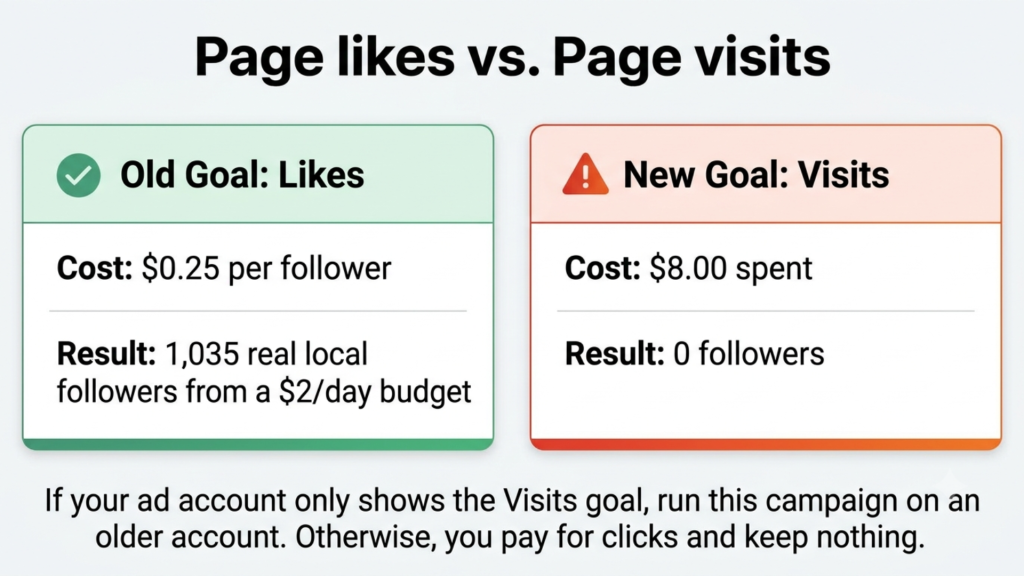
The results showed why this approach worked. HYPE Hyperion Digital spent $258.99 and generated 1,035 real local followers. That brought the cost per follower down to just $0.25.

For a local clinic, that is a strong asset. These are people in the market who have now connected with the page and can keep seeing the clinic in their feed. They become more familiar with the brand over time. When they or someone in their family starts looking for vein treatment, The Vein Place is no longer a random clinic they just discovered. It is a name they have already seen before.
⚠️Meta’s New Account Traps
There is one important warning before anyone tries to copy this setup. Meta has been updating ad accounts and removing the classic Page Likes goal from newer dashboards. Instead, Meta now pushes the Page Visits performance goal, which sounds similar but does not produce the same result.
This is where the campaign can go wrong. Page Visits can get people to land on the page, but it does not mean they will follow it. A user can click, look around briefly, leave, and the campaign may still count that as a successful result. That is a completely different outcome from a real page follow.
We tested this newer setup and the results proved the problem. The campaign spent around $8, generated page visits, and produced exactly zero followers. That means the budget created temporary traffic but left no lasting audience behind. In simple terms, the campaign created temporary traffic, but it did not build a lasting audience and leave.
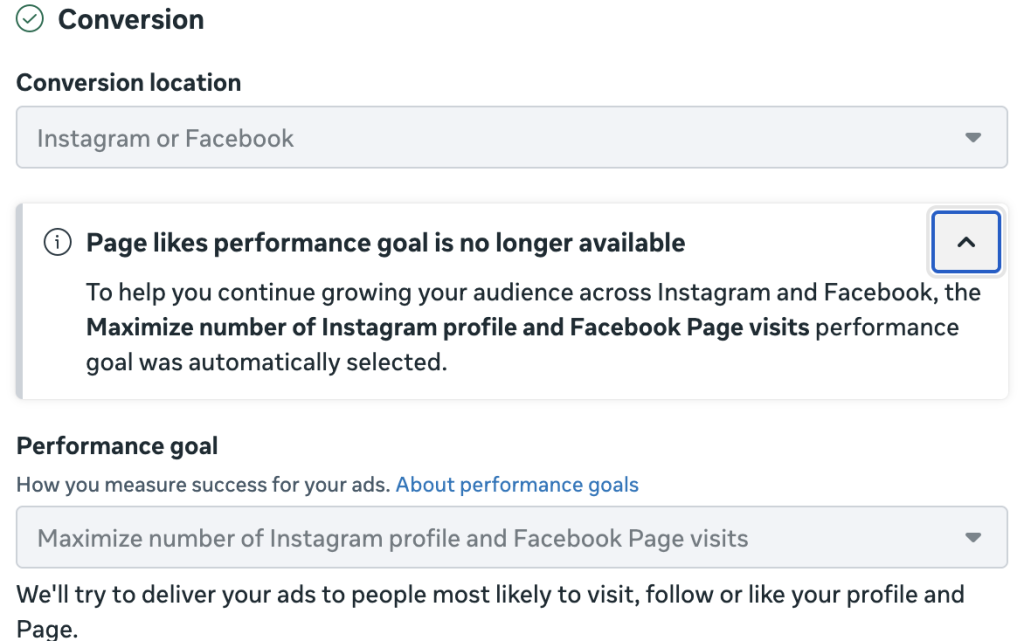
The solution is clear. If the Page Likes performance goal is missing in the new dashboard, this campaign should be run through an older generation ad account where the right goal is still available. Otherwise, the budget can easily go down the drain. For this strategy, the goal matters because visits and followers are not the same asset.
🏆Social Proof Is More Than a Vanity Metric
Here is the only question that really matters.
Imagine a patient choosing between two similar local clinics. One page has 47 followers. The other has 1,100.
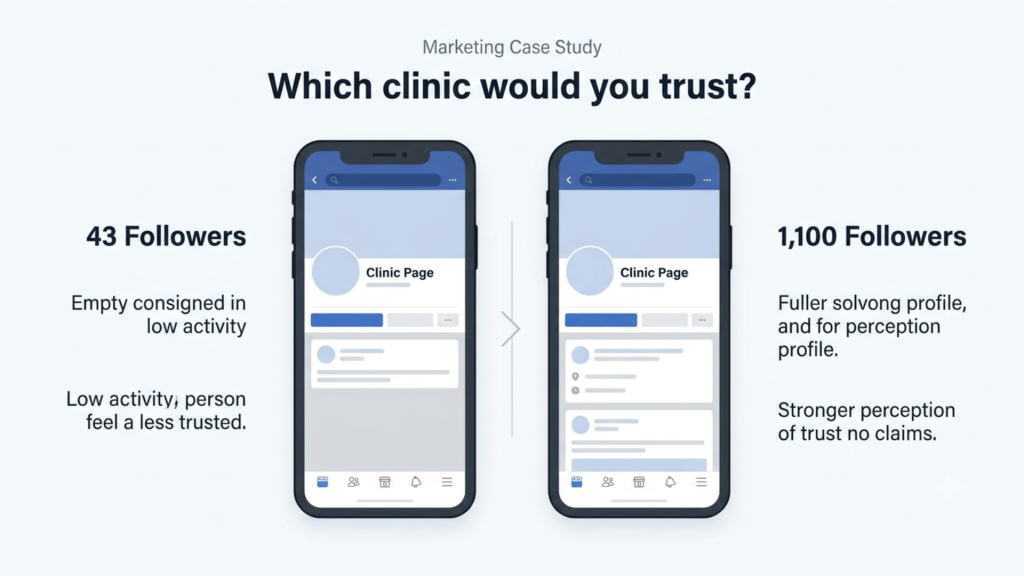
Which one feels more established? Which one feels safer? Which one is the patient more likely to call?
Most people already know the answer.
Building a thousand followers for a couple of hundred dollars is not about bragging rights. It is not about vanity. It is about building instant trust with anyone who visits the page before booking. In healthcare, that trust can be the difference between someone calling the clinic and quietly choosing another provider.
For The Vein Place, the follower campaign created a local credibility layer that supports the entire marketing system. Lead ads work better when the brand looks established. Website visits feel safer when the social page looks active. Patient trust builds faster when the clinic does not look invisible online