Facebook Case Study #18: Facebook Ads vs Yelp: How a Moving Company Hit $356K Revenue

📊Facebook Ads vs Yelp: How a Moving Company Hit $356K Revenue

In this case study, we implemented a strategy where Facebook Ads became one of the primary lead sources for the moving company Tim Movers, effectively replacing Yelp as the main paid acquisition channel.

🚚Few words about the Tim Movers moving company

Tim Movers is a trusted moving company based in San Francisco, California, handling both local and long-distance moves for homes and businesses. They’re known for fair pricing, reliable crews, and a really customer-friendly approach—no hidden fees. With lots of positive reviews and high ratings, Tim Movers has built a solid reputation as a go-to choice for stress-free moves around the Bay Area.

📈From Yelp to Facebook: Building a More Scalable and Cost-Effective Lead System
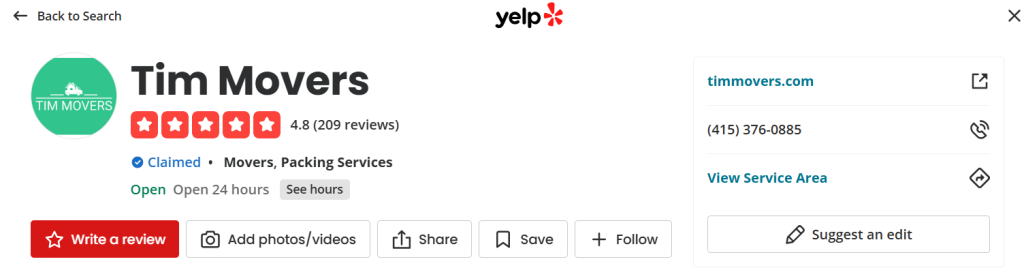
Before launching Facebook Ads, the company was spending approximately $60,000 per year on Yelp advertising. While Yelp delivered leads, it offered limited scalability, reduced control over lead quality, and high dependency on a single third-party platform. The key objective was to build a more cost-efficient, flexible, and controllable lead generation channel capable of delivering consistent inbound requests.

By shifting focus to Facebook Ads, we built a structured lead generation system that proved to be both more adaptable and more profitable in terms of cost per lead and overall return on ad spend. Unlike Yelp, Facebook allowed precise audience targeting, full control over budgets, creatives, and messaging, as well as the ability to scale or slow down campaigns based on seasonality and business demand. As a result, Facebook Ads became one of the main sources of inbound leads, providing a stable flow of potential customers throughout the year.

⚙️ Follow-Up System That Maximized Conversions

A critical success factor was not just the advertising itself, but the strict follow-up system implemented alongside the campaigns. Facebook leads tend to respond best when contacted quickly, and this behavior was fully leveraged in the sales process. Three core follow-up rules were introduced:

  • The first call was made within 5 minutes after a form submission
  • 📞 A minimum of three call attempts within the first 24 hours
  • 🔁 Two call attempts per day until the lead either booked a job or clearly declined

This approach significantly increased contact and booking rates, ensuring that generated leads were converted into real revenue rather than lost opportunities.

Facebook Ads Creatives

📈 Campaign Results & Lead Generation Impact

As a result of this strategy, Facebook Ads became a stable and controllable acquisition channel that consistently delivered inbound leads across different seasons. The campaigns demonstrated strong scalability, predictable lead flow, and higher operational flexibility compared to directory-based platforms.
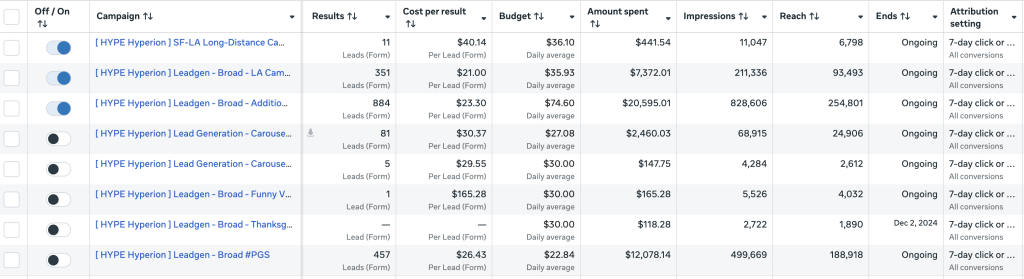
Most importantly, the business gained full control over its growth engine, reduced dependency on third-party aggregators, and built a system that supports long-term revenue stability rather than short-term lead purchases.

The strongest performance was recorded in June, which became the peak revenue month with $76,000 in total revenue. Importantly, even during slower periods — particularly in November — Facebook Ads continued to generate inbound requests, helping maintain consistent lead flow and supporting sales during the off-season.

📊 Platform Comparison: Facebook Ads vs Yelp Ads
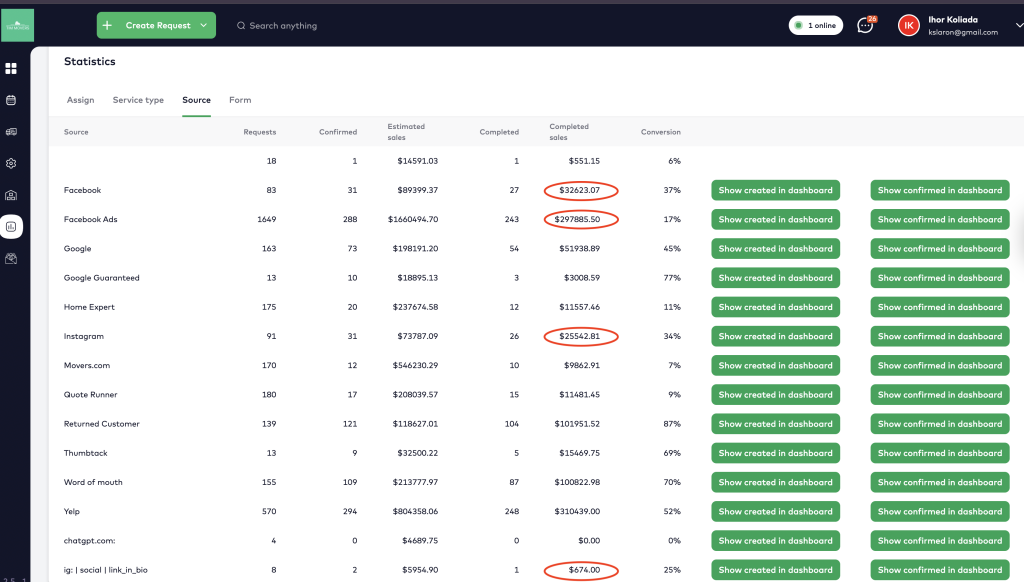
tim movers leads revenue
Performance Over a 12-Month Period

🟡 Yelp Ads

Ad Spend: ~$60,000
Revenue Generated: $310,439

Key Metrics

  • ROAS: ~5.17×
  • Gross Return (Revenue − Ad Spend): ~$250,439
  • Cost Efficiency: ❌ Lower
  • Scalability & Control: ❌ Limited

Yelp Ads were able to generate revenue, but at a higher acquisition cost and with a strong dependency on a closed platform. Control over lead quality, volume, optimization, and scaling was restricted, limiting long-term growth flexibility.

🔵 Facebook Ads

Ad Spend: $43,378.04
Revenue Generated: $356,724

Key Metrics

  • ROAS: ~8.22×
  • Gross Return (Revenue − Ad Spend): ~$313,346
  • Cost Efficiency: ✅ Significantly higher
  • Scalability & Control: ✅ High

Facebook Ads delivered higher revenue with lower ad spend, while providing full control over targeting, creatives, budgets, and campaign scaling.

🔍 Direct Performance Comparison

~$63,000 higher net return from Facebook Ads
$16,600 lower ad spend on Facebook Ads
$46,285 higher revenue generated via Facebook
~3.05× higher ROAS compared to Yelp

🚀 Why Facebook Ads Outperformed Yelp in This Case

The success of Facebook Ads in this case was driven by several key advantages over Yelp. Facebook provided full control over lead generation, including targeting, messaging, budget allocation, and scaling. Unlike Yelp, which functions as a closed marketplace with limited flexibility, Facebook allowed the business to proactively reach potential customers before they actively compared multiple competitors.

Additionally, Facebook leads proved more responsive to fast follow-up, especially when contacted within minutes. Combined with a disciplined sales process, this created a competitive advantage that Yelp could not offer. Finally, Facebook reduced platform dependency, allowing Tim Movers to build a predictable and scalable acquisition channel without relying on a single aggregator.

Ultimately, the combination of cost-efficient Facebook Ads and a disciplined follow-up process enabled Tim Movers to reduce reliance on Yelp, lower advertising costs, and achieve sustainable revenue growth.
🤝 A Word of Thanks

We would like to thank Tim Movers moving company for their trust and openness throughout this collaboration. Their willingness to test new acquisition channels, optimize internal processes, and fully commit to disciplined follow-up played a key role in achieving these results. Partnerships like this are what allow performance-driven strategies to truly deliver measurable growth.

SEO Case Study #5: Real Impact of Google Maps, Yelp, and Local Listings on Rankings & Leads in the US Market

SEO Case Study #5: Google Maps & Local Listings Impact on US Rankings

📍 What Local Business Listings Provide for New Businesses

For a new business, the primary SEO challenge is not rankings but trust. Search engines need clear confirmation that a company exists, operates in a specific location, and provides real services. Local business listings help establish this foundation by connecting a website to verifiable third-party platforms.

When a business is registered across trusted directories with consistent information, it strengthens entity recognition. Search engines can more confidently associate the brand name, address, phone number, and website with a real-world business. This reduces uncertainty and accelerates visibility, particularly for location-based searches.

Beyond validation, local listings help shape the early search footprint of a brand. They create additional indexed pages, branded search results, and controlled references that appear in SERPs before the website itself begins ranking consistently.

🔗 Why Links from Authoritative Listings Matter for SEO

Links from authoritative business directories serve a different role than traditional backlinks. Their value lies less in raw link equity and more in trust, stability, and context.

For new domains, these links act as confirmation signals. They show that a business is referenced by established platforms with strict moderation and verification standards. This helps search engines evaluate legitimacy and reduces reliance on weaker or artificial links in early SEO stages.

Additionally, directory links are geographically and topically relevant. They reinforce local intent, support entity-based search models, and contribute to a natural link profile. While they are not designed to push competitive keywords to the top, they create a stable SEO baseline for future growth.

🗺️ Local & Regional Business Listings in the US

In addition to major platforms, regional and niche-specific listings play a significant role in local SEO. These directories often rank well for city- and state-level queries and help reinforce geographic relevance at a more granular level.

Common US local and regional listings include:

  • YellowPages
  • Angi
  • Thumbtack
  • Local Chamber of Commerce directories
  • City and state business directories
  • Industry-specific service and medical listings

Such platforms help diversify citation sources and strengthen local authority signals beyond national directories.

📌 Benefits of Google Maps for New Businesses

Google Maps (Google Business Profile) is the most influential local platform for businesses targeting geographic search intent. It connects a company directly to Google’s ecosystem and plays a key role in local pack visibility, branded searches, and map-based discovery.

For new businesses, Google Maps often delivers visibility faster than traditional organic rankings. A properly set up profile allows a company to appear in local results even when the website itself has little authority. Reviews, photos, and engagement signals further strengthen relevance and trust.

✅ Pros:

  • Direct visibility in Google local pack and map results
  • Strong trust signals through verification, reviews, and engagement
  • High relevance for location-based and service-related queries
  • Integration with photos, services, directions, and contact actions

⚠️ Cons:

  • Requires active management and review monitoring
  • Strict guidelines and risk of suspension if misused
  • High competition in major metro areas

⭐ Benefits of Yelp for New Businesses

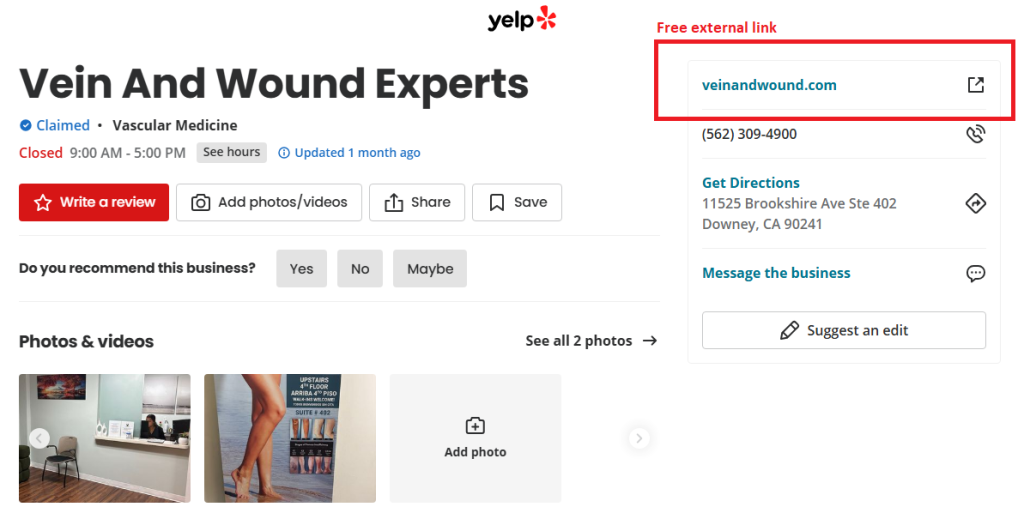
Yelp is one of the most authoritative third-party review platforms in the US and frequently ranks on the first page of Google for local service queries. Even when a business website is new, its Yelp profile can capture early visibility and traffic.

From an SEO standpoint, Yelp reinforces brand legitimacy and provides strong citation signals. Yelp pages often act as “proxy rankings,” allowing businesses to appear in SERPs before their own pages achieve stable positions.

✅ Pros:

  • High domain authority and strong SERP presence
  • Brand exposure independent of website rankings
  • Trust-building through detailed user reviews
  • Authoritative citation and backlink source

⚠️ Cons:

  • Limited control over review visibility and filtering
  • Aggressive monetization and upsell tactics
  • Typically lower conversion intent than Google Maps

🛡️ Benefits of Better Business Bureau (BBB)

Better Business Bureau focuses less on discovery and more on trust and verification. It is especially relevant for medical, legal, and professional services where credibility strongly influences decision-making.

For new businesses, a BBB listing acts as a legitimacy signal, confirming transparent operations and adherence to consumer standards. While BBB rarely drives high traffic volumes, it strengthens brand trust and improves conversion confidence.

✅ Pros:

  • Strong authority and long-standing reputation
  • High trust value for sensitive or regulated industries
  • Reinforces business legitimacy and credibility
  • Authoritative backlink from a trusted domain

⚠️ Cons:

  • Limited direct lead generation
  • Paid accreditation required for full benefits
  • Lower visibility compared to search-driven platforms

🚀 Our Experience Registering Private Vein Clinics in Local Listings

As part of our work with a network of private vein treatment clinics, we implemented a structured local listings strategy across multiple authoritative platforms. All three projects were launched from scratch, with new landing pages and no existing local presence.

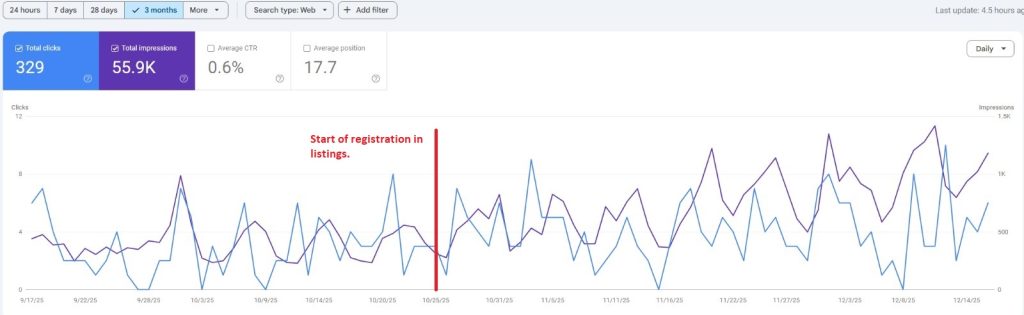
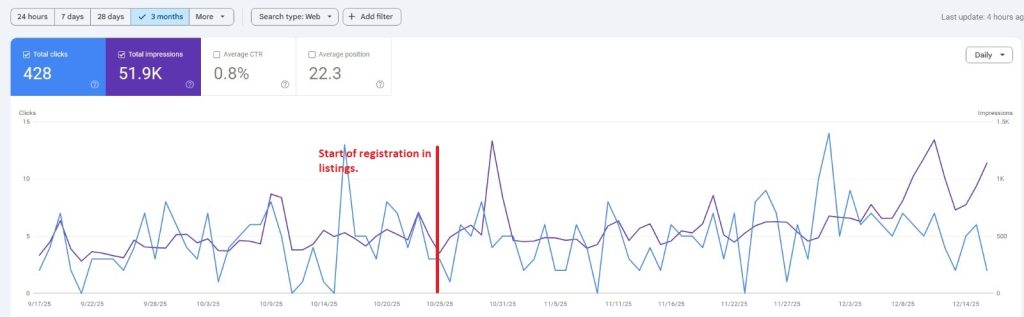
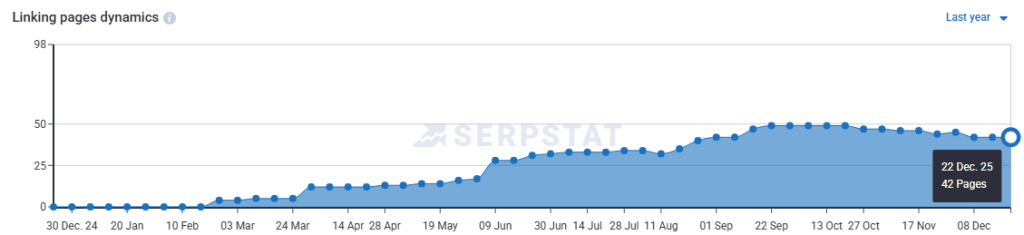
The listings phase began in mid-October and focused on consistent business data, verified profiles, and gradual expansion across trusted directories. By mid-December, we observed a clear and simultaneous increase in Google visibility across all three clinics. Rankings improved not only for branded searches, but also for service-based local queries tied to each location.

Below, screenshots from each clinic illustrate how local listings contributed directly to increased visibility and position growth, even before advanced link-building or content expansion was introduced.

Example 1 –

Example 2 –

Example 3 –


What made this process particularly effective was the cumulative impact of multiple trust signals appearing within a short time window. Google was able to quickly associate each website with a real medical business operating at a specific address, supported by authoritative third-party references. This resulted in broader keyword coverage, stronger local pack presence, and more stable ranking positions.

✅ Key Takeaways

It may seem like a simple step, but registering your business in free local listings can have a substantial impact on search visibility. As we’ve seen with the vein clinic network, consistent profiles across authoritative directories quickly translated into higher rankings, stronger local pack presence, and more impressions for relevant queries.

Even a free backlink from a trusted platform carries weight: it acts as a signal of legitimacy and trust to search engines, supports entity recognition, and helps build an early, natural link profile. For new businesses, these “small” actions are often the difference between being invisible in search and appearing prominently for local customers.

Posted in SEO